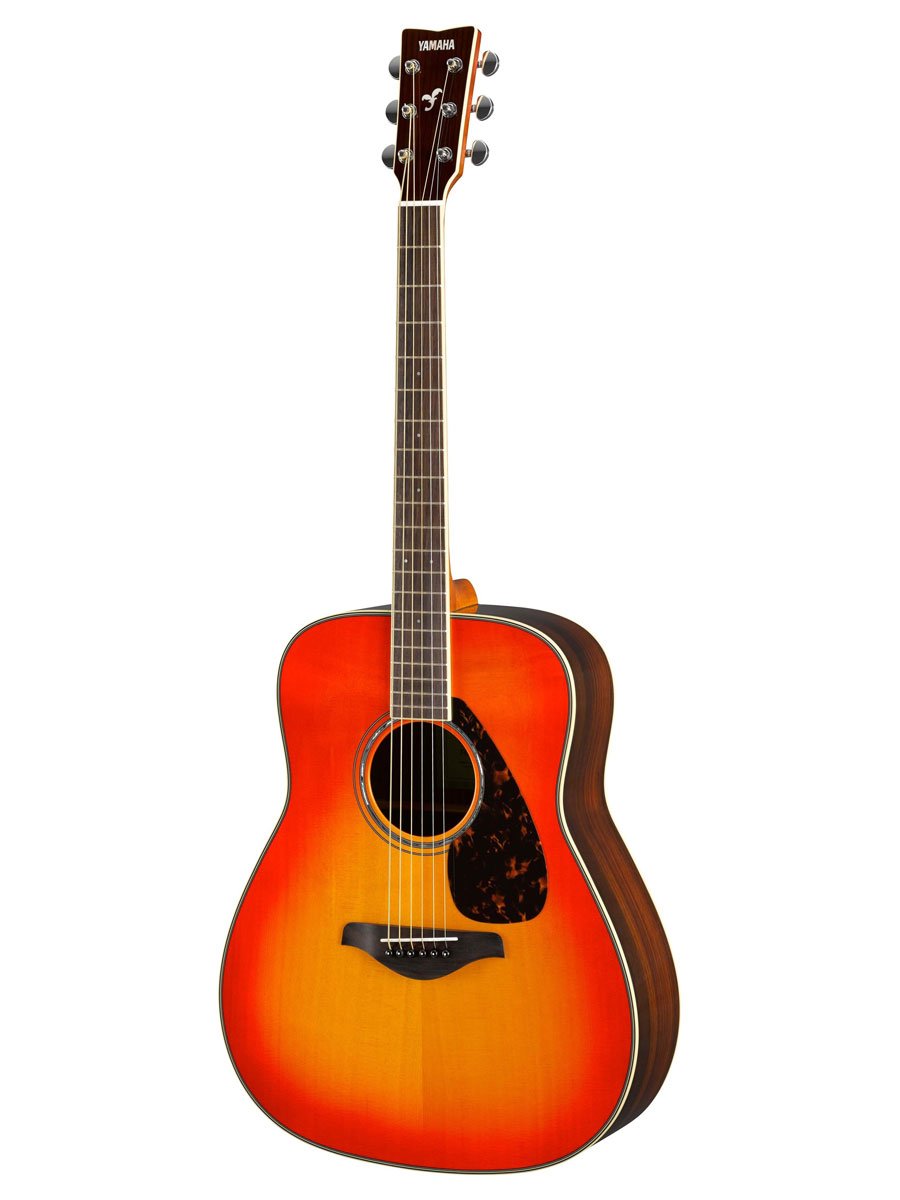
Yamaha FG830 vs. Fender CD-60S: When Your Second Guitar Is More Important Than Your First
Your first guitar got you through the learning curve. Your second one is where you actually start to sound like yourself. That’s the honest truth about the $200–$350 acoustic guitar tier — these aren’t beginner instruments wearing a more expensive label. They’re legitimate working guitars, and the decision you make here tends to stick around for years. If you’re comparing the Yamaha FG830 and the Fender CD-60S, you’re already asking smarter questions than most buyers at this price point. Both are dreadnoughts — the full-bodied, wide-shouldered acoustic guitar shape that became the standard for everything from campfire strumming to stage performance — and both punch above their price tags in ways that continue to surprise even experienced players who stumble across them.
What separates them comes down to one foundational choice: spruce top versus all-mahogany construction. That’s a tonewood decision (the specific wood used to build a guitar’s body, which shapes its sound character), and it has real, audible consequences for how you play and where you play it. This article breaks down those consequences clearly, shows you the comparison where it matters, and ends with a specific decision rule so you leave knowing which guitar is actually right for you — not just which one has better specs on paper.
| EDITOR'S PICKYamaha FG830 Solid Top Acoustic… | Mid-tierFender Acoustic Guitar | Budget pickEpiphone SG Special Electric Gu… | |
|---|---|---|---|
| Body style | Dreadnought | Dreadnought | SG (solid body) |
| Top wood | Solid | — | — |
| Body wood | — | Mahogany | — |
| Fingerboard | — | Walnut | — |
| Finish | Autumn Burst | Gloss | Cherry |
| Instrument type | Acoustic | Acoustic | Electric |
| Price | $429.99 | $229.99 | $199.00 |
| See on Amazon → | See on Amazon → | See on Amazon → |
The Tonal Divide: What Spruce and Mahogany Actually Do
Solid Sitka Spruce and the FG830’s Sonic Identity
The FG830’s top is solid Sitka spruce — the same species used on instruments that cost ten times more. Spruce is the dominant acoustic guitar tonewood for a reason: it delivers a wide dynamic range (meaning it responds differently when you play softly versus aggressively), strong projection, and a brightness across the frequency spectrum that rewards articulate picking and complex chord voicings. The back and sides on the FG830 are nato and rosewood-patterned laminate, but that solid spruce top is doing the heavy lifting.
As documented in Acoustic Guitar magazine’s tonewood archive feature “Tonewoods Explained: Spruce vs. Mahogany,” a solid top vibrates as a unified piece of wood, producing overtones — harmonic frequencies layered above the main note — that laminates, which are multiple thin layers glued together, simply cannot replicate at the same intensity. The Sweetwater product page and buyer Q&A for the Yamaha FG830 reinforces this, with multiple owner comments noting deep, authoritative bass response, crisp midrange definition, and a treble register that sounds genuinely articulate rather than harsh.
One particularly credible account from a player who owns a Martin HD-28 — one of the most respected acoustic guitars in production — describes buying the FG830 as a travel guitar and finding that its hammer-on response (the technique of sounding a note by tapping a string to the fretboard rather than picking it) outperformed their primary instrument. That’s not marketing. That’s a player with expensive reference points telling you something real.
Fender
$229.99
In stock on Amazon
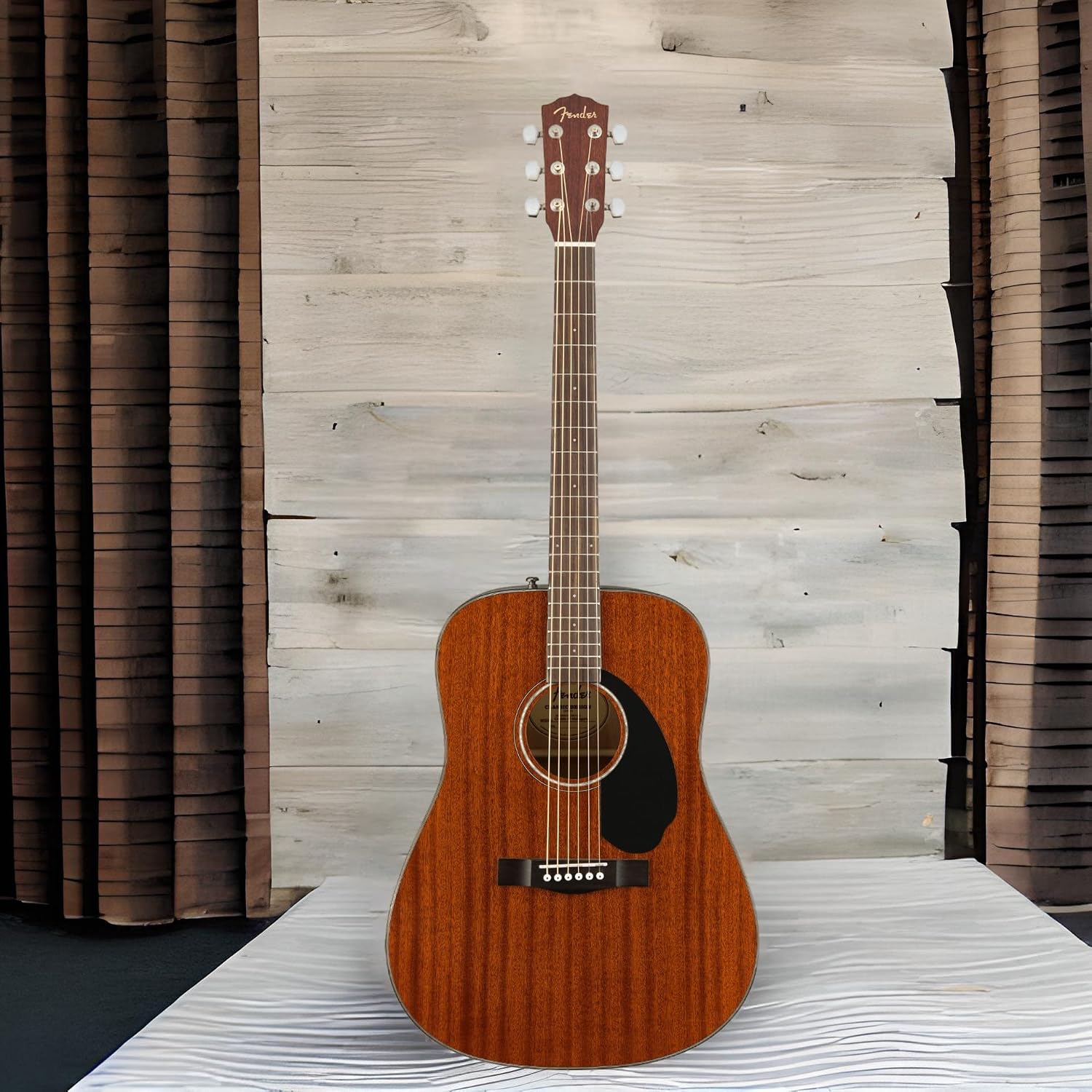
Check price on AmazonAll-Mahogany Construction and the CD-60S’s Warmth
The Fender CD-60S takes a different path entirely. It’s all-mahogany — top, back, and sides — which produces a fundamentally different sonic personality. Mahogany rolls off some of the high-frequency sparkle and compresses the dynamic range slightly, but what it gives you in return is a warm, focused midrange that sits beautifully in a mix and doesn’t overwhelm a room. MusicRadar’s 2024 review of the CD-60S notes that the all-mahogany construction creates a tone that’s intimate and voice-forward — ideal for singer-songwriters and fingerpickers who want the guitar to support their vocals rather than compete with them.
One observation consistent across multiple reviews worth taking seriously: the CD-60S is noticeably quieter than you might expect from a full dreadnought. That’s not a defect — it’s mahogany physics. If you’re playing around a campfire with loud friends or busking on a corner, that characteristic matters. In a home studio or an intimate setting, it becomes an asset.
Epiphone
$199.00
In stock on Amazon
Check price on AmazonWhere These Tones Actually Live in Genre and Context
Per Fretboard Journal’s feature article “Understanding Dreadnought Acoustics,” mahogany instruments tend to record with less management required in the midrange frequencies — session players often describe them as mix-friendly for exactly that reason. Genres that benefit most from mahogany’s warmth include folk, Americana, blues, and singer-songwriter styles. Spruce’s brightness and projection tend to serve bluegrass, flatpicking country, strumming-heavy pop, and any context where you need to cut through other instruments.
Guitar World’s 2025 buyer’s guide for acoustic guitars under $500 makes a related point: at this price tier, the tonewood decision is the most consequential choice you’ll make, and it should map directly to how and where you intend to play — not to which specification reads better in a comparison chart.
Fender
$229.99
In stock on Amazon
Check price on AmazonSide-by-Side Specifications
| Feature | Yamaha FG830 | Fender CD-60S |
|---|---|---|
| Top | Solid Sitka spruce | Solid mahogany |
| Back & Sides | Nato / rosewood-patterned laminate | Laminate mahogany |
| Nut width | 43mm (1-11/16”) | 43mm (1-11/16”) |
| Street price (2026) | ~$299–$329 | ~$229–$279 |
| Included case | Basic gig bag | Hard case (Austin Bazaar bundle) |
| Best for | Projection, dynamic range, group playing | Warmth, home recording, singer-songwriter |
The price gap is real, but the bundle math on the CD-60S deserves its own section.
Practical Considerations: Case, Setup, and Real-World Cost
The Austin Bazaar Hard Case Bundle
The Fender CD-60S has developed a parallel reputation through the Austin Bazaar bundle package, which pairs the guitar with a hard case. Multiple buyers have flagged the hard case quality specifically — not as a throwaway comment but as a genuine differentiator in their purchase decision. Hard cases at this price point often feel like an afterthought: thin walls, flimsy latches, foam that compresses immediately. Owner consensus on the Austin Bazaar bundle case is that it holds up like something that cost more than it did, with latch quality and interior foam cited as specific strengths.
For a player who travels to lessons, takes the guitar to friends’ houses, or lives somewhere with temperature and humidity swings, a legitimate hard case isn’t a luxury. It’s protection for an instrument that warrants protecting. The Yamaha FG830 typically ships with a basic gig bag, which provides minimal protection against drops and none against environmental damage. If you buy the FG830, budget roughly $40–$80 for a standalone hard case. Factor that into your comparison, and the price gap between these two guitars compresses meaningfully.
Epiphone
$199.00
In stock on Amazon
Check price on AmazonSetup Quality: What Arrives vs. What You’ll Adjust
Factory setup quality — how the guitar is adjusted for string height, intonation, and action before it leaves the factory — varies considerably at this price point. Action (the distance between the strings and the fretboard) that’s too high makes a guitar physically tiring and difficult to play in tune. Action that’s too low causes fret buzz.
The CD-60S earns consistent praise for its out-of-box playability. Multiple owners report receiving the guitar essentially in tune with comfortable action from day one. That’s genuinely rare at this price, and it reduces the barrier to picking the guitar up and playing on the day it arrives.
The FG830’s setup reputation is solid but slightly more variable — most owners report it’s very good, though some note the action could come down a bit for lower string gauges. A professional setup (a technician adjusting nut slots, saddle height, and neck relief) costs roughly $40–$75 at most guitar shops and transforms either of these instruments. Guitar World’s 2025 buyer’s guide for acoustics under $500 notes that instruments in this tier almost always benefit from professional setup, even when factory setup is above average — the difference between a properly set-up $300 guitar and an unset-up $300 guitar is more noticeable than most buyers expect.
One experienced owner documented replacing both the FG830’s nut (the small slotted piece at the top of the neck that guides the strings) and saddle (the piece at the bridge that the strings rest on) with bone — a traditional upgrade material that improves tone and sustain — alongside a string swap. That’s an upgrade path costing under $50 in parts that elevates either guitar noticeably and represents a sensible next step for players who want to push the instrument further without buying something new.
Fender
$229.99
In stock on Amazon
Check price on AmazonFrequently Asked Questions
Is the FG830 a meaningful step up from the FG800, or just cosmetic differences? The FG800 uses a nato top rather than solid Sitka spruce. That’s not cosmetic — it’s the most important structural and tonal component of the guitar. Solid spruce produces more complex overtones and responds differently as it ages, typically opening up and improving over years of playing. The FG830’s upgrade to a solid spruce top is a real acoustic improvement, not a marketing distinction. If you’re choosing between them and budget allows, the FG830 is the meaningful step.
Why does an all-mahogany guitar sound different from a spruce-top, and which genres does it suit best? Mahogany absorbs more high-frequency energy than spruce, producing a warmer, darker, more compressed tone that emphasizes the midrange — the frequency range where vocals and rhythm guitar live. As Acoustic Guitar magazine’s tonewood archive explains, this makes mahogany instruments particularly well-suited to folk, Americana, blues, singer-songwriter styles, and fingerpicking. Spruce’s brightness and projection serve bluegrass, flatpicking country, strumming-heavy pop, and any context where you need to cut through other instruments.
Is the hard case in the Austin Bazaar CD-60S bundle actually good quality? Based on owner accounts across multiple reviews, yes — meaningfully better than the soft cases included with most guitars at this price. Owners consistently distinguish it from typical budget hard cases, citing latch quality and interior foam as specific strengths. It’s not a boutique flight case, but it’s real protection for an instrument that deserves it.
Do either of these guitars need a professional setup before they’re comfortable to play? The CD-60S frequently arrives very playable out of the box, which is a genuine advantage. The FG830 is also typically good, with some variability. Either guitar benefits from a professional setup, but neither requires one to be functional from day one. If your budget allows $50–$75 for a setup at a local shop, do it — the improvement is substantial and lasting. Per Guitar World’s buyer’s guide, this is the single highest-return investment you can make on an instrument at this price point.
Can the CD-60S all-mahogany hold its own at a jam session or campfire? It can participate, but manage expectations for projection. All-mahogany guitars are inherently less loud than spruce-top instruments. In a quiet living room or a close circle, it’s perfectly capable. In a noisy outdoor setting with multiple instruments or enthusiastic singers, it will feel like it’s working harder to be heard. If campfire and jam contexts are your primary use case, the FG830’s projection advantage is real and relevant.
The Decision Rule
Buy the FG830 if: you play in genres that reward brightness and dynamic range — bluegrass, country, pop — you perform or jam in group settings where projection matters, or you want a guitar with a documented ceiling. Players with expensive reference guitars have put this one to serious comparison and come away impressed.
Buy the CD-60S if: you primarily write and record at home, play folk or fingerstyle, want a guitar that’s immediately comfortable out of the box, or the Austin Bazaar hard case bundle makes practical sense for your situation. It typically does, unless you already own a case.
If you’re genuinely torn: the FG830 at its current street price, paired with a $50 professional setup, is the more versatile long-term instrument. The CD-60S is the better match for a specific sonic identity — warm, intimate, mix-friendly. Know which one you’re buying for, because both are good enough that the wrong choice for your context will feel like the wrong guitar, even though it’s a perfectly capable instrument.