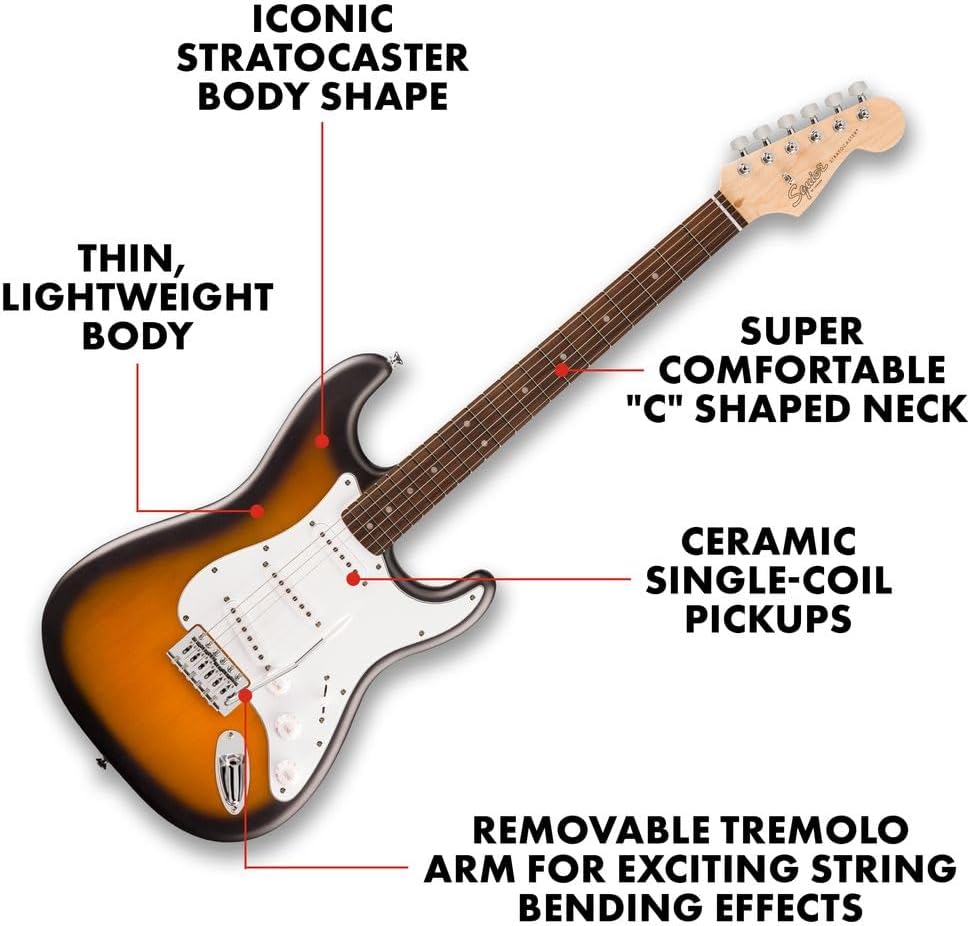
If you’ve ever typed “cheap Stratocaster” into a search bar and gotten back three different Squier model lines — all confusingly similar in name, all made by Fender, all priced under $400 — you know the feeling. A Stratocaster (or “Strat,” for short) is the classic electric guitar body shape Fender introduced in 1954, recognizable by its double-cutaway curves and three single-coil pickups. Squier is Fender’s budget-friendly sub-brand, built to get that iconic shape into players’ hands without the four-figure price tag. The problem is that Squier now fields three distinct entry tiers — the Debut, the Affinity, and the Sonic — and they aren’t interchangeable. Each one targets a different player at a different stage. Pick the wrong one and you’ve either overpaid or shortchanged yourself on a guitar you’ll likely play for the next several years. This guide breaks down what actually separates them, what the tradeoffs cost you in real terms, and which one deserves your money right now.
| EDITOR'S PICKSquier Affinity Series Stratoca… | Mid-tierFender Squier Debut Series Stra… | Budget pickFender Squier Debut Series Stra… | |
|---|---|---|---|
| Finish | Black | Black Matte | Dakota Red Matte |
| Fingerboard | Maple | — | — |
| Free Lessons | ✗ | ✓ | ✓ |
| Series | Affinity | Debut | Debut |
| Price | $319.99 | $149.99 | $149.99 |
| See on Amazon → | See on Amazon → | See on Amazon → |
What You’re Actually Comparing (And Why It Matters)
Let’s establish the terrain. As of mid-2026, Fender’s Squier Stratocaster lineup sits in three price brackets:
- Squier Debut Stratocaster: ~$149–$179 (often sold as a bundle with amp)
- Squier Affinity Stratocaster: ~$229–$279 (the long-standing workhorse of the line)
- Squier Sonic Stratocaster: ~$299–$349 (introduced in 2023, the newest architecture in the range)
That’s a $150 spread from floor to ceiling — not huge in absolute dollars, but significant when you’re looking at entry-level instruments where material choices compound fast. A cheaper tuning machine, a lower-grade body wood, a less stable nut: none of those things individually ruin a guitar, but they accumulate into a playing experience that either encourages or discourages the habit of picking the instrument up every day.
The distinction matters most in three areas: playability (how the guitar feels in your hands, especially as a developing player), components (tuners, pickups, and hardware that determine tuning stability and tone quality), and upgrade ceiling (whether the guitar is worth improving over time or should simply be replaced when you outgrow it). Each tier makes a different bet on each of those three.
Side-by-Side: How Each Tier Stacks Up
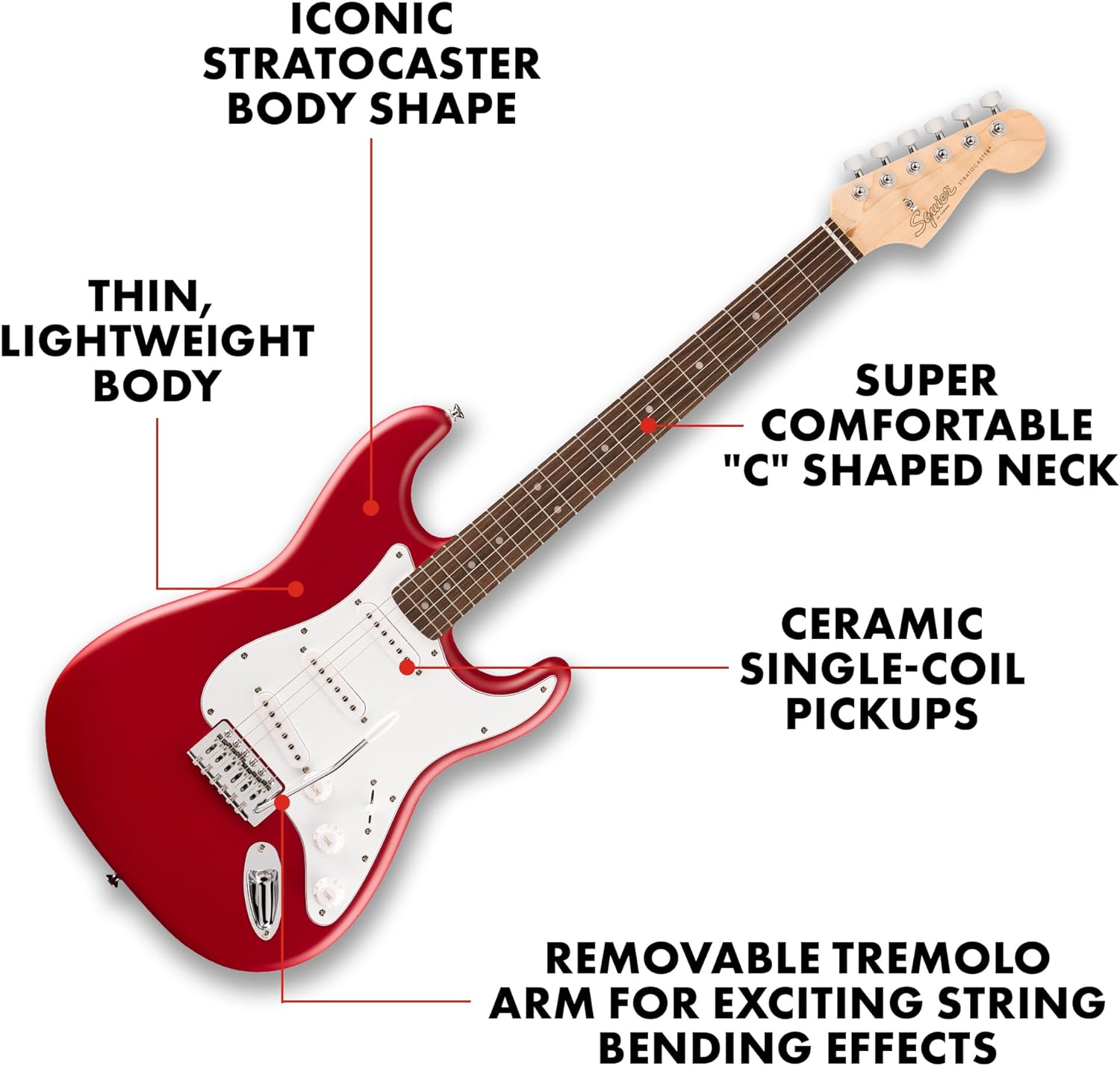
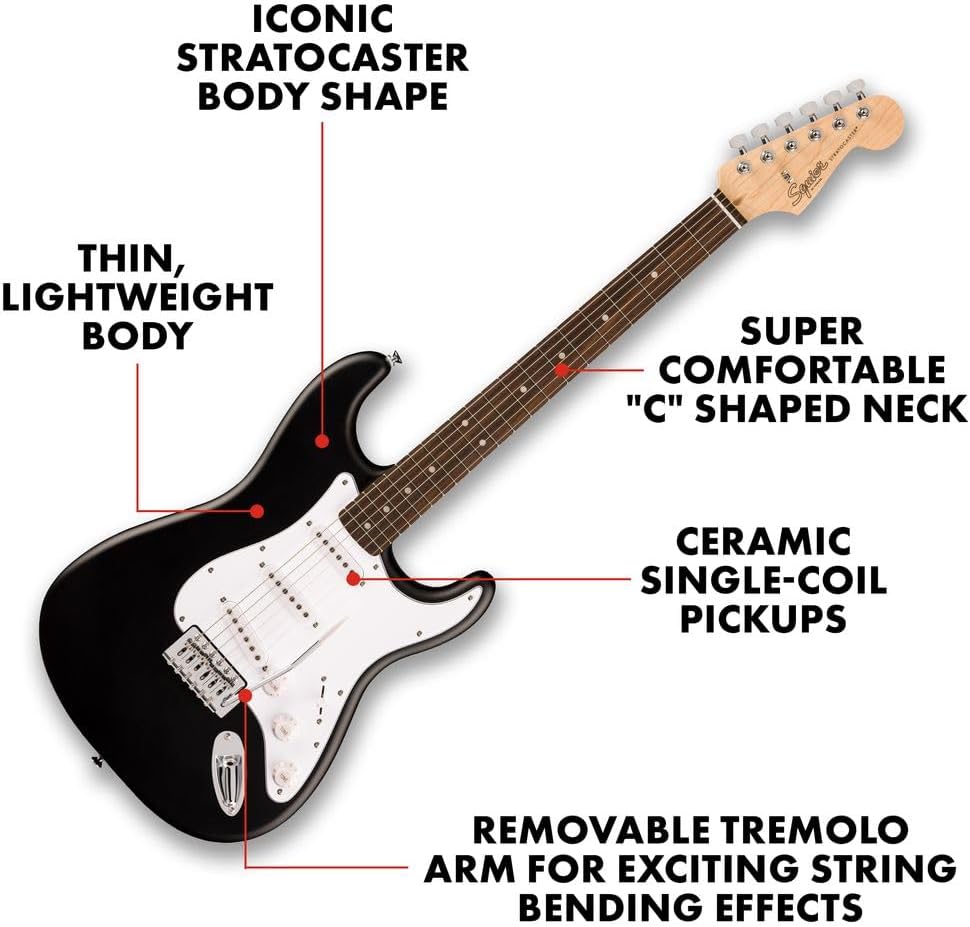
The Squier Debut Stratocaster
The Debut is Fender’s true bottom rung — and there’s nothing wrong with that, as long as you know what you’re signing up for. Sweetwater Sound’s product documentation for the Debut Stratocaster describes a basswood body and a simplified electronics configuration designed to hit an aggressive price point rather than maximize long-term longevity. The neck radius — the curvature across the fingerboard — is 9.5 inches, which is comfortable and consistent with the rest of the Squier line. The tuners are functional but not especially stable under heavy playing or temperature changes, which is a meaningful limitation once you move past the earliest stages of learning.
The Debut is almost always sold as a complete starter bundle: guitar, small practice amp, cable, picks, and a strap. That bundling is actually a smart buy for one specific person: someone who owns zero gear and needs to get playing for under $250 all-in. If you’re buying a first guitar for a child, a curious partner, or yourself before you know whether you’ll stick with the instrument, the bundle math works in your favor.
Guitar World’s “Best Beginner Electric Guitars” coverage consistently identifies this tier as appropriate for what they call “zero-to-one” buyers — people crossing the threshold from no gear to their first complete setup, not players who already have any foundation under them.
Buy the Debut if: You need a complete first setup for under $250, you genuinely aren’t sure you’ll stick with guitar, or you’re buying for a younger player whose hands haven’t finished growing.
Don’t buy the Debut if: You’re already past that stage. If you’ve been playing for even six months, you’ll feel the ceiling quickly. The hardware won’t hold tune reliably during extended practice sessions, and there’s no realistic upgrade path that makes financial sense — at some point you’re spending more on replacement parts than the guitar is worth.
Fender
$149.99
In stock on Amazon
Check price on AmazonThe Squier Affinity Stratocaster
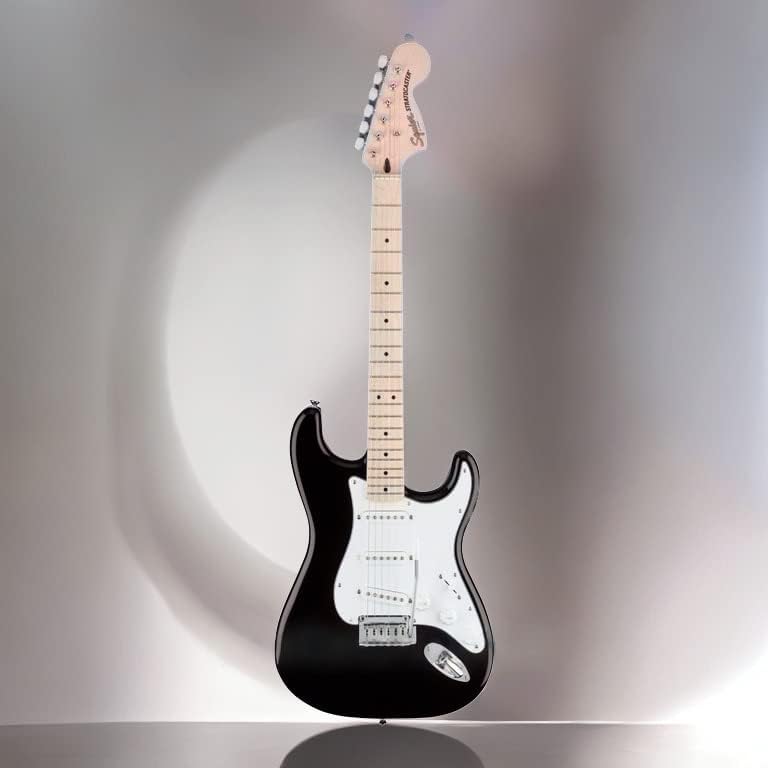
The Affinity Stratocaster has been the backbone of the Squier line for over two decades, and it holds that position for good reason. The jump from Debut to Affinity isn’t cosmetic — it reflects real differences in materials and construction that most players notice within the first hour of playing.
The Affinity’s body is poplar or alder depending on colorway and production run, both of which are genuine tonewoods used across Fender’s entire lineup including American-made instruments. The neck is a maple “C” profile with a 9.5-inch radius fingerboard. The pickups are Squier-branded single-coils that won’t astonish anyone, but they’re balanced and clear enough to accurately reflect what your playing actually sounds like — which matters enormously when you’re developing technique and need honest sonic feedback.
Critically, the Affinity ships with enough hardware integrity that targeted upgrades make financial sense. MusicRadar’s “Best Budget Electric Guitars” guide identifies the Affinity Stratocaster as a legitimate upgrade platform — a guitar where swapping in a better set of tuners or a new pickguard-mounted electronics assembly costs less than purchasing a new instrument outright but yields a meaningful improvement in performance. For a player six months to two years in who wants to learn how gear works and how to maintain an instrument, that’s genuinely valuable experience.
Premier Guitar’s entry-level gear coverage describes the Affinity as representing the clearest value proposition in the Squier catalog — the point where manufacturing quality and honest affordability genuinely converge. The Affinity also tends to arrive from the factory better set up than the Debut, meaning the string action (the gap between strings and fretboard) is closer to playable right out of the box. That said, a proper professional setup at your local guitar shop is worth the $40–$60 cost regardless of which Squier you choose.
Buy the Affinity if: You’ve been playing for a few months to a year and want a guitar that will grow with you through two to three years of serious development. You want something that rewards practice without punishing your budget, and you’re interested in learning how to upgrade and maintain an instrument along the way.
Don’t buy the Affinity if: You’re already playing live or in a band context where tuning stability under real-world conditions is non-negotiable. You’ve also likely outgrown this tier if you’re seriously weighing it against a Fender Player Series Stratocaster.
Fender
$149.99
In stock on Amazon
Check price on AmazonThe Squier Sonic Stratocaster
The Sonic Stratocaster is Fender’s most recent rethink of the entry tier, introduced in 2023 and now a settled part of the lineup. Where the Affinity’s reputation is earned through decades of time-tested reliability, the Sonic’s case is built on targeted improvements in the specific areas where entry-level guitars have historically disappointed players most.
The most significant changes are in electronics and hardware. Select Sonic configurations feature a “Deep C” neck profile — slightly more substantial in the hand than the Affinity’s standard “C” — which players with larger hands consistently prefer for extended playing sessions. More meaningfully, Fender redesigned the pickup configuration on certain Sonic variants to include a hum-canceling pickup in the bridge position. Hum-canceling pickups (also called noiseless or stacked pickups) reduce the electrical interference responsible for the characteristic 60-cycle buzz — the low, persistent hum audible near fluorescent lighting or other electrical equipment. Standard single-coil Strat pickups are notoriously susceptible to this interference. The Affinity makes no attempt to address it at the hardware level.
The Sonic also ships with sealed die-cast tuners, which are mechanically more stable than the open-back tuners on the Debut and a meaningful step forward over what ships on most Affinity production runs. MusicRadar’s reader-informed coverage of budget electric guitars surfaces tuning stability as a recurring frustration for Affinity players under live conditions, and players making the move to the Sonic frequently report the improvement as immediately noticeable.
Sweetwater Sound’s product documentation for the Sonic Stratocaster specifically highlights the sealed tuning machines and updated electronics as the primary differentiators from the Affinity, framing the Sonic as designed for players who require real-world performance rather than a practice-room-only instrument.
The trade-off is price and tone character. At $299–$349, the Sonic bumps up against the lower end of the Fender Player Series in terms of budgeting psychology. And the hum-canceling pickup, while practical, does alter the classic Strat character — that bright, glassy, slightly chimey tone that defines the instrument. The Sonic’s solution is more versatile, but purists may find they actually prefer the Affinity’s straightforward single-coil output even with the noise trade-off factored in.
Buy the Sonic if: You’re in a band setting, playing live, or recording where 60-cycle hum is a genuine problem. You want the best out-of-box hardware in the Squier tier without crossing into Fender Player Series territory. Your hands are adult-sized and you’ve consistently found the standard “C” neck profile slightly thin for your grip.
Don’t buy the Sonic if: You specifically want the traditional Strat single-coil tone character. The Sonic’s noiseless-adjacent circuit is an engineering solution that changes the sonic equation in ways traditionalists will notice and dislike. If that pure Strat voice matters to you, go with the Affinity — or start saving for the Player Series instead.
Squier
$319.99
In stock on Amazon
Check price on AmazonThe Decision Frame: Matching the Tier to Where You Actually Are
Here’s the practical call, stripped of hedging.
If you’re buying a first guitar for yourself or someone else who has never played: Buy the Debut bundle. The all-in price under $250 is its entire argument, and it’s a valid one at this stage. Don’t overthink it — the instrument just needs to not actively resist the learning process, and the Debut clears that bar.
If you’ve been playing for six months or more and want a guitar that’ll carry you through serious beginner-to-intermediate development: Buy the Affinity Stratocaster. It has earned its reputation over two decades, it’s the right platform for learning to upgrade and maintain an instrument, and it’s honest about what it is. Pair it with a professional setup at your local shop — that $40–$60 investment makes a noticeable difference in how any guitar plays and is worth doing regardless of which tier you choose.
If you’re already playing in a band context, recording at home, or know you’ll be using this guitar live: Buy the Sonic Stratocaster. The hardware and electronics improvements are the right bet for real-world conditions. It’s also worth saying plainly: if you can stretch to $799, the Fender Player Series Stratocaster is a categorically different instrument. If the Sonic sits at the ceiling of your budget, it’s the right call within this tier. If you have room to go further, the Player Series jump is real and the gap is not marketing.
If you’re a more experienced player buying a backup or a dedicated beater for gigs: The Affinity is the historically reliable pick. The Sonic’s tuner and pickup improvements make a genuine case depending on context — studio versus live, purist Strat tone versus versatility — so let your specific use case drive the final decision rather than brand loyalty to either model.
Where to Buy
All three Squier tiers are widely stocked at major retailers. Sweetwater Sound carries the full lineup with detailed specifications and a standard two-year warranty on new gear; their product pages include side-by-side spec comparisons that make the Debut-to-Sonic differences easier to evaluate without handling the instruments. Guitar Center stocks all three and allows in-store comparison, which matters at this price point — string action and neck feel vary enough unit-to-unit that playing before buying is worth it whenever a location is accessible. For the Affinity specifically, Reverb is worth checking for lightly used examples in excellent condition, where a one-to-two-year-old instrument sometimes comes in $50–$80 below new pricing and has occasionally already been set up by a previous owner.
The Squier line exists to put a real, functional Stratocaster in your hands for real money. None of these instruments are compromises you’ll regret — as long as you match the tier to where you genuinely are right now, not where you hope to be.