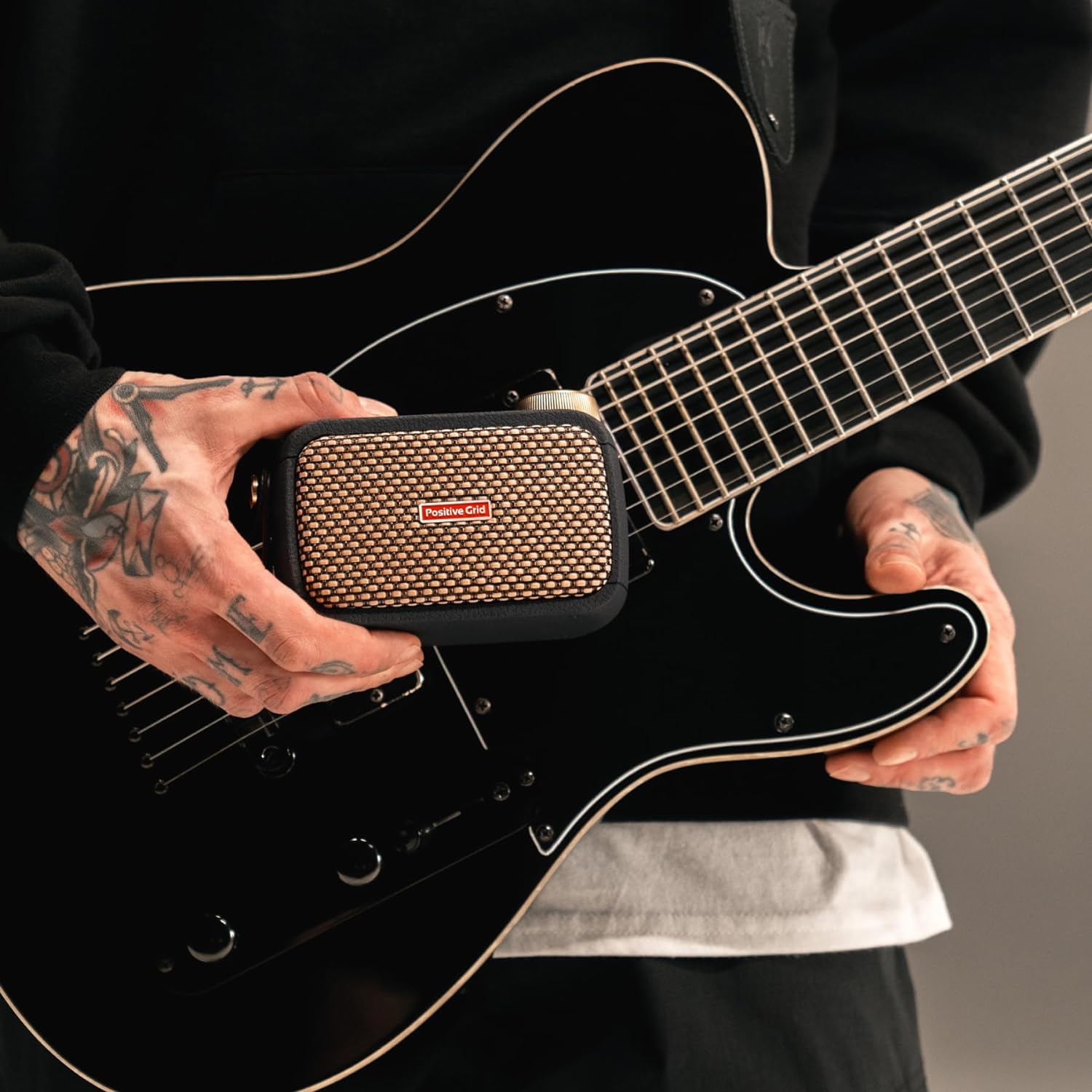
If you’ve been playing guitar for a while but you’re still using the same amp you grabbed at a big-box store when you started, you’ve probably noticed the friction: maybe it’s too loud for your apartment, too heavy to drag to a friend’s place, or it sounds great cranked up but thin and lifeless at low volume. This article is about three amps that all try to solve that problem — the Positive Grid Spark GO, the Fender Mustang Micro Plus, and the Orange Crush 12. Each one is portable, each costs under $250, and each takes a fundamentally different approach to what “practice amp” even means in 2026. By the time you’re done reading, you’ll know exactly which one fits your life, your guitar, and your workflow — and which two you can confidently skip.
A quick note on what “modeling” means, since it matters here: a modeling amp (or “amp modeler”) uses digital processing to simulate — or model — the sound of classic amplifiers, effects pedals, and speaker cabinets. The Spark GO and Mustang Micro Plus are both modeling devices. The Orange Crush 12 is a traditional solid-state amp: it doesn’t pretend to be anything other than what it is.
What Each Amp Is Actually Designed to Do
Before you compare specs, it helps to understand the use-case DNA baked into each of these amps.
Positive Grid Spark GO
The Spark GO is, at its core, a portable Bluetooth speaker that also accepts a guitar input — and it’s quite good at both. Positive Grid designed it around the same app ecosystem as the full-size Spark amps, which means you get access to a large library of amp models, effects, and — this is the standout feature — AI-generated backing tracks that respond to your chord progressions in real time. That last part sounds gimmicky until you actually use it as a solo practice tool. Sweetwater’s editorial overview of the Spark GO describes its AI backing track capability as one of its primary differentiating features for home practice, and owners on Sweetwater’s product page consistently describe it as genuinely useful for ear training and staying musically engaged during practice sessions.
That said, one experienced owner on the Sweetwater product page offers an honest counterweight: “Do not expect hi-fi.” The speaker is small, and at high volume it clips and loses bass response. That’s not a flaw unique to the Spark GO — it’s just physics. A cabinet this small will always be sound-staging in a compressed frequency window. Calibrate expectations accordingly. MusicRadar’s roundup “Best practice amps 2025: our top picks for home playing” echoes this characterization, positioning the Spark GO as a lifestyle and convenience product as much as a tonal tool.
Orange
$119.00
In stock on Amazon
Check price on AmazonFender Mustang Micro Plus
The Mustang Micro Plus takes a different approach entirely. It’s a headphone amp — a tiny device that plugs directly into your guitar’s output jack and sends signal to a pair of headphones, with no speaker required — with app-based modeling and Bluetooth audio streaming baked in. It does include a small built-in speaker for monitoring convenience, but Guitar World’s coverage of compact practice amps in their “Best small guitar amps” roundup notes that the built-in speaker is better understood as a utility feature than a performance one. The Micro Plus’s real sweet spot is silent practice in shared spaces.
One intermediate-level owner specifically purchased it to play in a small house where sound travels into every room, pairing it with a Squier Affinity Strat — exactly the scenario Fender built it for. The catch: the Mustang Micro Plus app currently runs only on Apple iOS devices. It does not work on Android. That’s not a minor inconvenience — Android users lose access to the full preset library and firmware update pathway. This limitation is documented in Guitar World’s “Best small guitar amps” roundup and flagged by multiple owners across major retail review sections, and it needs to factor into your decision before purchase.
Orange
$119.00
In stock on Amazon
Check price on AmazonOrange Crush 12
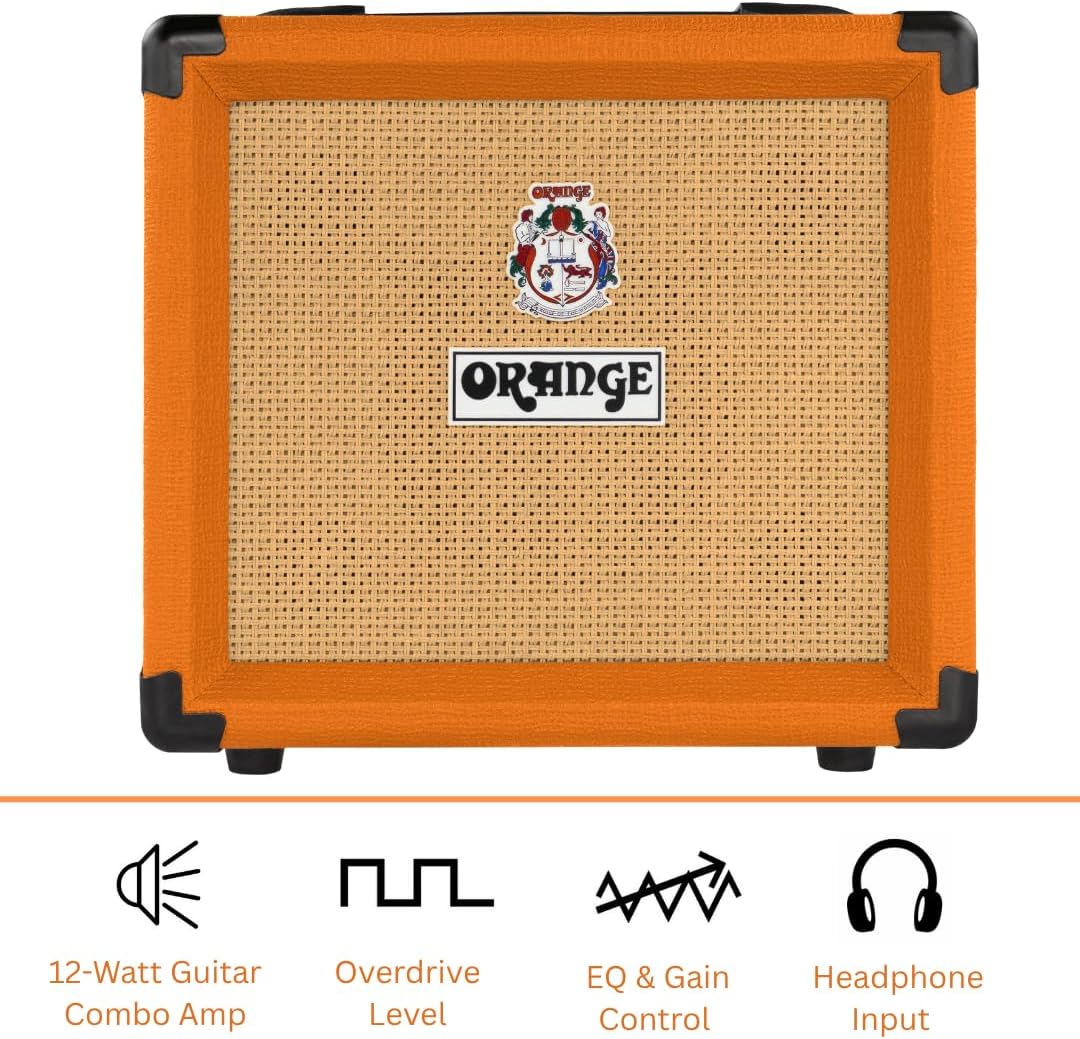
The Orange Crush 12 is the analog outlier in this group. No app. No Bluetooth. No battery option. It plugs into the wall, you plug your guitar in, and it makes sound through a real 6-inch speaker in a real cabinet. That sounds like a step backward in 2026, but it’s actually a competitive advantage for a specific buyer — and we’ll get into that shortly. MusicRadar’s “Best practice amps 2025” roundup consistently positions the Crush 12 as a benchmark for real amp feel in the sub-$150 price tier, and Premier Guitar’s ongoing coverage of the Orange Crush series has praised the line’s tone-to-dollar ratio across multiple review cycles.
Jasmine
$119.00
In stock on Amazon
Check price on AmazonThe Numbers That Actually Matter
Here’s a quick snapshot of the key specs that drive real purchase decisions:
| Feature | Spark GO | Mustang Micro Plus | Orange Crush 12 |
|---|---|---|---|
| Speaker | 2 × 2-inch | Small built-in + headphone out | 6-inch |
| Power | ~5W (battery) | Headphone-primary | 12W |
| Battery | Yes (USB-C charge) | Yes (USB-C charge) | No — AC only |
| App required? | Recommended | iOS only | None |
| Bluetooth audio | Yes (input + output) | Yes | No |
| Amp models | 33+ | 36+ | 0 (solid-state) |
Where Each Amp Wins — and Where It Doesn’t
Spark GO: Lifestyle Integration and Ecosystem Depth
If you want one object that travels to the backyard, the hotel room, or a friend’s living room, functions as a Bluetooth speaker when you’re not playing, and gives you a surprisingly complete modeling rig in your backpack, the Spark GO does more things than any competitor in this price tier. The AI backing track feature is genuinely underrated as a motivational tool for intermediate players working on improvisation — Sweetwater’s editorial overview calls it one of the primary reasons to choose the Spark GO over simpler modeling options. Just go in clear-eyed: owners consistently report it sounds better at moderate volume than cranked. It’s a companion amp and a practice tool, not a hi-fi speaker or a stage monitor.
The Spark GO also wins on cross-platform compatibility. Because it doesn’t depend on a companion app the way the Mustang Micro Plus does — the app enhances the experience but isn’t required for basic function — it’s accessible to players on Android, iOS, or no smartphone at all.
Orange
$119.00
In stock on Amazon
Check price on AmazonMustang Micro Plus: Silent Practice Done Right (For iPhone Owners)
This is the amp for players in apartments, condos, or houses with light sleepers, thin walls, or noise-sensitive situations. The headphone experience is genuinely strong — Fender’s Tone app (iOS) gives you access to the full range of Mustang modeling presets, and Bluetooth streaming lets you play along to music from your phone through the same headphones. Guitar World’s “Best small guitar amps” review notes the direct recording capability via USB as a usable feature for home demos and light studio work.
The Android limitation deserves a second mention here because it’s that significant. Android users who purchase the Mustang Micro Plus cannot access the full preset library, cannot push firmware updates, and are effectively using a lesser version of the product they paid for. If you own an Android device and are considering this amp, the decision should stop here.
Orange
$119.00
In stock on Amazon
Check price on AmazonOrange Crush 12: Real Amp Feel, Zero Overhead
This is where the shootout gets genuinely interesting. An experienced Strat player with active pickups — the kind of setup that can sound brittle or harsh through underpowered digital rigs — reports the Crush 12 “punches well beyond its weight class” running direct with no pedal board. The reason is straightforward: 12 watts through a real 6-inch speaker produces actual air movement and speaker interaction that no battery-powered two-inch driver can replicate.
Perhaps more telling: a gigging musician who uses the Crush 12 as a green room amp (the backstage warm-up space before a show) describes it as something that “cuts through everything including the drums” at rehearsal volume. Premier Guitar’s coverage of the Orange Crush series has consistently praised exactly this quality — the Crush line’s ability to deliver usable, natural-feeling tone without digital processing overhead. The Crush 12 is also the only amp here with zero app dependency, zero battery concern, and zero Bluetooth pairing friction. You plug in, you play. For players who find that simplicity philosophically satisfying — and many experienced players do — this is genuinely the right call.
Jasmine
$119.00
In stock on Amazon
Check price on AmazonThe Decision Framework: If X, Then Y
Here’s where we stop hedging and give you a clean decision tree.
If you practice alone, travel frequently, and want one device that does double duty as a Bluetooth speaker — buy the Spark GO. It’s the most versatile physical object in this comparison. Just don’t expect it to replace a full practice amp in terms of speaker feel or maximum volume. Think of it as a Swiss Army knife: you’re paying for portability and the ecosystem, not raw tone.
If you live in a shared space, you own an iPhone, and your priority is playing without disturbing anyone — buy the Mustang Micro Plus. The headphone experience is its core strength, and iOS users get the full modeling library to explore. If you’re on Android, stop here — this amp is not built for you yet.
If you want the most guitar-amp-like experience, you care about speaker feel, or you need something reliable for green room or rehearsal use without the overhead of apps and batteries — buy the Orange Crush 12. It’s the least tech-forward option here, and that’s the point. Players coming from a background of playing through real amps will find the Crush 12 more satisfying to play through than either modeling option, simply because it behaves predictably and responds naturally to pick attack and volume control.
Frequently Asked Questions
Does the Positive Grid Spark GO work as a regular Bluetooth speaker when you’re not playing guitar? Yes — this is one of its legitimate selling points. Sweetwater’s product overview confirms it functions as a standalone Bluetooth speaker for music playback, and Positive Grid markets this capability explicitly. Sound quality at moderate volume is described by owners as acceptable for casual listening; it’s not competing with dedicated Bluetooth speakers at the same price point, but it’s functional.
Does the Fender Mustang Micro Plus app work on Android phones? No. As documented in Guitar World’s “Best small guitar amps” roundup and confirmed by owner accounts through mid-2026, the Fender Tone app required for full Mustang Micro Plus functionality is iOS only. Android users cannot access the full preset library or firmware updates. This is a significant limitation — factor it in before purchasing.
How loud is the Orange Crush 12 — can it hold its own in a small band rehearsal? Based on owner accounts, yes — at least in controlled contexts. The gigging musician’s green room report (“cuts through everything including the drums”) is one consistent data point. At 12 watts through a 6-inch speaker, it won’t compete with a drummer in a full band at live volume, but for small rehearsal rooms, practice alongside one other acoustic instrument, or green room warm-ups, owners describe it as more than capable. Premier Guitar’s coverage of the Crush series reinforces this characterization of the line’s usable volume ceiling.
Can the Spark GO replace a full practice amp setup for a developing player? For most developing players in home practice situations, it can handle the role — with the caveat that the speaker size limits both bass response and volume ceiling. It works well at bedroom volumes, covers a wide modeling palette, and the AI backing track feature adds genuine practice value as noted in Sweetwater’s editorial overview. Players who eventually want to understand how a real amp responds to their playing will eventually outgrow it, but as a first serious practice tool it holds up.
Is the Mustang Micro Plus good enough to use for recording directly into a DAW? Owners who’ve used it as a recording interface report workable results for home demos and reference recordings. It’s not a premium audio interface, and tracking purists will find limitations in the conversion quality, but for laying down ideas quickly in a home studio context — particularly on iOS — it functions. Guitar World’s coverage of the Micro Plus in their compact amp roundup notes USB direct recording as a usable, if not professional-grade, feature.
Which of these options works best for acoustic-electric guitars? The Orange Crush 12 is generally the most forgiving platform for acoustic-electrics, particularly instruments with active preamp systems, because it responds more naturally to a wide dynamic range without the digital processing artifacts that modeling amps can introduce. The Spark GO includes an Acoustic mode that MusicRadar’s “Best practice amps 2025” mentions as a reasonable option for the format, but players with quality acoustic-electric setups tend to report the Crush 12 as the more honest-sounding option in this price tier.