If you’ve ever plugged a guitar into a small amplifier at home and thought, this doesn’t sound anything like the recordings I love, you’re not alone — and the amp is probably the reason. A practice amp is a compact, relatively low-wattage amplifier (typically 5 to 50 watts) designed for bedroom or living-room use rather than a stage. The three amps in this comparison — the Positive Grid Spark 2, the Positive Grid Spark GO, and the Fender Mustang LT25 — all belong to a newer generation of modeling amps, meaning they use digital processing to simulate the sounds of dozens of famous amplifiers and effects without requiring a room full of gear. They’re genuinely good options for home players at almost any experience level. But each one makes different tradeoffs, and getting the wrong one for your situation means leaving real value on the table. This article will show you the math, name the tradeoffs, and give you a clear decision rule at the end.
| EDITOR'S PICKPositive Grid Spark 2 50W Smart… | Mid-tierFender Mustang LT25 Guitar Ampl… | Budget pickPositive Grid Spark GO 5W Ultra… | |
|---|---|---|---|
| Power output | 50W | 25W | 5W |
| Speaker size | — | 8" | — |
| Built-in looper | ✓ | — | — |
| Presets | — | 30 | — |
| Bluetooth | ✓ | — | ✓ |
| Headphone out | — | ✓ | ✓ |
| Price | $345.00 | $179.99 | $147.00 |
| See on Amazon → | See on Amazon → | See on Amazon → |
What You’re Actually Choosing Between
Before getting into specifics, here’s a quick orientation on where these three amps sit relative to each other.
By the numbers (as of mid-2026):
| Amp | Wattage | Portability | AI Backing Tracks | App Required? |
|---|---|---|---|---|
| Positive Grid Spark 2 | 50W (stereo 2×25W) | Desktop/home | Yes | Yes (Spark app) |
| Positive Grid Spark GO | 5W | Truly portable/battery | Yes | Yes (Spark app) |
| Fender Mustang LT25 | 25W | Desktop/home | No | Optional (Fender Tone) |
That table is the skeleton. The meat is in how these differences play out in actual use — and the recurring owner-feedback patterns that keep surfacing across published reviews.
The Three Amps, Side by Side
Positive Grid Spark 2: The Flagship With a Footnote
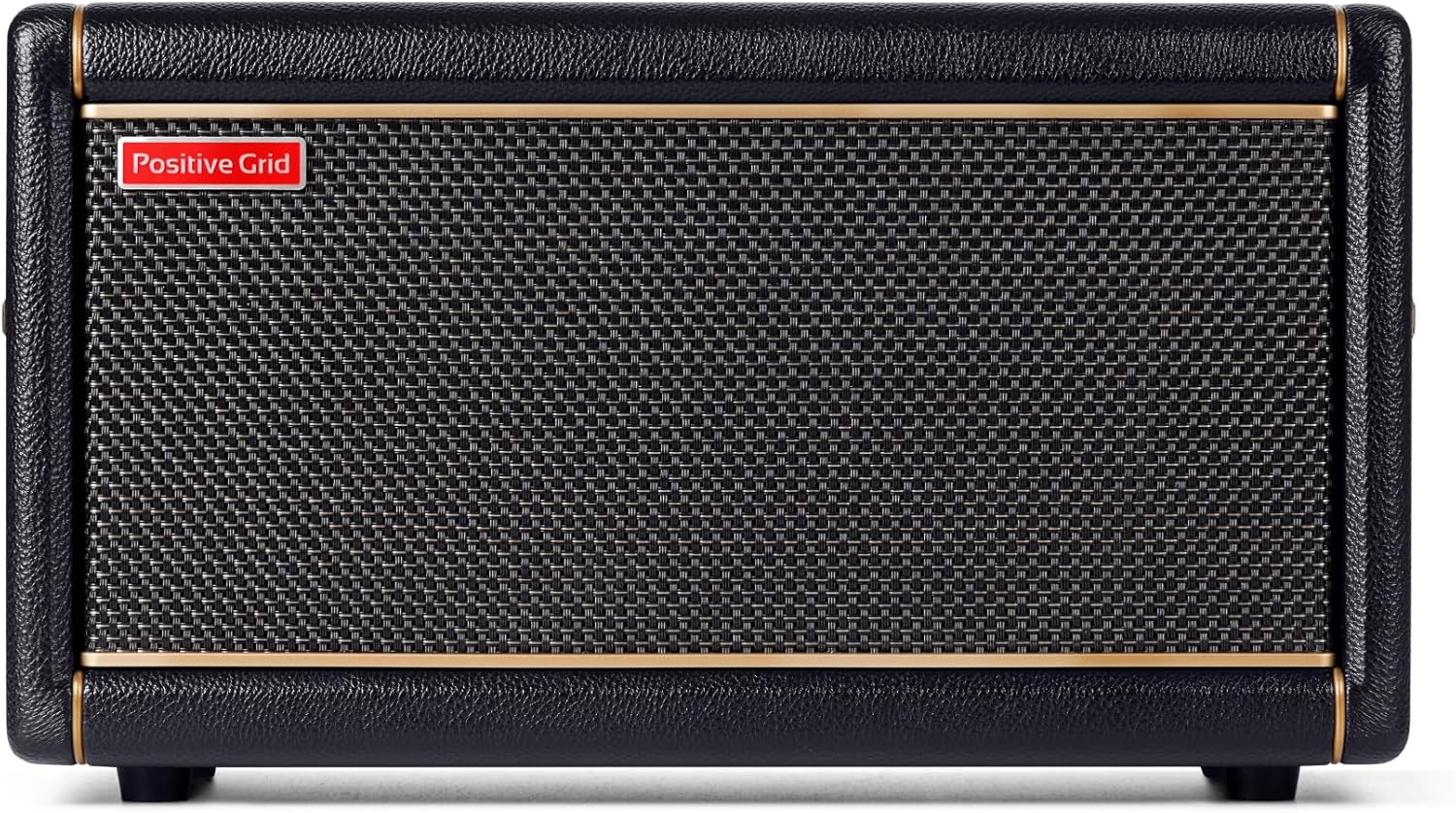
The Spark 2 is the most capable amp in this group. Guitar World, in their published Positive Grid Spark 2 review, describes it as a genuinely versatile home-studio centerpiece, praising the stereo output and onboard looper. The AI-powered backing track feature, accessed through Positive Grid’s Spark app, generates chord-aware jam tracks on the fly — a capability that owners consistently describe as useful for ear training and structured improvement practice.
Here’s the footnote worth spelling out before you buy: hidden costs. Based on information from Guitar World’s Spark 2 review and Sweetwater’s published Spark ecosystem product documentation, here is what “hidden costs” typically means in practice:
- Positive Grid’s Spark+ subscription unlocks expanded cloud tone libraries, additional AI features, and backing track capabilities beyond the free tier. The free app is functional, but the ceiling of the Spark 2’s AI features lives partly behind that subscription.
- USB recording setup costs: If you want to use the Spark 2 as a USB audio interface for recording into your computer, you may find yourself wanting DAW software (Digital Audio Workstation — programs like GarageBand or Reaper) beyond the most basic free options.
- Standard accessories: The Spark 2 ships with a power cable, but players building out a home rig often add a quality instrument cable, a guitar stand, and a footswitch for hands-free looper and preset control.
None of these costs are unreasonable. But if you budget only for the amp and assume you’re getting the full experience out of the box, you may feel the pinch later.
Buy this if: You want the most capable home-practice amp in this group, you’re comfortable navigating an app ecosystem, and you’re willing to potentially subscribe for the full AI feature set. The Spark 2 rewards players who engage with it as a practice platform, not just a box that makes guitar sounds.
Positive
$345.00
In stock on Amazon
Check price on AmazonPositive Grid Spark GO: Small Body, Genuine Surprise
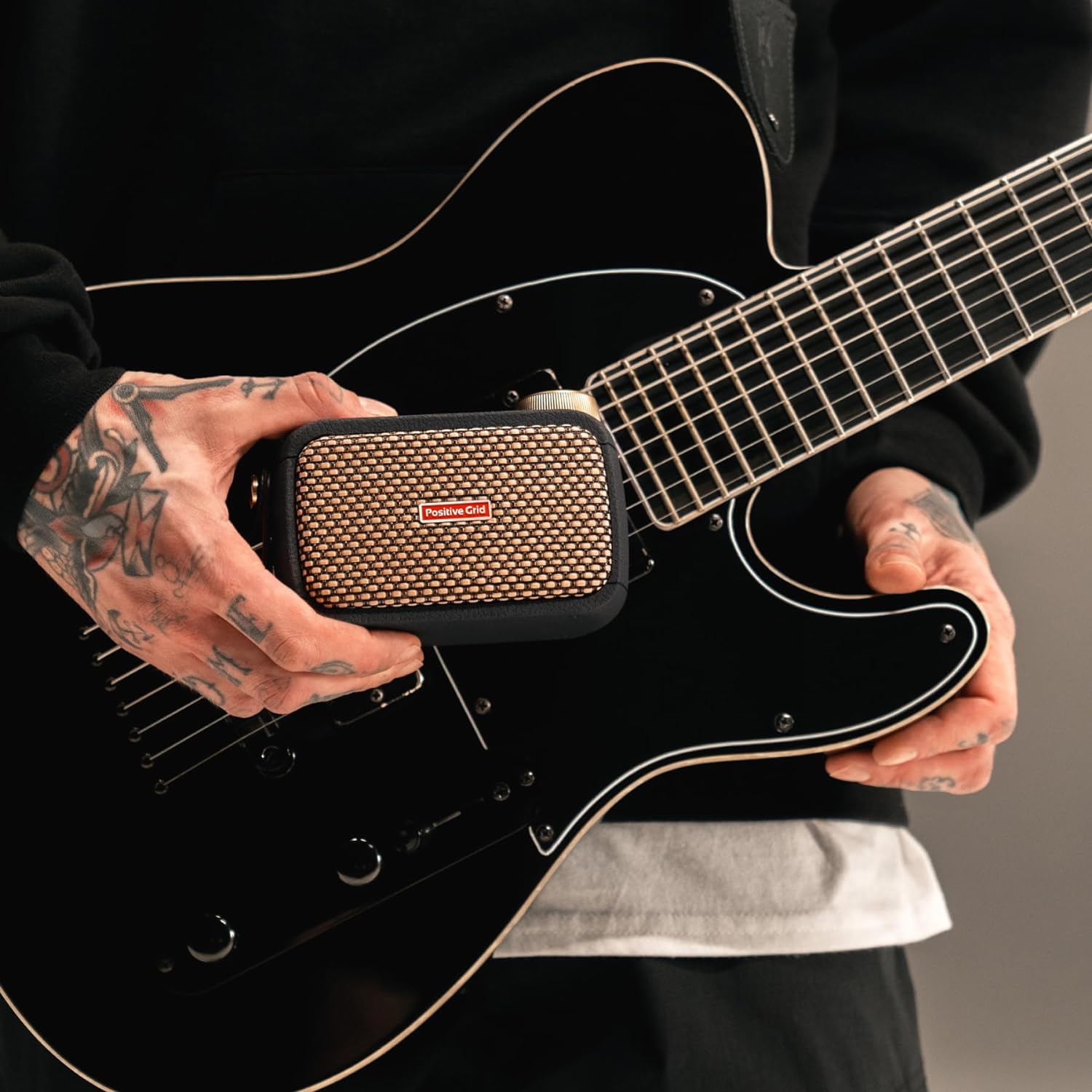
The Spark GO is the outlier in this comparison — a battery-powered, genuinely portable amp roughly the size of a large water bottle. Sweetwater’s published Spark GO product page documents it at 5 watts with Bluetooth streaming capability and the same AI-powered Spark app integration as the Spark 2. It’s the only amp in this group that runs without a wall outlet.
Owners who were skeptical about a 5-watt amp report being caught off guard by the sound quality relative to the size — particularly players upgrading from very cheap mini-amps or entry-level practice speakers. That comparison is fair, but context matters: the Spark GO is not going to keep up with an acoustic guitarist strumming at full volume in the same room. It’s a bedroom, headphones-optional, couch-session amp.
The firmware concern: Some prospective buyers researching the Spark GO encounter older videos describing Bluetooth connectivity issues and app pairing problems. Sweetwater’s current Spark GO product documentation reflects the post-firmware-update version of the amp, and current owners consistently report that units ship with updated firmware and connect without the issues shown in older coverage. If you’re watching a review from 2023 or early 2024, take the connectivity complaints with a grain of salt.
The Android question: Positive Grid’s Spark app officially supports both iOS and Android, as noted in Sweetwater’s published product documentation for the Spark GO. However, owners on various Android devices report occasional inconsistencies — the experience tends to be smoother on iOS. If you’re an Android user, the app works, but the iOS version remains the more polished path.
Buy this if: You want to play guitar in multiple rooms, take an amp to a friend’s place, or practice somewhere without an outlet. If portability is even a secondary priority, the Spark GO is the only option in this group that addresses it. It’s also the right call if your budget is tighter and you’re primarily focused on solo practice rather than playing alongside other instruments at significant volume.
If you need to play alongside other instruments at volume: Five watts from a small driver has a hard ceiling. The Spark GO works beautifully in a quiet bedroom; it disappears next to an acoustic strumming hard or even a light drum practice pad session.
Positive
$147.00
In stock on Amazon
Check price on AmazonFender Mustang LT25: The Underdog With a Secret Setting
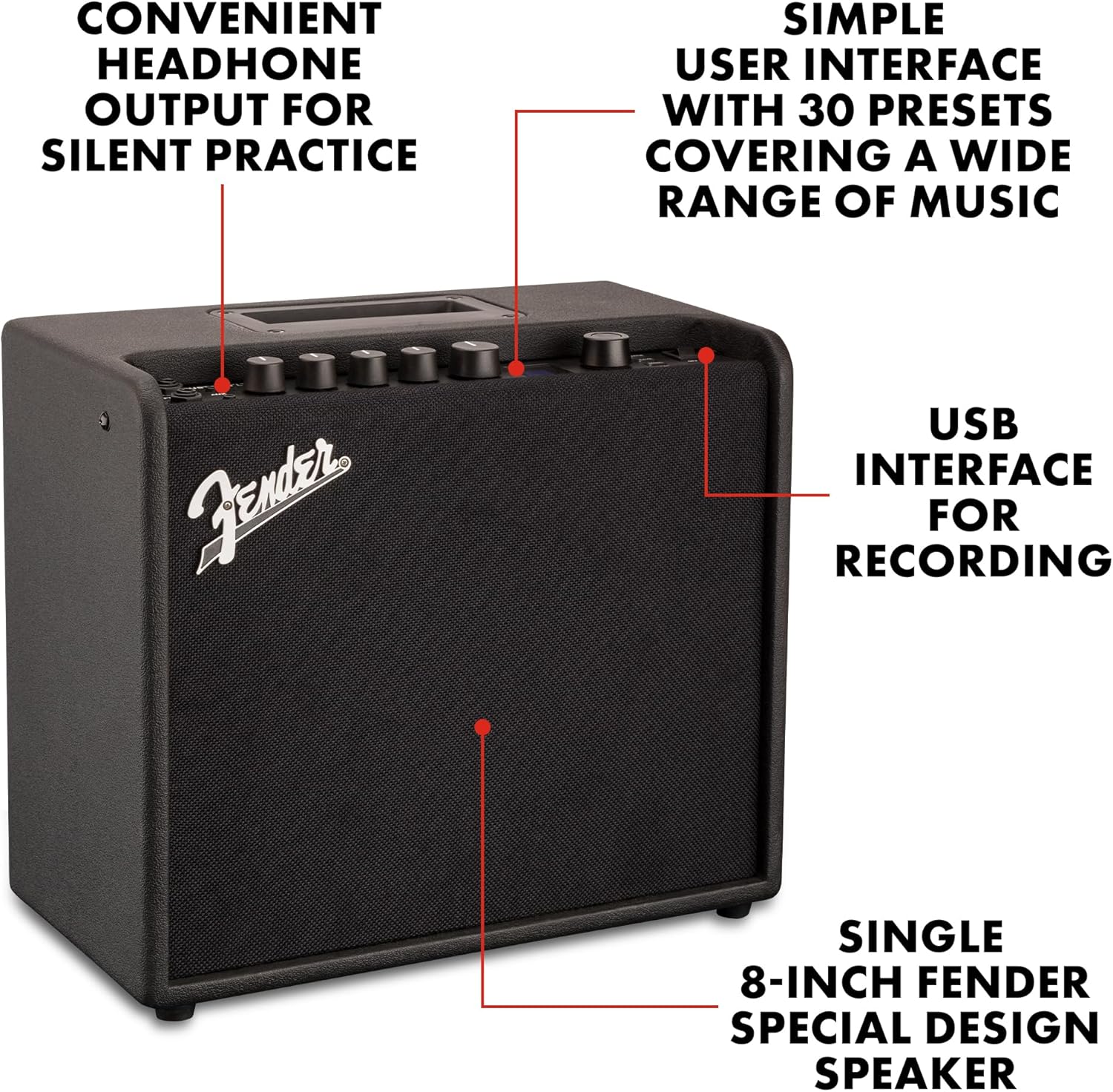
The Fender Mustang LT25 is frequently overlooked next to the Spark lineup because it doesn’t have AI backing tracks or Bluetooth streaming. What it does have is 25 watts of solid modeling performance, 30 preset effects chains drawn from Fender’s broader Mustang modeling platform, and a build approach that MusicRadar’s published Fender Mustang LT25 review describes as typical of Fender’s no-frills, reliable practice-amp philosophy.
The most practically useful insight for any LT25 buyer is this: the Output Select setting matters enormously, and almost nobody figures it out on their own.
Here’s the plain-English version of what’s happening. The LT25 has an internal setting called Output Select that tells the amp how it’s being used — whether it’s running as a standalone speaker in a room, through headphones, or into a recording interface. The amp’s EQ and speaker simulation behave differently depending on which mode is active. Owners who set this correctly report a night-and-day improvement in sound quality. Owners who leave it at the wrong default often conclude the amp sounds muddy, thin, or somehow “off” — and blame the amp itself. The manual doesn’t emphasize this setting prominently, which means a real percentage of LT25 buyers are living with a worse-sounding amp than they paid for.
How to fix it: Access the Output Select setting via the Fender Tone app (available for iOS and Android) or through the amp’s onboard menu. Match it to your actual situation — “Speaker” if you’re playing through the amp’s own driver, “Headphones” if you’re monitoring through headphones, and the appropriate recording setting if you’re routing into an interface. Once matched correctly, the LT25 sounds significantly better than the out-of-box experience suggests.
One more recurring pattern from LT25 owners worth noting: several discovered that what they thought was a bad-sounding guitar was actually an underpowered multi-effects pedal upstream. When they switched to the LT25’s onboard effects, the problem disappeared. The lesson is that a better amp often exposes weaknesses elsewhere in your signal chain — which is useful information, not a reason to avoid upgrading.
Buy this if: You don’t want to manage an app ecosystem for your core playing experience, you’re looking for a reliable 25-watt desktop practice amp, or you specifically want Fender’s voicing and preset library without the Spark price premium. The LT25 rewards a small amount of upfront setup effort with a disproportionate improvement in daily usability.
Fender
$179.99
In stock on Amazon
Check price on AmazonThe Katana-50 Gen 3: When “Practice Amp” Isn’t Enough
This comparison focuses on the Spark 2, Spark GO, and Mustang LT25 — but any honest version of this article has to acknowledge the Boss Katana-50 Gen 3 sitting just outside the frame. Premier Guitar’s published first-look coverage of the Katana Gen 3 highlights the Tube Logic circuit design — Boss’s proprietary approach to making solid-state amplification respond more like a tube amp — and 12 distinct amp characters as its headline features. Owners consistently describe it as a long-term amp rather than a stepping stone, and it appears repeatedly in published coverage as the answer to the question “what do I buy when I’ve outgrown my practice amp?”
Is the Katana-50 overkill for pure home practice? On wattage alone, technically yes — 50 watts in a bedroom is more power than you’ll use at any reasonable volume. But the Katana-50 has a 0.5-watt power setting specifically for bedroom use, and the amp characters and Tube Logic voicing are available at any volume. If you anticipate wanting to play with other people — even casually — within the next year or two, the Katana-50 grows with you in a way the LT25 and Spark GO don’t. The Spark 2 has more headroom than those two, but the Katana-50’s power scaling and live-performance DNA make it the more natural choice if gigging is anywhere on your horizon.
Frequently Asked Questions
Does the Positive Grid Spark app work on Android devices or only Apple? The Spark app officially supports Android, as documented in Sweetwater’s published Spark GO product materials. Android compatibility is real — but iOS tends to deliver a more consistent experience. Android users report the app works, with occasional device-specific quirks.
Is the Spark GO actually loud enough to play alongside other instruments? No — not comfortably. Five watts from a compact driver is ample for solo bedroom practice, but it won’t hold its own next to an acoustic guitar being strummed with any force, let alone a second electric amp or even light drum practice. For multi-instrument play, the Spark 2 or Mustang LT25 are the floor.
What are the hidden costs some Spark 2 reviewers mention? The Spark+ subscription (unlocking extended AI and cloud tone features), potential DAW software if you want to record via USB, and standard accessories like footswitches and quality cables. The amp works without the subscription, but the full AI feature set lives partly behind it — as noted in Guitar World’s published Spark 2 review.
What does the Output Select setting on the Mustang LT25 do, and why does it matter? It tells the amp how it’s being used — through its own speaker, through headphones, or into a recording interface — and adjusts the EQ and speaker simulation accordingly. Setting it correctly produces a noticeably better sound. Leaving it at the wrong default is the most common reason LT25 owners underestimate the amp. MusicRadar’s Fender Mustang LT25 review touches on the importance of proper amp configuration for this reason.
Is the Katana-50 Gen 3 overkill for pure home practice? On wattage alone, yes. But it has a 0.5-watt bedroom mode, and its Tube Logic voicing and 12 amp characters are accessible at any volume level. Premier Guitar’s first-look coverage of the Katana Gen 3 emphasizes that the amp’s design is built around tonal quality at any output level, not raw volume. If you might want to play with others or take the amp to a rehearsal, the Katana-50’s ceiling makes it a sound long-term investment.
The Decision Rule
- If portability matters at all → Spark GO. Nothing else in this group runs on battery or fits in a bag. Positive — $147.00
- If you want maximum AI practice features and can handle an app ecosystem → Spark 2. Budget for the potential Spark+ subscription. Positive — $345.00
- If you want reliable, no-fuss home practice with Fender voicing → Mustang LT25. Spend ten minutes finding the Output Select setting and you’ll wonder what the fuss was about. Fender — $179.99
- If you’re buying your last practice amp for a while and want room to grow → Katana-50 Gen 3. It doesn’t have AI backing tracks, but it has the headroom and tonal depth to stay useful long after the others feel limiting.