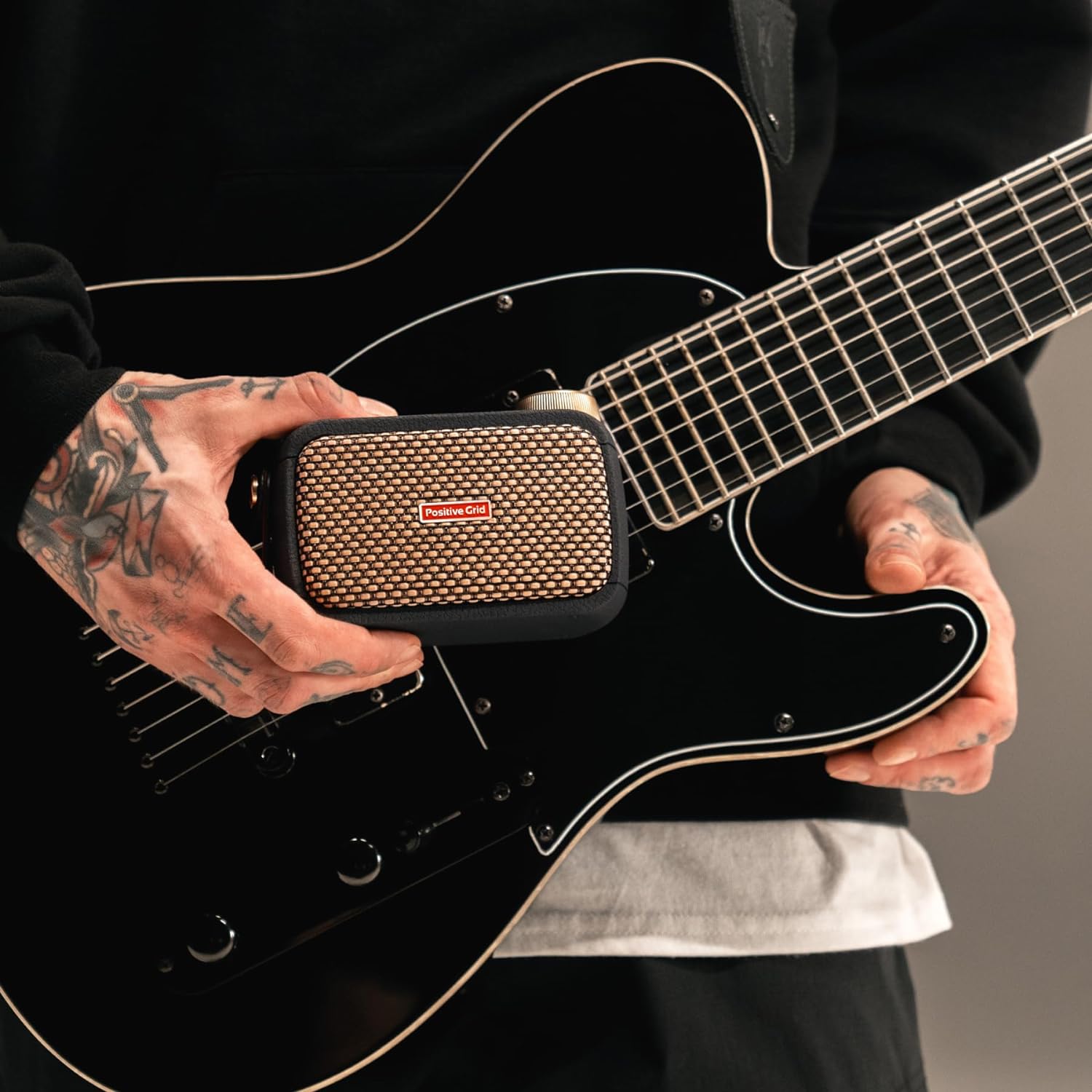
If you’ve been playing guitar for a year or two, you’ve probably bumped into the term modeling amp. Here’s what that means in plain language: instead of one fixed sound, a modeling amp uses digital processing to simulate — or “model” — the tones of dozens of classic amplifiers inside a single box. You get Fender clean, Marshall crunch, Vox chime, and a hundred other voices without owning a hundred amps. The smart amp category takes that one step further by adding Bluetooth connectivity, smartphone apps, and sometimes automatic chord-detection or backing-track features — tools designed specifically for the home player who wants to learn, record demos, and sound great without disturbing the neighbors. This guide compares three of the most-discussed options in that space: the Positive Grid Spark 40, the Boss Katana 50 MkII, and the Fender Mustang GTX50. By the end, you’ll know exactly which one fits your situation.
| EDITOR'S PICKPositive Grid Spark 2 50W Smart… | Mid-tierFender Mustang LT50 Guitar Amp | Budget pickFender Mustang LT25 Guitar Ampl… | |
|---|---|---|---|
| Wattage | 50W | 50W | 25W |
| Speaker Size | — | — | 8" |
| Presets | — | 30 | 30 |
| Bluetooth | ✓ | — | — |
| USB Interface | — | ✓ | ✓ |
| Built-in Looper | ✓ | — | — |
| Price | $345.00 | $249.99 | $179.99 |
| See on Amazon → | See on Amazon → | See on Amazon → |
What You’re Actually Comparing (and Why It Matters)
These three amps are priced within roughly $100–$150 of each other in the $200–$300 range, which means they’re genuinely competing for the same dollars. But they’re built around different philosophies, and that gap in philosophy produces real differences at the bench, on the desk, and through headphones at midnight.
Each amp earns its reputation in a distinct way. The Spark 40 leads with its app ecosystem. The Katana 50 MkII leads with plug-and-play simplicity and a full-size speaker. The Mustang GTX50 leads with Fender’s own amp-modeling pedigree. Understanding which of those priorities maps to your practice habits is the whole game.
Head-to-Head: The Three Contenders
Positive Grid Spark 40 — The Smart Practice Companion
The Positive Grid Spark 40 (approximately $279 street) is the amp that made “smart practice amp” a mainstream phrase. Its defining feature is the Spark companion app — an iOS and Android application that can listen to a chord progression you’re playing and auto-generate a backing band in real time. It also connects to a cloud library of user-created presets. Guitar World’s “Best Practice Amps” roundup identifies the Spark’s approach to practice — sometimes described as “gamified” — as something that genuinely keeps players coming back to their instrument, singling out the auto-chord-recognition and Smart Jam features as differentiated tools rather than marketing add-ons.
The amp is rated at 40 watts and uses a 2×4-inch speaker configuration. The Sweetwater Sound product overview for the Spark 40 describes the amp’s USB audio interface output, noting that players can plug it directly into a computer and record a processed or dry signal without purchasing any additional gear. That is a meaningful cost savings for someone at the beginning of a home studio build.
The tradeoff is real: the app is load-bearing for the Spark’s identity. Without it, the Spark 40 is a competent-sounding practice amp with a modest speaker setup. Players who forget to charge their phone, prefer to play in airplane mode, or simply want to plug in and go may find the Spark’s value proposition starts to fray the moment the app is out of reach.
Best for: Self-taught players, learners who practice alone, and anyone building a home recording setup who wants a single box that handles both practice and direct-to-computer recording.
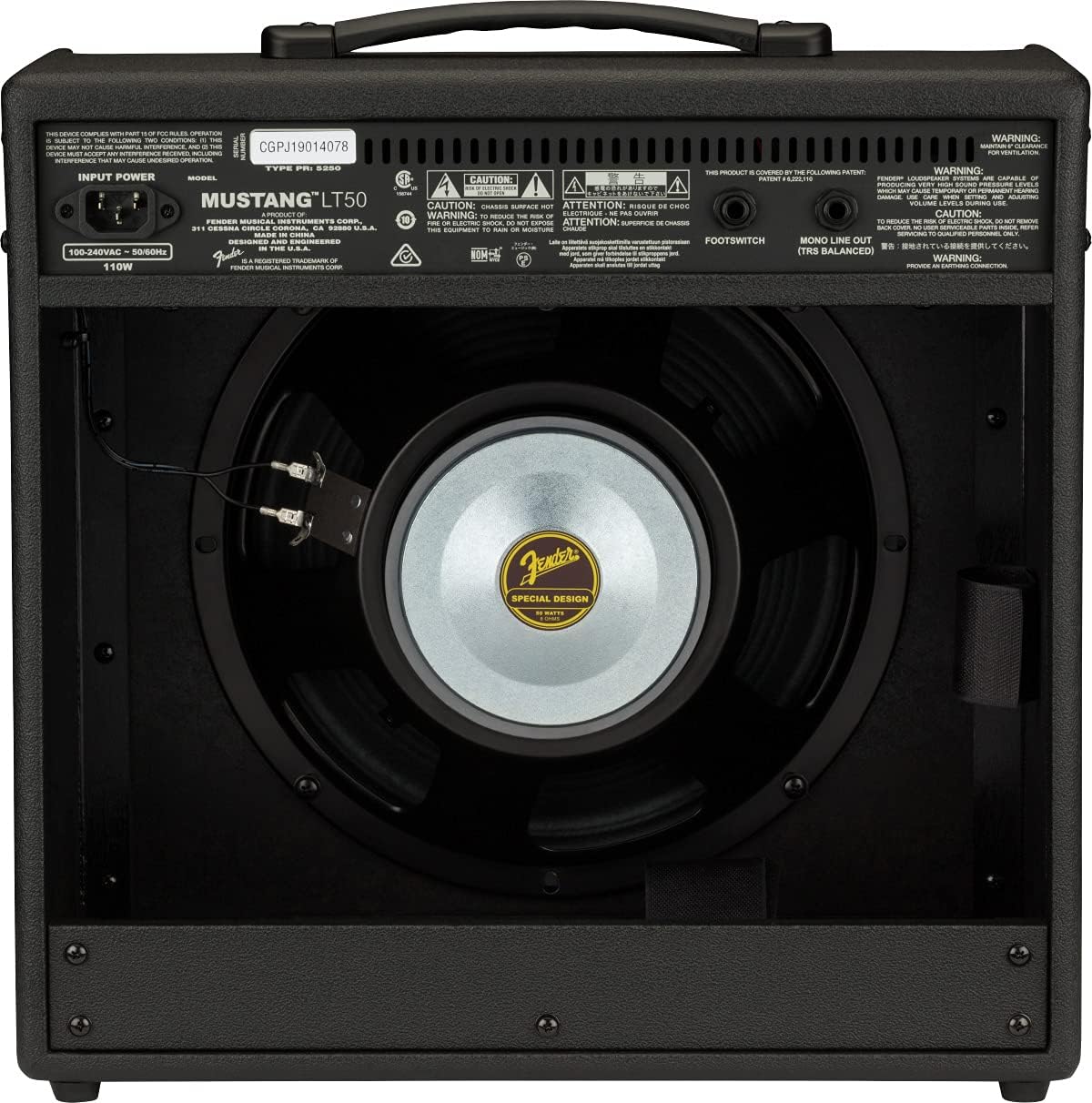
Fender
$249.99
In stock on Amazon
Check price on AmazonBoss Katana 50 MkII — The Plug-and-Play Standard
The Boss Katana 50 MkII (approximately $229–$249 street) comes from a different tradition: Boss built its reputation on durability, simplicity, and tones that work without fussing with software. The Katana’s headline differentiator is five amp characters — Clean, Crunch, Lead, Brown, and Acoustic — selectable directly on the front panel with no phone or laptop required.
MusicRadar’s review of the Boss Katana 50 MkII describes the onboard effects section as unusually deep for a practice amp, noting that over 60 effects are accessible via the free Boss Tone Studio software. The critical qualifier MusicRadar makes explicit: most players never need the software to get a usable, satisfying tone. Boss Tone Studio exists for those who want to go deeper, but the front-panel controls cover the vast majority of real-world use cases.
The speaker is a single 12-inch custom unit. That physical size produces a fuller low-mid response than any 4-inch driver array can. At apartment volumes — with the Katana’s built-in power scaling dialed back to 5 watts or less — the 12-inch speaker works in a more natural frequency range than a smaller driver would at the same perceived volume. MusicRadar’s Katana 50 MkII review specifically calls out low-volume performance as one of the amp’s headline achievements, a point reinforced by the amp’s variable power control that lets players step down from 50 watts to 25, 12.5, or 0.5 watts without leaving the front panel.
For a player who rehearses with a band and also practices at home, the Katana’s predictability is a genuine feature: what you dial in at bedroom volume translates reliably when you scale the power back up for rehearsal.
Best for: Players who want to stop thinking about software and start playing, intermediate players who rehearse with a band, and anyone who values long-term durability and resale stability.
Fender
$249.99
In stock on Amazon
Check price on AmazonFender Mustang GTX50 — The Fender DNA Pick
The Fender Mustang GTX50 (approximately $299 street) is Fender’s current flagship in the practice and home-recording tier. Premier Guitar’s coverage of the Mustang GTX series highlights the amp’s large onboard preset library, expression pedal capability via a connected controller, and Fender Tone app integration with cloud preset storage. The GTX50 is rated at 50 watts into a single 12-inch speaker.
What distinguishes the Mustang GTX50 most from the other two amps is lineage. Fender designed the amp models in this unit with their own catalog as the primary reference point. That means the Fender clean voices — the Twin Reverb, the Deluxe Reverb, the Bassman — sound particularly resolved here. Guitar World’s coverage of the Mustang GTX line notes that if you play Fender-influenced music — blues, country, indie, surf, vintage rock — the GTX50’s clean and edge-of-breakup tones feel unusually authentic for the price. Competing modeling amps must approximate those sounds from the outside; Fender is modeling itself.
The Fender Tone app is competently built. Premier Guitar’s GTX series coverage notes that cloud storage of presets is a practical convenience for players who want to carry tones between practice sessions or share sounds with other GTX users. The app is less central to the amp’s identity than the Spark app is, however — the front-panel workflow on the GTX50 is intuitive enough that new users can build useful sounds without ever opening their phone.
Best for: Blues, country, indie, and vintage-rock players who want Fender amp DNA above everything else, and intermediate players who may eventually move this amp to small-venue gigs.
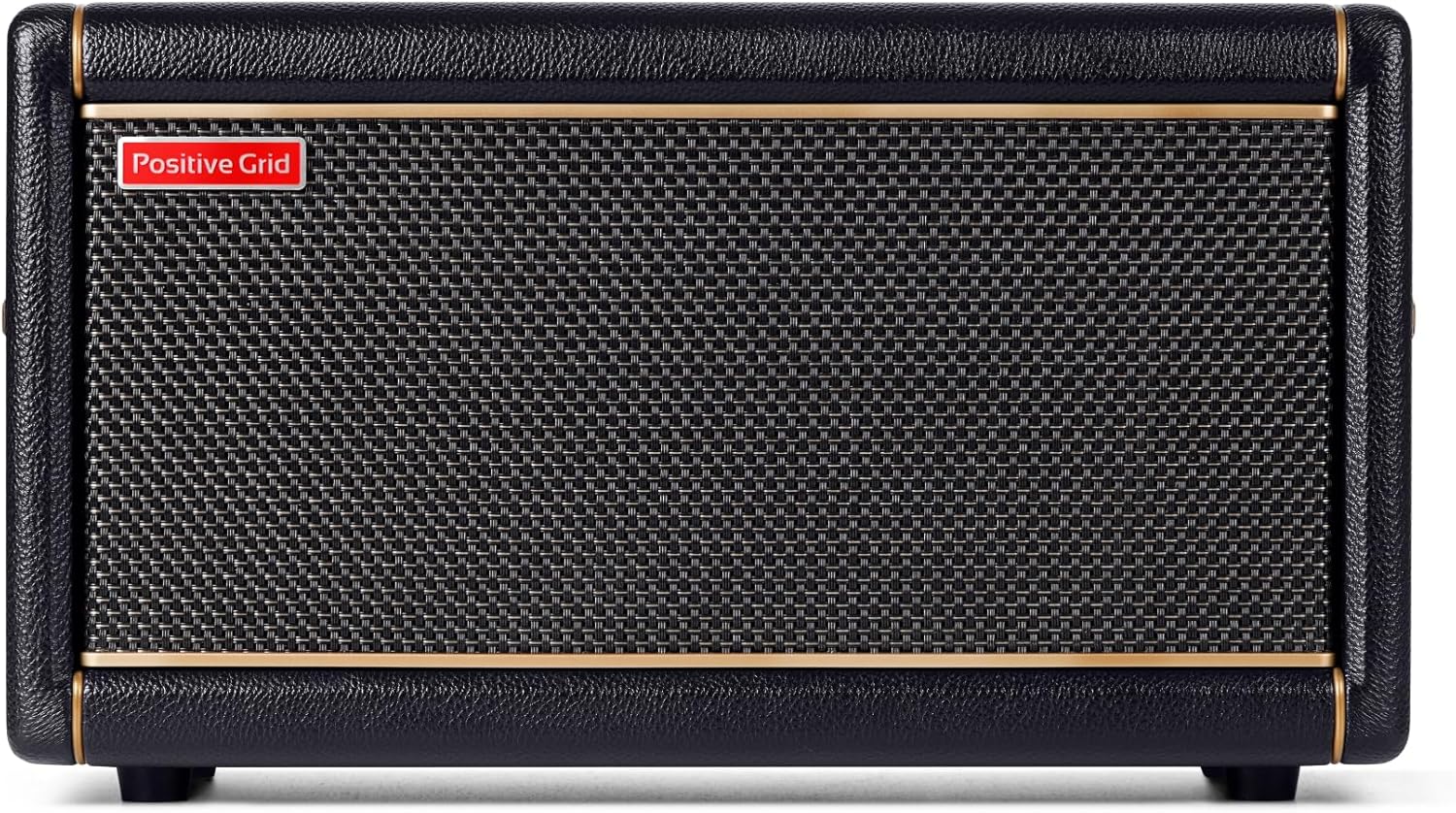
Positive
$345.00
In stock on Amazon
Check price on AmazonBy the Numbers
| Feature | Positive Grid Spark 40 | Boss Katana 50 MkII | Fender Mustang GTX50 |
|---|---|---|---|
| Watts | 40W | 50W | 50W |
| Speaker | 2×4” | 1×12” | 1×12” |
| App | Spark (iOS/Android) | Tone Studio (optional) | Fender Tone |
| USB Recording | Yes | Yes | Yes |
| Street Price (2026) | ~$279 | ~$229–$249 | ~$299 |
The Tradeoffs That Actually Decide This
Smart Features vs. Plug-and-Play Simplicity
The Spark’s app is the clearest differentiator in this category. The Sweetwater Sound product overview for the Spark 40 describes the auto-chord-recognition and Smart Jam features as designed for genuine solo practice use rather than marketing demonstration — the app listens to what key and tempo you’re playing in and constructs a rhythm section to match. For self-taught players who don’t have a regular band to jam with, this is a real tool, not a gimmick.
The Katana 50 MkII is the antidote to app fatigue. Players can set five channel presets on day one and rarely need to open a laptop again. Boss Tone Studio is available for those who want deeper effects customization, but the amp is fully functional — and fully satisfying — without it. Guitar World’s “Best Practice Amps” roundup frames this as a meaningful philosophical difference between the two camps: players who want interactive coaching features will gravitate toward the Spark, while players who want repeatable, software-free tone will gravitate toward the Katana.
The Mustang GTX50 sits between these poles. The Fender Tone app adds convenience, particularly for preset management, but it isn’t required for the amp to sound good. For players who’ve had frustrating experiences with mandatory-app workflows on other gear, the GTX50 offers a middle path.
Speaker Size and the Low-Volume Experience
A single 12-inch speaker moves more air and creates a more three-dimensional low-mid response than any combination of 4-inch drivers can. This matters most at low volumes. At bedroom levels, the Katana 50 MkII and the Fender Mustang GTX50 — both running 12-inch drivers — feel more physically present than the Spark 40 through the same monitoring chain. MusicRadar’s review of the Boss Katana 50 MkII specifically highlights low-volume performance as a headline achievement, attributing it in part to the variable power control that scales wattage down without changing the speaker.
The Spark 40’s 2×4-inch speaker setup is honest about what it is: optimized for desktop proximity listening, headphone output, and direct recording. Players using the Spark primarily through headphones or running it directly into a DAW won’t miss the 12-inch driver. Players who occasionally want to fill a room — even a small one — will hit the Spark’s ceiling quickly.
Recording and Home Studio Integration
All three amps include USB audio output, allowing direct connection to a DAW without a separate audio interface. This is a genuine cost savings for players building a home recording setup from scratch.
The Sweetwater Sound product overview for the Spark 40 describes the USB recording implementation as straightforward: plug in, select output mode, record. The Spark passes either a cabinet-simulated processed signal or a dry signal depending on the selected output mode, giving recordists flexibility without requiring additional software. Premier Guitar’s coverage of the Mustang GTX series similarly gives favorable marks to the GTX50’s direct-recording output quality, noting that the Fender Tone app allows preset recall between sessions, which streamlines re-amping and overdub workflows. The Katana’s USB output functions well, but Boss’s workflow for toggling between cab-simulated and dry signal is slightly less immediately obvious than the other two — a minor friction point worth noting for players whose primary use case is recording rather than live practice.
The Decision Framework
If you practice alone most of the time and need motivation to stay consistent → Buy the Positive Grid Spark 40. The Smart Jam and backing-track features are genuinely differentiated tools for solo practice, as Guitar World’s “Best Practice Amps” roundup makes clear. Players who describe themselves as self-taught or learning by ear consistently report that the Spark app made them practice more often, and the USB recording output means a single purchase covers both practice and home studio needs.
Fender
$249.99
In stock on Amazon
Check price on AmazonIf you want a practice amp that doubles as a low-volume rehearsal amp and you’re done managing apps → Buy the Boss Katana 50 MkII. The 12-inch speaker, the five-channel front-panel workflow, and the durability of Boss build quality make this the most “set and forget” option in the category. It’s also the most affordable of the three, and its workflow — with real knobs for real functions — transfers well to traditional amp operation if you upgrade later.
Fender
$249.99
In stock on Amazon
Check price on AmazonIf you play primarily Fender-influenced styles — blues, country, indie, surf, vintage rock — and care most about clean and edge-of-breakup tones → Buy the Fender Mustang GTX50. As Guitar World’s coverage of the Mustang GTX line notes, the amp models built around Fender’s own catalog sound more resolved here than they do on any competing modeler at this price, and Premier Guitar’s GTX series coverage confirms that the 12-inch 50-watt configuration gives enough headroom to eventually take this amp to small venues.
Positive
$345.00
In stock on Amazon
Check price on AmazonOne More Consideration: The Upgrade Path
Players who are already thinking about their next amp purchase should consider what these amps teach them. The Spark’s app-centric ecosystem is excellent for learning, but it creates some platform dependency — if app support changes or you move ecosystems, the amp’s smartest features go with it. The Katana’s front-panel workflow maps closely to real amplifier operation: channel selection, presence, depth, and tone controls that behave like analog equivalents. Players who later move to a Fender Blues Junior, a Vox AC15, or a boutique head will find the muscle memory built on the Katana transfers cleanly. The Mustang GTX50 benefits from Fender’s long history with the Mustang line — Premier Guitar’s coverage of the GTX series notes the platform’s steady evolution across multiple generations — providing reasonable confidence that the ecosystem will continue to receive support.
For most players in the $200–$300 practice amp category, the Boss Katana 50 MkII represents the clearest value on pure dollars-per-usefulness and long-term reliability. The Spark 40 earns its premium if the practice-companion features will genuinely be used. The Mustang GTX50 is the choice for players who want Fender DNA above everything else. None of these is a wrong call — but now you know which one is right for you.
How the Tiers Compare
For readers weighing price against capability, here’s how the standout picks break down by budget level.
Best Budget Pick
At $147.00, this is the value option in this lineup — it covers the essentials without the premium-tier cost, the smart starting point if you’re weighing price against capability.
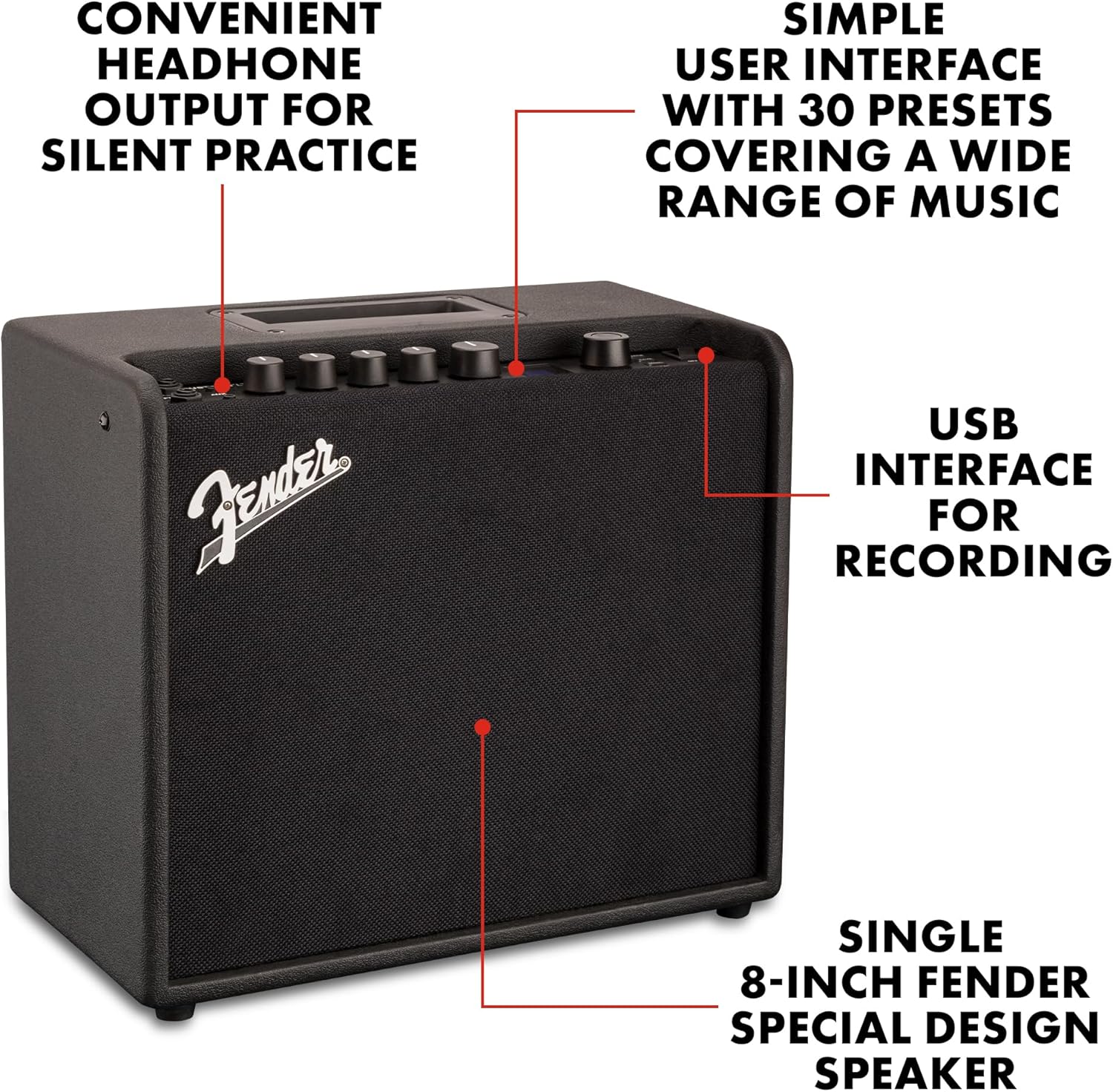
Fender
$179.99
In stock on Amazon
Check price on AmazonBest Mid-Range Pick
At $249.99, this is the balanced choice — it closes most of the gap to the high end while staying well short of premium pricing, which is why it’s the pick most buyers actually land on.
Fender
$249.99
In stock on Amazon
Check price on AmazonBest Premium Pick
At $345.00, this is the top performer here — you pay for it, but if capability and longevity matter more than the upfront cost, this is the one to beat.
Positive
$345.00
In stock on Amazon
Check price on Amazon