If you’ve just bought your first electric guitar — or you’ve been playing for a few months and suspect your amp is holding you back — you’re in exactly the right place. An amplifier (the box that makes your guitar loud) shapes your tone just as much as the guitar itself. “Modeling amps” are a specific type of amp that use computer processing to recreate the sounds of many classic amplifiers inside one box, usually for a fraction of the cost of owning the real things. They’re the dominant choice for home practice in 2026 because they’re quiet, versatile, and increasingly excellent. This article walks a specific upgrade path — Fender Frontman 10G → Fender Mustang LT25 → Boss Katana-50 Gen 3 — names the real tradeoffs at each step, and tells you exactly when to move up the ladder and when to stay put.
If you’re six months in, recently upgraded from a starter pack, and wondering whether your amp is the weak link, this is the decision frame you need.
The Three Amps at a Glance
Before diving into each amp individually, it helps to see how the hardware specs stack up side by side. The table below captures the numbers; the sections that follow explain what those numbers actually mean in a bedroom or small home studio.
| Spec | Frontman 10G | Mustang LT25 | Katana-50 Gen 3 |
|---|---|---|---|
| Watts | 10W | 25W | 50W (switchable to 0.5W) |
| Speaker | 6” | 8” | 12” |
| Modeled amp tones | 0 | 30+ | 60+ |
| Built-in effects | Reverb only | 30+ effects | 60+ effects |
| App editing | No | Yes (Fender Tone) | Yes (Boss Tone Studio) |
| Approximate street price | ~$60 | ~$150 | ~$300 |
Fender
$89.99
In stock on Amazon
Check price on Amazon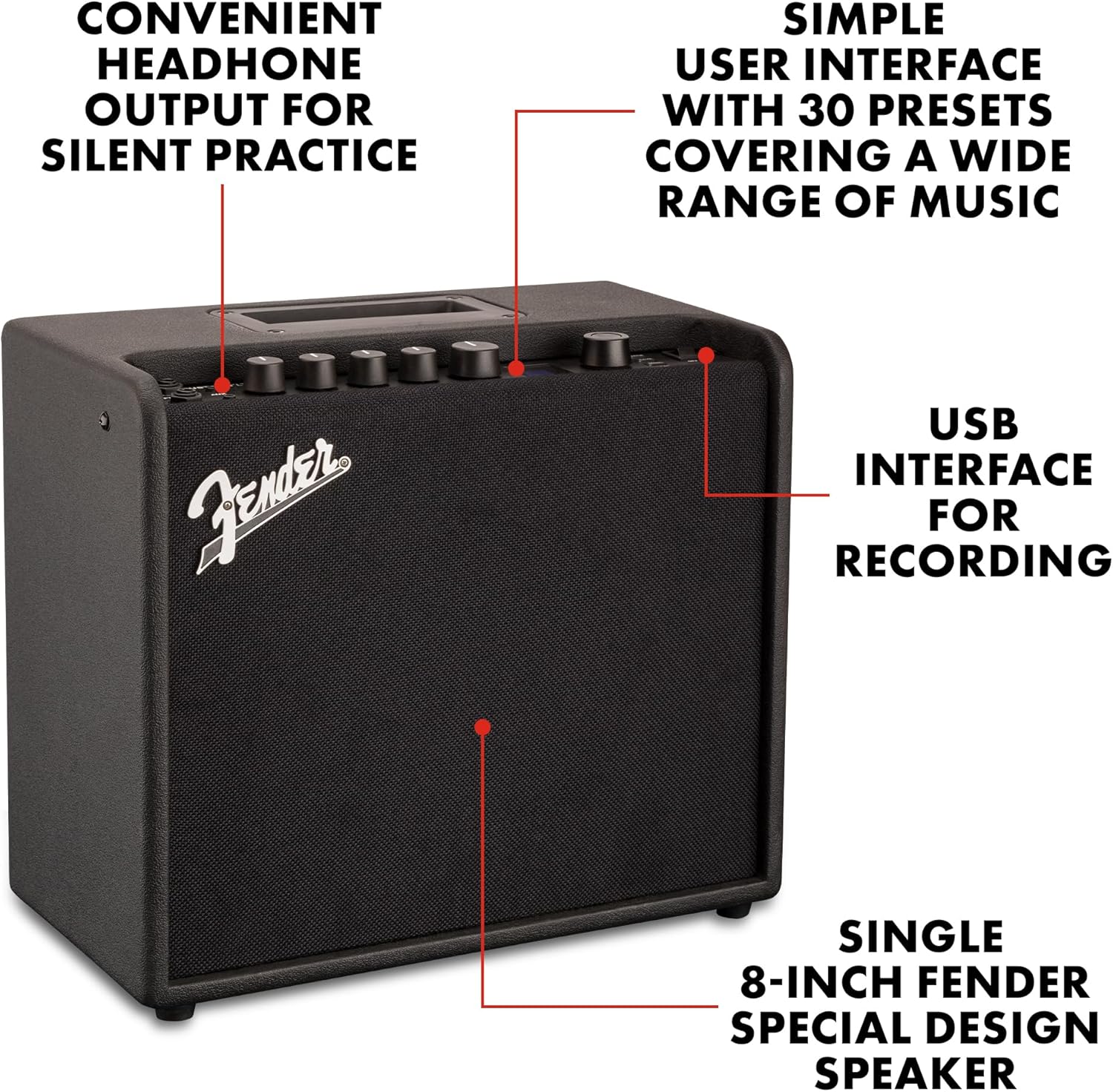
Fender
$179.99
In stock on Amazon
Check price on Amazon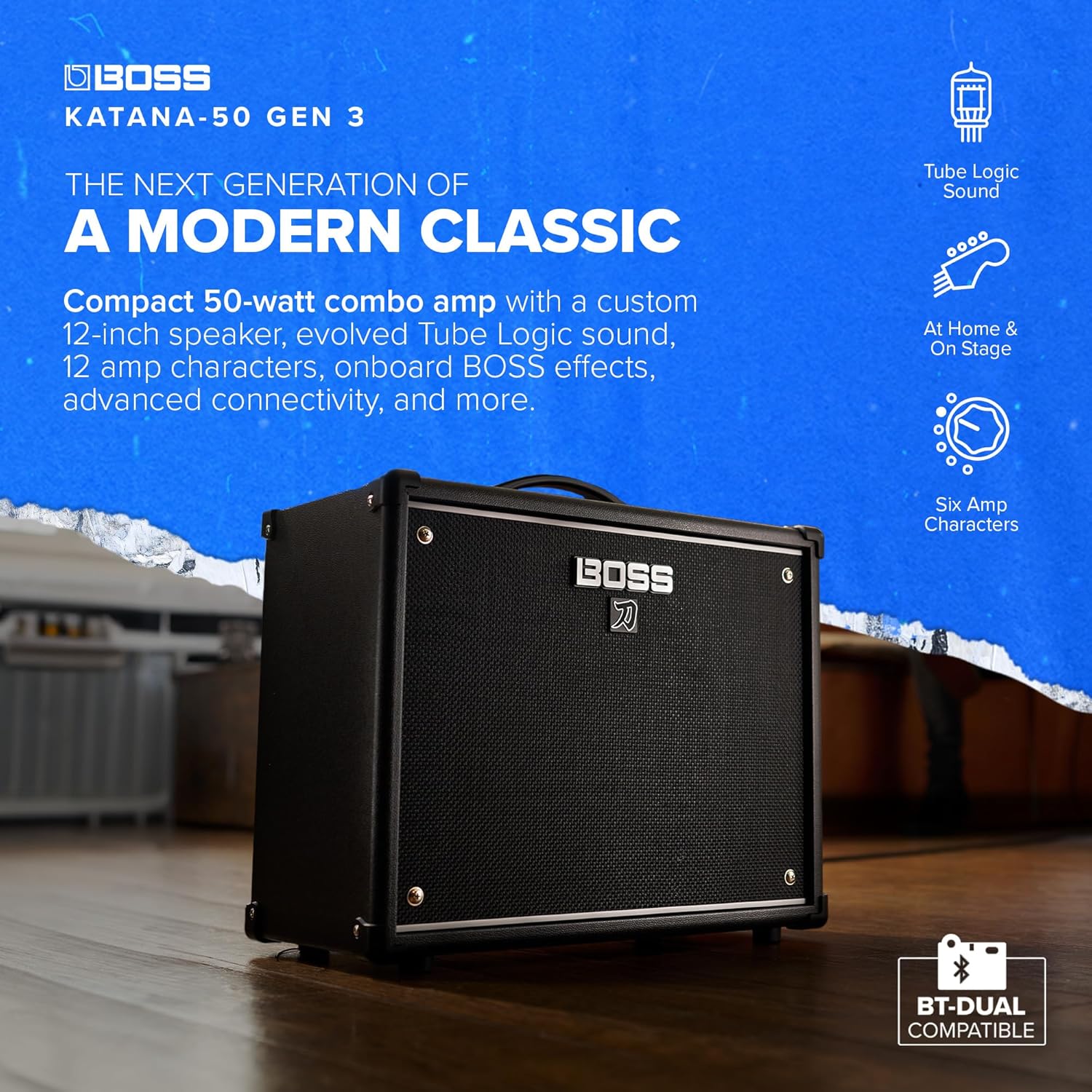
BOSS
$343.37
In stock on Amazon
Check price on AmazonHead-to-Head: Each Rung of the Ladder
The Frontman 10G: Honest About What It Is
Fender
$89.99
In stock on Amazon
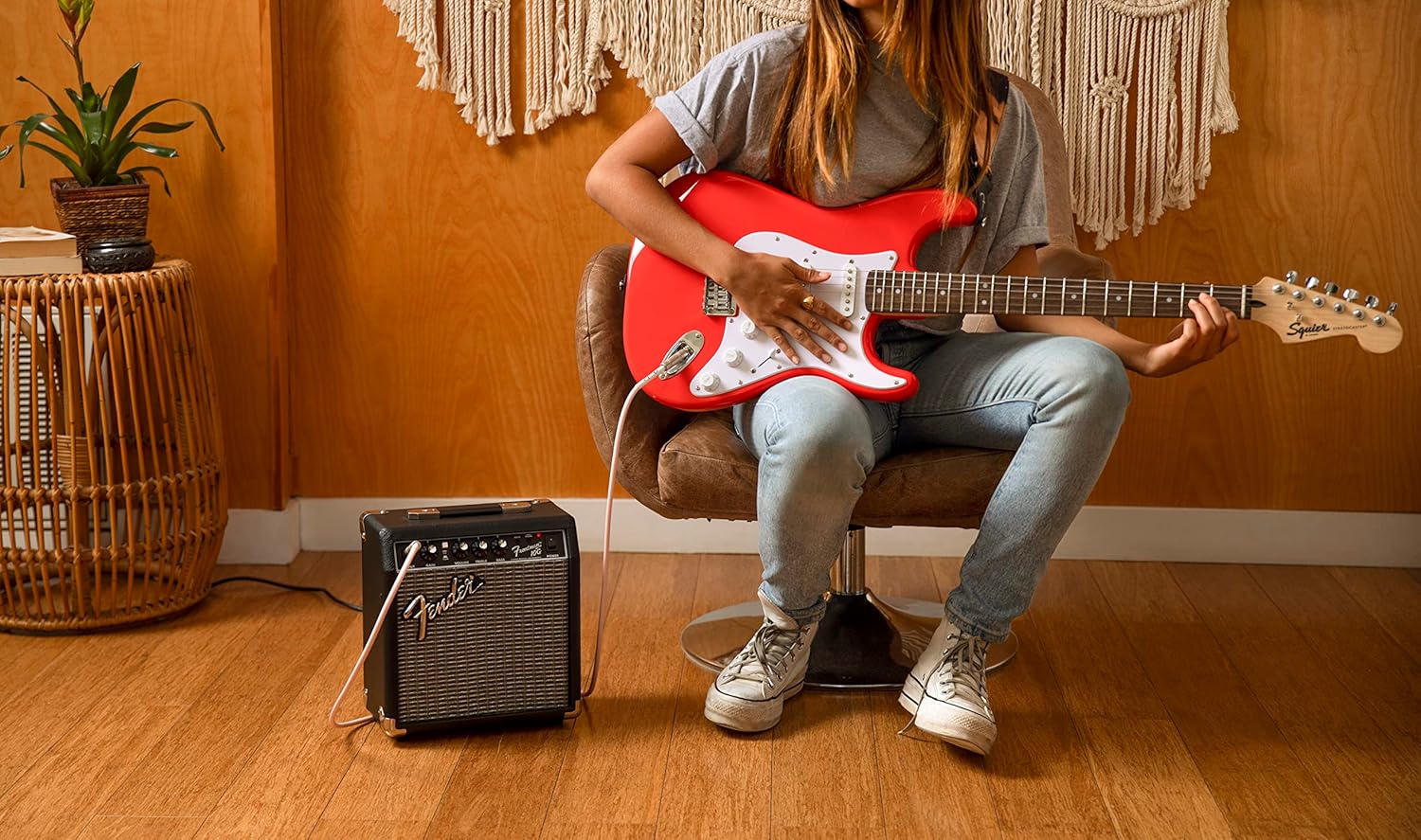
Check price on AmazonThe Fender Frontman 10G is a 10-watt, single-channel solid-state amp — meaning it uses transistors rather than vacuum tubes to amplify your signal. It is not a modeling amp in the strict sense. There is no digital processing, no preset library, no companion app. What you get is a basic clean channel, a basic overdrive channel (overdrive = a gritty, distorted guitar sound), a three-band EQ (bass, middle, treble), and a headphone output for silent practice. That’s the whole feature set.
Buyer feedback catalogued on the Sweetwater Sound Frontman 10G product page and Guitar World’s “Best practice amps for beginners” (2025 edition) reveals a consistent pattern: reviewers are nearly unanimous on two points. The clean channel — the undistorted, bell-like guitar sound — is genuinely solid for the price. It is transparent enough that you can hear your guitar’s actual character, which matters when you’re learning. The overdrive channel, though, is where the honest conversation gets uncomfortable. Experienced players across both sources consistently describe the built-in drive as thin, fizzy, and lacking the harmonic complexity that makes distorted guitar sound musical rather than buzzy. This is not a knock on the Frontman 10G’s price point; it is the honest physics of a budget solid-state overdrive circuit.
The practical implication: if you’re playing mostly clean or light crunch tones, the Frontman 10G does its job. If you want rock, blues, or anything with real grit, the amp’s drive channel is a bottleneck from day one, and you’ll want to budget for a separate overdrive pedal (a small stomp-box that sits between your guitar and amp) almost immediately. Even a budget overdrive in the $30–$50 range will outperform the Frontman 10G’s built-in circuit for those tones.
When to move up: The recurring pattern in owner reviews collected on Sweetwater Sound’s Frontman 10G product page suggests most players who take playing seriously hit the ceiling within three to six months. The trigger is almost always one of two things: you start wanting to shape your overdrive tone and realize the built-in drive doesn’t respond to your guitar’s volume knob the way a real overdrive circuit would, or you start playing along with recordings and realize the 6-inch speaker makes your tone sound thin compared to the track. Either signal means it’s time to climb the ladder.
Fender
$89.99
In stock on Amazon
Check price on AmazonThe Mustang LT25: The Moment Players Realize the Amp Was the Problem
Fender
$179.99
In stock on Amazon
Check price on AmazonThe Fender Mustang LT25 is where the modeling conversation actually starts. At 25 watts through an 8-inch speaker, it’s genuinely small — still a bedroom-practice instrument — but the internal architecture is a completely different world from the Frontman 10G. The LT25 runs Fender’s amp modeling engine, delivering over 30 recreations of classic Fender amplifiers and some non-Fender models, paired with a library of built-in effects including reverb, delay, chorus, and tremolo. The Fender Tone app connects via Bluetooth and gives you a full editing interface on your phone.
The most compelling pattern in owner reviews — documented in Guitar World’s “Fender Mustang LT25 review” (2023) and the Sweetwater Sound Mustang LT25 buyer Q&A — is what players consistently call a “revelation” moment. A recurring description goes roughly like this: a player thinks their guitar sounds bad, or that they need new pickups, or that their cheap multi-effects pedal is the problem. They plug into the LT25. Suddenly the guitar sounds like a guitar, the effects sound like effects, and everything clicks. The culprit, in nearly every case, was the previous amp. A mediocre amp will make a good guitar sound bad; a decent modeling platform gives you an accurate picture of your instrument and your playing — which is exactly what you need while you’re still building technique and ear.
Does the Mustang LT25 replace stompbox pedals? For most players at this stage, yes — almost entirely. The built-in overdrive, delay, chorus, and reverb models are genuinely usable in a way the Frontman 10G’s built-in drive is not. MusicRadar’s “Best guitar amps under $500” (2025 roundup) specifically flags the LT25 as a strong choice for players who want to avoid the pedalboard rabbit hole early on. That said, if you’re already attached to a specific pedal you love, the LT25’s effects loop — an input/output pair that inserts your pedals into the signal chain more cleanly — gives you room to grow.
The 25-watt caveat: 25 watts is plenty loud for bedroom practice — loud enough that most players run it at a fraction of its volume capability indoors. What the wattage doesn’t fully capture is speaker size. The 8-inch speaker in the LT25 produces noticeably less low-end weight and “air” compared to a 12-inch speaker. For practice purposes this is rarely a problem. For anyone thinking about using this amp to play with a drummer, even casually, it’s going to feel thin and may struggle to cut through.
Fender
$179.99
In stock on Amazon
Check price on AmazonThe Katana-50 Gen 3: When You’re Actually Ready for Serious Tone Shaping
BOSS
$343.37
In stock on Amazon
Check price on AmazonThe Boss Katana-50 Gen 3 is a different category of tool. At 50 watts through a 12-inch speaker, the physical hardware alone is a substantial step up from the LT25. A 12-inch driver produces a fundamentally different low-frequency response and room-filling presence that owners catalogued on Sweetwater Sound’s Katana-50 Gen 3 product page consistently describe as the first amp that “feels” like a real amp rather than a monitor speaker. The Boss Tone Studio app — available on Android, iOS, Mac, and Windows via USB, per Sweetwater Sound’s Katana-50 Gen 3 product documentation — provides access to over 60 amp characters and effects, and the Gen 3 iteration added deeper integration between the hardware controls and the app, which reviewers note makes real-time tweaking significantly less frustrating than on previous generations.
The Katana-50’s reputation is built around one thing: classic tones. Guitar World’s coverage of the Katana line consistently praises its recreations of British-voiced crunch (think late-1960s Marshall sounds), American clean tones, and its ability to make a mid-gain blues tone sit naturally in a mix. It is genuinely one of the best-reviewed practice-to-small-gig amps under $350 in 2026 for players who prioritize classic-rock and blues-crunch territory.
The genre caveat worth flagging: One detailed category of owner feedback in the aggregated Sweetwater Sound reviews raises a meaningful “know your genre” distinction. Players whose primary sounds live in vintage American clean territory — rockabilly, early country, surf — sometimes find that Fender’s modeling engine, as implemented in the Mustang line, prioritizes clean headroom and single-coil clarity in a way that serves those styles specifically, while the Katana skews toward British gain structures. This isn’t a knock on the Katana-50; it’s a genuine decision point worth auditing before you buy.
On wattage and real-world use: The Katana-50 Gen 3 includes a power attenuator that steps the amp down to 25W, 0.5W, and a silent recording mode. This matters more than the wattage number itself. Running at 0.5 watts is genuinely quiet enough for late-night apartment practice, and the full 50 watts provides enough headroom for outdoor yard sessions and small rehearsal spaces. Most players are unlikely to outgrow this amp acoustically until they’re playing mid-size stages.
BOSS
$343.37
In stock on Amazon
Check price on AmazonFrequently Asked Questions
Is the Frontman 10G’s built-in overdrive usable, or should you add a pedal immediately? Add a pedal fairly quickly if overdrive matters to you. The clean channel earns its keep; the drive channel does not. Even a budget overdrive pedal in the $30–$50 range will outperform the Frontman 10G’s built-in circuit for rock and blues tones. If you’re playing mostly clean or light country and pop strumming, you can hold off, but plan for it.
What’s the practical difference between 25 and 50 watts for home practice? Almost none in terms of usable volume — both are far louder than any sane home-practice level. The real difference is speaker size (8-inch vs. 12-inch) and the physical feeling of the amp. A 12-inch speaker moves more air and produces fuller low-mids. For pure bedroom practice, 25 watts is sufficient. For playing along with recordings at realistic volumes, jamming with others, or simply wanting the amp to feel like a “real” amp, the 50-watt/12-inch combination is meaningfully better.
Does the Mustang LT25 replace the need for stompbox pedals? For most players in the first two years of playing: yes. The built-in effects are genuinely good, the app editor makes tweaking easy, and the modeled amp sounds eliminate the need for separate overdrive or distortion pedals in most practice contexts. Advanced players with specific sounds built around particular stompboxes will find the effects loop accommodating, but the LT25’s built-in library handles the vast majority of practical use cases without adding any pedals at all.
Can the Katana-50 app editor be used on Android or only iOS? Both platforms. Boss Tone Studio is available on Android and iOS, and also connects via USB on Mac and Windows desktop, per Sweetwater Sound’s Katana-50 Gen 3 product documentation. This cross-platform flexibility has been a consistent strength of the Katana platform compared to some competitors.
At what point does a beginner actually outgrow the Frontman 10G? The consistent pattern in owner reviews on Sweetwater Sound’s Frontman 10G product page suggests most players who take playing seriously hit the ceiling within three to six months. The trigger is almost always one of two things: you start wanting to shape your overdrive tone and realize the built-in drive doesn’t respond the way a real overdrive circuit would, or you start playing along with recordings and the 6-inch speaker makes your tone sound thin. Either one is your signal to move up.
The Decision Frame: If X, Then Y
- If you’re buying a first amp and aren’t sure you’ll stick with guitar: The Frontman 10G keeps the financial risk low and sounds fine for clean practice. Budget for an overdrive pedal if you want rock tones at all.
- If you’ve been playing 3–6 months and your amp is limiting what you can hear about your own playing: The Mustang LT25 is the upgrade. It’s the moment most players realize their instrument is better than their amp was letting them believe.
- If you’re past the beginner phase and want one amp that covers serious home practice, recording, and small-group playing: The Katana-50 Gen 3 is the answer — particularly if your genre lives in classic rock, blues, or British crunch territory.
- If your primary genre is vintage American clean sounds — rockabilly, country, early surf: Audition the Fender Mustang GT50 alongside the Katana before committing, because Fender’s modeling engine may serve that specific palette better.
The ladder is real and the steps are logical. Most players climb it in the order it’s laid out here — and the ones who skip a rung rarely regret it.