Every year, millions of parents stand in front of a wall of guitar kits — or scroll through pages of them online — trying to make a decision they’re not quite equipped to make. A “beginner guitar kit” (an all-in-one bundle that typically includes a guitar, a small practice amplifier, a cable, picks, a strap, and sometimes a tuner and bag) seems like the obvious, safe gift. One box, everything included, done. The problem is that not all kits are created equal, and the single most common reason kids abandon a first guitar has nothing to do with motivation or talent. It has to do with the guitar being physically hard to play because it was never properly set up after shipping — and most parents have no idea that’s even a variable. This guide breaks down what’s actually in these kits, which ones reviewers consistently call out as genuinely playable, and the one piece of information that will determine whether your child’s guitar becomes a treasured instrument or a closet decoration.
What’s Actually in a Beginner Kit — and What to Prioritize
Walk through the contents of any typical $100–$200 guitar kit and you’ll see a pattern. The guitar itself is the main event, but the bundle usually pads its perceived value with accessories of wildly varying quality. Here’s how experienced player-reviewers generally rate what’s inside:
The guitar body and neck — This is where most of the real quality variation lives. Budget kit guitars from brands like Donner, LyxPro, and Squier (Fender’s entry-level line) all use laminate wood bodies and bolt-on necks. That’s fine for a beginner. What matters more is how the neck is shaped, how the frets are finished (sharp fret ends are a real playability problem on cheap kits), and whether the “action” — a guitar term meaning the gap between the strings and the fretboard — is low enough for small hands to press strings without serious effort.
The included amplifier — This is where kits diverge most dramatically. Reviewers on Guitar World’s coverage of best beginner kits consistently note that bundled amps range from surprisingly usable (the Donner DST-100 kit, in particular, drew parent reviewers who called the included amp a genuine quality surprise) to frankly inadequate (multiple LyxPro kit reviewers flatly state the included amp “leaves much to be desired”). If the amp sounds thin and buzzy at any volume, the child will quickly stop wanting to play.
The accessories — Picks, straps, cables, and tuner clips are largely commodity items. Don’t make your buying decision based on the accessory count. A kit with seven picks and a canvas gig bag but a bad guitar is a worse value than a kit with fewer extras and a better-playing instrument.
The $40 Fix That Most Parents Never Hear About
Here’s the most important thing in this entire article, and it’s something a lot of music stores will tell you up front if you ask — but most online listings never mention it.
Factory-fresh guitars, especially in the $100–$200 price range, almost always need a professional “setup” before they play well. A setup is a 30-to-60-minute appointment at a guitar shop where a technician adjusts the action (string height), intonation (whether the guitar plays in tune up and down the neck), and sometimes files the nut (the small piece at the top of the neck that spaces the strings). It typically costs $40–$75 depending on your city and the shop.
Donner’s own customer service team made a notably candid public acknowledgment of this on product review pages, stating that shipping can disturb factory adjustments and encouraging customers to have the guitar checked rather than returned. That’s a rare and honest admission from a kit brand — and it’s universally true across the category.
The pattern across aggregated reviews is stark: parents who understood that a $150 kit requires a $40 setup appointment report high satisfaction. Parents who did not understand this report the guitar is unplayable and return it. The guitar itself may be perfectly fine. The setup is the missing step.
Budget roughly $50 for a setup when you’re building your total kit budget. It’s not optional if you want the child to actually stick with the instrument.
Kit-by-Kit: What Reviewers Are Saying in 2026
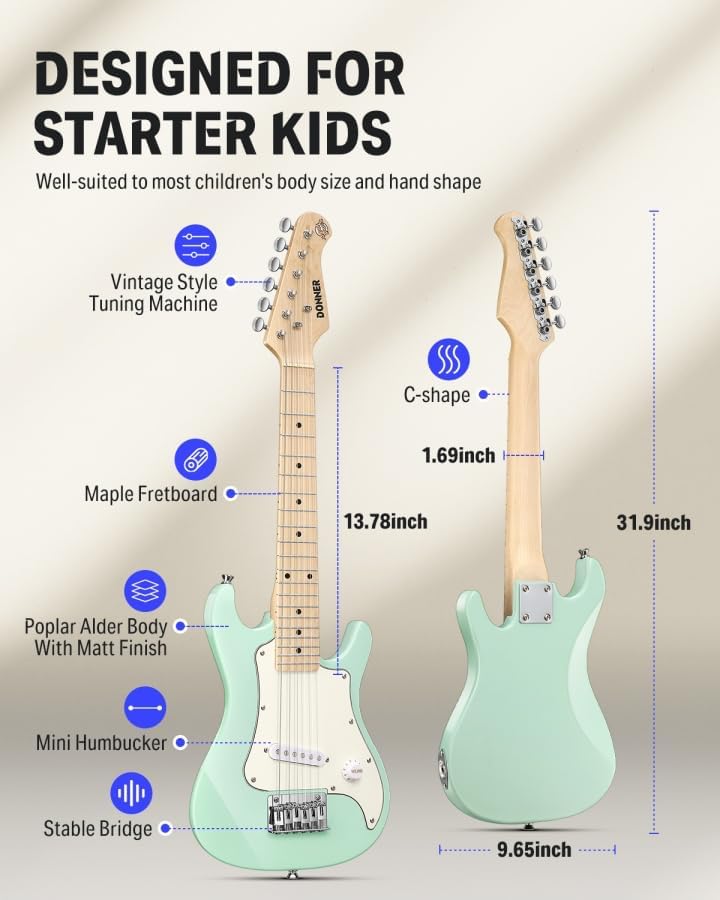
Donner 30-Inch Mini Electric Kit
Targeted at younger children (roughly ages 5–9), this smaller-scale guitar drew a notable review from a self-identified guitarist who explicitly stated it is “not a toy” — specifically calling out that it has real intonation and action adjustments, and that they used them all. That’s meaningful. A guitar with actual working adjustment points can be properly set up; a true toy cannot be fixed.
Best for: Parents of young children (under 10) who want a real instrument at a manageable size, not a decorative prop.
Donner DST-100 Electric Kit
The DST-100 is a full-size electric starter kit that consistently surfaces in Guitar World and MusicRadar roundups of best beginner guitar packages. The standout in parent reviews is the amp quality — multiple buyers note it sounds better than they expected from a bundled unit. It’s not a performance amp; it’s a bedroom practice amp. But “better than expected” is exactly the bar you want a first kit to clear.
Best for: Kids 10 and up who want a full-size electric guitar experience without stepping up to individual components.
LyxPro Electric Guitar Kit
The LyxPro kit offers a low price point and a visually appealing package, but the amp criticism is consistent enough to flag. Reviewers specifically cite the amp as the weak link. If you’re drawn to the LyxPro price, budget the $40 setup appointment and also consider whether a slightly higher entry point — toward the Donner or Squier tier — might save frustration.
Best for: Absolute budget-constrained situations where the goal is “real guitar, minimal investment” — with the setup appointment still factored in.
Squier Debut Series Starter Pack (by Fender)
The Squier Debut (Fender’s beginner-focused sub-brand) is the only kit at this tier that includes manufacturer-backed free lessons — not a coupon, not a trial-period access code to something you’ll pay for later, but actual structured beginner lesson access backed by Fender Play. One reviewer specifically cited this as meaningful when evaluating it as a child’s gift, because it closes the “now what do I do with this thing” gap that kills early momentum. Per Sweetwater’s beginner guide, the Squier family also benefits from Fender’s quality-control consistency, which matters in the $150–$250 range.
Best for: Families who want a recognizable brand name, lesson content included, and the backing of a major manufacturer for warranty questions.
By the Numbers: Kit Decision Snapshot
| Kit | Street Price Range | Amp Quality (per reviewers) | Lesson Content | Setup Still Needed? |
|---|---|---|---|---|
| Donner 30” Mini | ~$100–$130 | Adequate for age | None | Yes |
| Donner DST-100 | ~$150–$180 | Better than expected | None | Yes |
| LyxPro Kit | ~$100–$150 | Weak link | None | Yes |
| Squier Debut Pack | ~$180–$230 | Decent | Fender Play included | Yes |
When to Skip the Kit and Buy Components Separately
If your child is 13 or older, already plays a little, and is genuinely motivated — not just curious — the kit model starts to become a compromise. At that point, a separate guitar and separate amp each at a slightly higher price point will both outperform their bundled equivalents.
The threshold most player-educators and gear reviewers suggest: once a young player is ready to learn full songs, play with other people, or is showing genre-specific interests (they want to sound like a specific artist), it’s time to transition to individual components. A Squier Affinity Stratocaster or Pacifica 112V purchased separately, paired with a small Fender Frontman or Blackstar Fly amp, will be meaningfully better than any comparable-priced bundle — and will hold that player longer before another upgrade is needed.
Per Acoustic Guitar Magazine’s coverage of getting kids started, the instrument ceiling matters: a guitar that becomes noticeably limiting within 12 months of learning is a subtle de-motivator, because the player starts to hear the gap between what they want to sound like and what the instrument allows.
Frequently Asked Questions
What size guitar should I buy for a 9-year-old or 12-year-old child?
For a 9-year-old, a 3/4-scale guitar (around 36 inches total length) is the most commonly recommended starting point. For a 12-year-old, most can handle a full-size guitar, though 3/4 scale remains comfortable for smaller-framed kids. MusicRadar’s guide to guitars for kids uses arm length and hand spread as the real measure — if your child can comfortably wrap their hand around the neck and reach the first few frets without straining, the size is workable.
Is the amp included in a beginner guitar kit actually good enough to use, or should I buy a separate one?
It depends on the kit. Reviewers consistently rate Donner’s DST-100 bundled amp as genuinely usable for home practice. The LyxPro bundled amp draws consistent criticism. The honest answer: at the beginner level, “usable for bedroom practice at low volume” is the bar, and the better kits clear it. A separate amp purchase only makes sense if the child is progressing quickly and the bundled unit is audibly holding them back.
How do I know if my child’s new guitar needs a setup, and how much does that cost?
If pressing a string down anywhere on the neck requires noticeably more force than it should — if it feels stiff and uncomfortable — that’s a sign the action is too high and a setup is needed. Also, if the guitar sounds fine when played open but out of tune when fretted, the intonation is off. A professional setup at a local guitar shop typically costs $40–$75 in 2026 and is worth every dollar. Donner has publicly acknowledged that shipping can disturb factory adjustments — that’s true of all kit-level instruments.
Does the Squier Debut Series kit include real guitar lessons or just a coupon?
The Squier Debut Starter Pack includes access to Fender Play, Fender’s structured online lesson platform. This is meaningful, not a marketing placeholder — Fender Play has a curriculum designed for absolute beginners. At least one reviewer specifically cited this as a deciding factor when choosing it as a child’s gift, because it removes the “now what?” problem after unboxing.
At what age or skill level should a young player upgrade from a starter kit to a proper individual guitar and amp?
Most player-educators suggest the upgrade conversation starts when a child can play three or four complete songs, is practicing consistently on their own (not just when reminded), and is starting to express preferences about sound or genre. That could be 8 months in or 18 months in — it’s about engagement level, not calendar time. At that point, a Squier Affinity or Yamaha Pacifica purchased individually will be a meaningful step up that rewards the investment.
The Bottom Line
A beginner guitar kit is a reasonable, practical starting point — but it is not a plug-and-play solution. The guitar that ships in the box is almost never the guitar your child will play without at least a modest setup investment. Budget the $40–$75 appointment into your plan from the start, pick a kit with an amp that reviewers call adequate rather than a liability (Donner DST-100 and Squier Debut are the consistent value calls in 2026), and think carefully about whether your child’s age and engagement level warrant the kit model at all or whether individual components bought separately will serve them better.
The guitar in the closet is always the wrong guitar. The one that plays easily, sounds decent, and comes with a path forward — lessons, a working amp, a setup that actually holds — is the one that might change a kid’s life.