If you’ve been eyeing a budget electric guitar and keep running into letters like HSS, HSH, or HH in product listings, you’re not alone — and the confusion is worth clearing up before you spend a dollar, because these abbreviations describe the single most important factor in how a guitar will sound. Each letter stands for a pickup type: H means humbucker (a thicker, warmer, higher-output pickup that rejects electrical hum) and S means single-coil (a brighter, thinner-sounding pickup with more “sparkle” and articulation, though it can pick up electrical hum in certain environments). The configuration — the number and position of each pickup type — is essentially the guitar’s tonal personality baked in at the factory. An HSS guitar has one humbucker at the bridge and two single-coils toward the neck; an HSH has humbuckers at both ends with a single-coil in the middle; an HH has two humbuckers and nothing else. This guide compares four real budget guitars built around these three layouts, explains the tradeoffs in plain terms, and tells you exactly which one fits your playing based on what you actually want to hear.
What Each Configuration Is Actually Buying You Tonally
Before we look at specific guitars, it helps to understand what these layouts mean in practice — not in abstract spec-sheet terms, but in terms of what you hear when you plug in.
HH (two humbuckers): This is the classic Les Paul and SG layout. Both pickups are humbuckers, which means you get thick, warm, high-output tone across the board. The bridge humbucker gives you the grinding, harmonically dense overdrive that rock and metal are built on. The neck humbucker delivers a smooth, full-bodied clean. What you don’t get is the glassy, bright, chiming quality associated with single-coils. Clean tones are entirely achievable — and beautiful in the right hands — but they lean warm and round rather than crisp and airy.
HSS (one humbucker at bridge, two single-coils): This is the Stratocaster-inspired layout. You get the heft of a humbucker when you want to push gain, but flip the five-way selector toward the middle or neck position and you’re in classic single-coil territory: quacky, bell-like tone that defines funk, clean country, and blues. It is the most versatile layout for players who genuinely don’t know what genre they’ll land in.
HSH (humbucker-single-humbucker): This adds a humbucker at the neck position compared to HSS. In theory you get everything: two humbuckers for full-gain tones, plus a single-coil in the middle for those in-between positions. The five-way switch on an HSH opens up blended tones in positions 2 and 4 that mix adjacent pickups — producing a slightly out-of-phase, articulate quality that’s distinctly different from a pure humbucker, and where many players find their defining clean sound.
The Four Guitars: What Reviewers and Owners Are Actually Saying
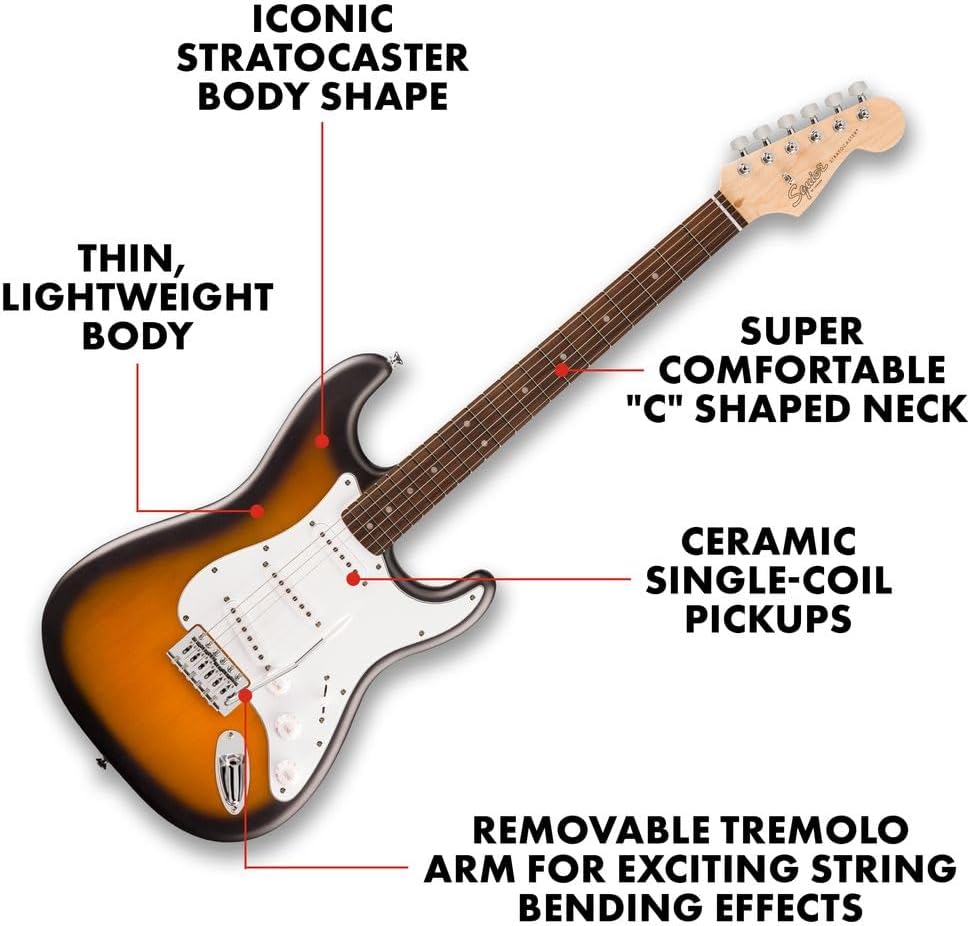
Squier Debut Stratocaster — SSS
Fender
$149.99
In stock on Amazon
Check price on AmazonThe Squier Debut Strat sits at the entry point of this comparison, typically retailing between $120 and $159. Guitar World’s “Best Cheap Electric Guitars” roundup (2025) identifies it as a strong performer at its price tier, noting that it delivers convincingly Fender-authentic character straight out of the box — a phrase that carries real weight when the instrument costs under $160. The SSS layout runs three single-coil pickups through a five-way selector, giving you the full range of classic Strat voices: bright and articulate at the neck, that signature “quack” in the in-between positions, and a slightly hotter bridge coil that can approach mild overdrive when pushed into a cranked amp. The one recurring mild criticism across reviews is the matte finish, which some find visually underwhelming. For what it is — a true beginner’s first electric with genuine Fender DNA — the Debut Strat performs above expectation at its price.
Best for: Beginners drawn to the Fender visual identity; blues, pop, funk, and country players who want authentic single-coil tone from the start.
Fender
$149.99
In stock on Amazon
Check price on AmazonSquier Debut Telecaster — SS
Fender
$149.99
In stock on Amazon
Check price on AmazonThe Squier Debut Telecaster runs a traditional two single-coil layout — bridge and neck — through a three-way selector. Where the Strat gives you five tonal positions and a rounder, smoother voice in the middle and neck, the Telecaster’s character is defined by contrast: the bridge pickup is bright, snappy, and biting in a way that no humbucker guitar can replicate, while the neck pickup delivers a warmer, rounder tone that makes the switch between the two feel like changing instruments. Guitar World’s ongoing coverage of entry-level Squier production notes that Fender’s quality control at this tier has improved meaningfully over recent years, making setup-ready playability more reliable than it was a decade ago. Owner patterns confirm this — a notable segment of Debut Telecaster buyers already own more expensive instruments and are purchasing the Tele specifically for tonal contrast with their humbucker-loaded guitars. The intonation and action are reported as arriving correctly set in a meaningful proportion of units, which is not a given at this price point.
Best for: Players who already own a humbucker guitar and want a bright, twangy complement; country, indie rock, and classic rock tones.
Fender
$149.99
In stock on Amazon
Check price on AmazonIbanez GRX70QA — HSH
Fender
$149.99
In stock on Amazon
Check price on AmazonThis is where the configuration conversation gets genuinely interesting. The GRX70QA runs a full HSH layout and typically retails between $180 and $220. MusicRadar’s “Best Electric Guitars Under $500” roundup (2025) identifies the GRX70QA as a consistently strong performer in its tier, specifically calling out Ibanez’s thin, fast neck profile as a genuine asset for players who find Gibson-style necks chunky — a feature Ibanez has refined across decades of production. Sweetwater’s product listing for the GRX70QA (2025) aggregates customer reviews that include experienced multi-guitar collectors comparing it favorably to instruments costing significantly more. Multiple owners who list reference guitars from well-regarded American manufacturers specifically identify the HSH layout as the key value differentiator at this price — you’re getting two full humbuckers for high-gain work, a single-coil in the middle for cleanup, and five distinct switch positions that include those blended in-between tones. For genre-agnostic buyers, this is the most logically complete tonal package in the sub-$250 range.
Best for: Players who want maximum tonal range from a single guitar; rock, metal, and genre-agnostic players who don’t want to commit to one voice.
Fender
$149.99
In stock on Amazon
Check price on AmazonEpiphone SG Special — HH
Fender
$149.99
In stock on Amazon
Check price on AmazonThe SG Special represents the HH argument in its purest form. Two humbuckers, a three-way selector, a mahogany-style body, and a slim neck — all for a street price in the $179–$229 range. Premier Guitar’s coverage of the Epiphone lineup has noted that recent production runs reflect tighter quality controls, particularly in fret finishing and nut height. Owner consensus from reviews aligns with that assessment: the SG Special is described by experienced players as delivering more than enough for someone who wants classic-rock tone without a significant financial commitment. The tradeoff is explicit. This guitar is not designed for players chasing bright, glassy clean tones. It absolutely can do clean work — the neck humbucker in particular delivers a warm, round, sustain-heavy clean that has its own appeal — but the voice is inherently full and dark, not crisp and airy. If that’s what you want, no guitar in this price range serves that goal more directly.
Best for: Hard rock, classic rock, and blues-rock players who know they want two humbuckers and aren’t interested in single-coil tones.
Fender
$149.99
In stock on Amazon
Check price on AmazonSide-by-Side Comparison
| Guitar | Config | Approx. Street Price | Switch Positions | Best Genre Fit |
|---|---|---|---|---|
| Squier Debut Strat | SSS | $120–$159 | 5-way | Blues, funk, pop, beginner all-around |
| Squier Debut Telecaster | SS | $120–$159 | 3-way | Country, indie, classic rock contrast |
| Ibanez GRX70QA | HSH | $180–$220 | 5-way | Rock, metal, genre-agnostic versatility |
| Epiphone SG Special | HH | $179–$229 | 3-way | Hard rock, classic rock, blues-rock |
The Decision Frame: If X, Then Y
If you’re a beginner who genuinely doesn’t know what genre you’ll end up in: The HSH layout on the Ibanez GRX70QA is arguably the most future-proof single guitar at this price. You can chase metal tones on the bridge humbucker, play clean indie on the neck humbucker, and hit those chimey in-between positions with the single-coil blended in. The Squier Debut Strat is the better call if you want the most “classic guitar” learning experience and are specifically drawn to the Fender visual and sonic identity.
If you already own a humbucker-heavy guitar and want a tonal complement: Buy the Squier Debut Telecaster. A meaningful number of owners are making this purchase specifically for the single-coil contrast with their existing instruments, and the reviews support the playability claims at this price tier.
If you know you want to play rock and metal and clean tones are secondary: The Epiphone SG Special is the correct answer. Don’t let anyone talk you into versatility you won’t use. Two humbuckers and a classic platform for gain-heavy playing is a complete package.
If your budget stretches to $200–$220 and you want maximum configurability: The GRX70QA is the value pick. The HSH layout at that price, validated by experienced multi-guitar owners across Sweetwater’s customer reviews and MusicRadar’s roundup coverage, is difficult to beat.
Frequently Asked Questions
Which pickup config is best for a beginner who doesn’t know their genre yet? HSS or HSH. Both give you access to humbucker tones for heavier playing and single-coil tones for cleaner, brighter sounds without committing permanently to one voice. The Ibanez GRX70QA’s HSH layout is the most complete option at the budget price point if you want to keep options fully open.
Does the Ibanez GRX70QA actually sound better than a Squier at the same price? “Better” depends entirely on what you want to hear. The GRX70QA has more tonal range due to the HSH config, and the thin Ibanez neck profile is genuinely faster for lead playing. The Squier Debut models deliver more authentic Fender DNA — that specific bright, twangy character the Ibanez doesn’t replicate. They serve different tonal goals. The “better” guitar is the one closer to the sound already in your head.
Is the SG Special’s HH config limiting if I want clean tones? It’s not limiting, but it is defining. You can get clean tones from two humbuckers — the neck pickup in particular sounds warm and full when played clean. What you won’t get is that bright, single-coil-style clarity. If your vision of clean tone is “chimey” or “glassy,” the SG Special isn’t the right tool. If your idea of clean is “warm, round, and full,” it delivers exactly that.
What does the five-way switch on the HSH actually do differently from a three-way? On a three-way switch (like the SG Special’s), you’re selecting bridge only, both pickups together, or neck only. On the five-way switch of an HSH guitar like the GRX70QA, positions 1 and 5 are the full bridge and neck humbuckers; positions 2 and 4 blend adjacent pickups (bridge humbucker plus middle single-coil, or middle single-coil plus neck humbucker); position 3 is the middle single-coil alone. Those blended positions produce a slightly out-of-phase, quacky, articulate tone that’s distinctly different from a pure humbucker — it’s where a lot of players find their defining clean or rhythm sound.
Does the Squier Debut Tele arrive needing a setup or is it truly play-ready? Based on aggregated owner reviews covered in Guitar World’s budget guitar roundup coverage (2025), a meaningful number of buyers report receiving the Debut Telecaster with intonation and action already set to playable spec. This is notable for a guitar at this price point, though manufacturing tolerances vary. If you’re buying locally, play it before you leave the store. If you’re ordering online, confirm the return policy before purchasing.
The honest summary: at this price range, you are not choosing between good and bad guitars. You are choosing between different tonal identities. Know what sound is already in your head — even approximately — and let the pickup configuration match it. The math is simple once you name the sound you’re chasing.