If you’ve never bought a practice amp before, here’s the short version: a practice amp is a small, low-powered amplifier — the box that makes your guitar loud — designed for bedroom or living-room use rather than a stage. The wattage number (10 watts, 12 watts) tells you roughly how much volume it can produce; higher is louder, but even 10 watts produces more sound than most beginners expect. Today we’re putting three of the most popular entry-level amps side by side: the Fender Frontman 10G, the Vox Pathfinder 10, and the Orange Crush 12. All three sell in the $60–$95 range as of mid-2026, all three offer both clean tones (your guitar’s natural sound, unprocessed) and overdrive (that crunchy, distorted sound central to rock music). The question is which one actually delivers on both promises — and which one is going to frustrate you six months from now.
Here’s what this article gives you: a straight comparison of tone, volume, pedal friendliness, and real-world usability, drawn from aggregated owner experience and published spec sheets, ending with clear “buy this if…” decision rules for each amp.
| EDITOR'S PICKVox Pathfinder 10 1x6.5 inch 10… | Mid-tierOrange Crush 12 12W 6" Guitar A… | Budget pickFender Frontman 10G Electric Gu… | |
|---|---|---|---|
| Power | 10W | 12W | 10W |
| Speaker | 6.5" | 6" | 6" |
| Channels | 1 | — | — |
| Built-in Overdrive | — | — | ✓ |
| Headphone Jack | — | — | ✓ |
| Aux Input | — | — | ✓ |
| Price | $129.99 | $119.00 | $89.99 |
| See on Amazon → | See on Amazon → | See on Amazon → |
The Contenders at a Glance
Before going deep, here are the numbers that matter:
| Amp | Watts | Speaker | Built-in Overdrive | Headphone Jack | Street Price (2026) |
|---|---|---|---|---|---|
| Fender Frontman 10G | 10W | 6” | Yes | Yes | ~$60 |
| Vox Pathfinder 10 | 10W | 6.5” | Yes (+ tremolo) | Yes | ~$85 |
| Orange Crush 12 | 12W | 6” | Yes | Yes | ~$95 |
All three are solid-state amps, meaning they use transistor circuits rather than vacuum tubes. Tubes — the glass components inside vintage and premium amps — produce a warmer, more complex sound that breaks up naturally when pushed hard. Solid-state amps are more consistent, lighter, cheaper, and require no maintenance, which is exactly why they dominate the practice-amp category.
The Vox Pathfinder is the oldest design of the three and has maintained a loyal following for well over a decade. The Orange Crush 12 is the current iteration of Orange’s budget line. The Frontman 10G is Fender’s long-standing entry-level workhorse.
Clean Tones and Overdrive: Where Each Amp Wins and Loses
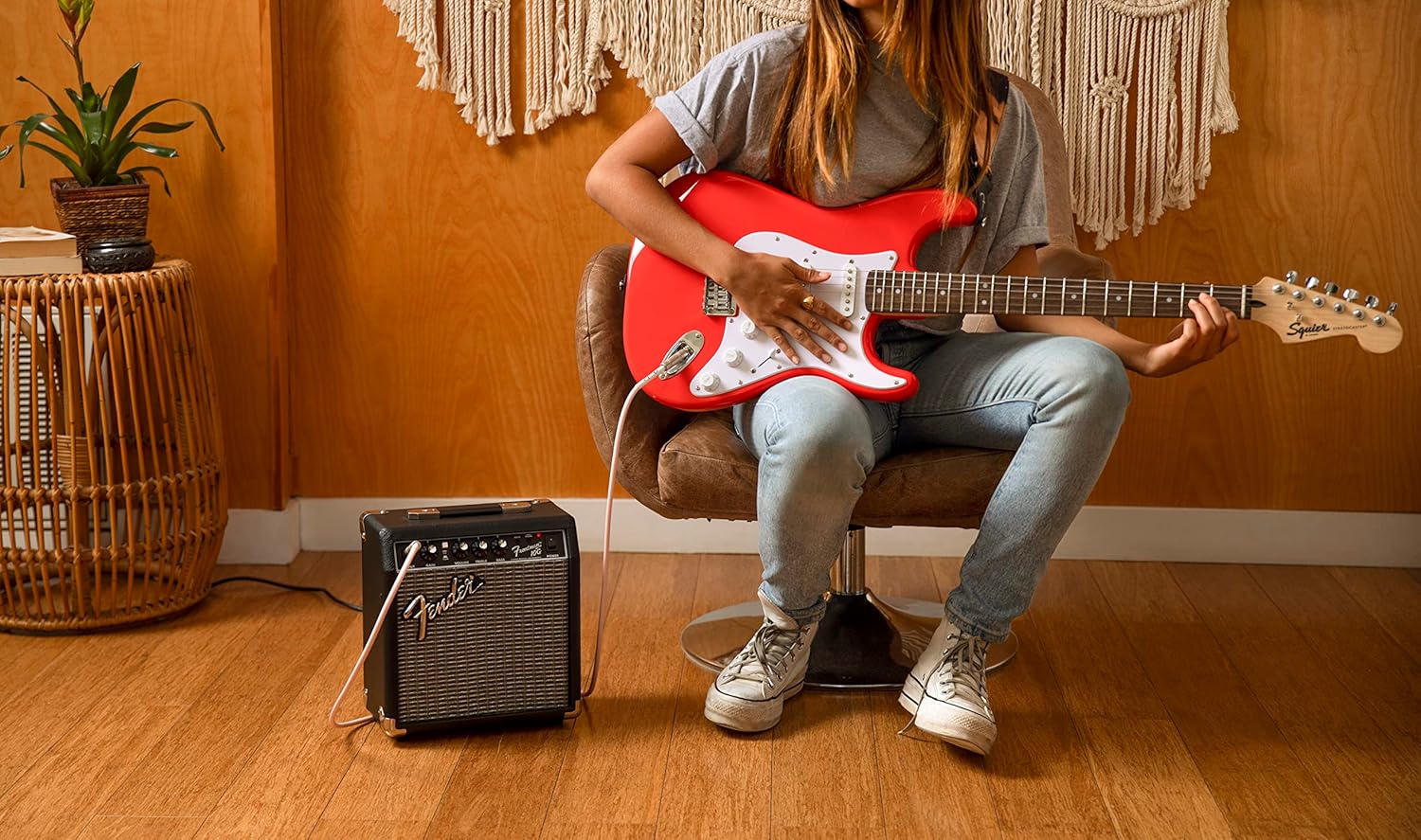
Fender Frontman 10G — Clean Workhorse, Weak Drive Channel
The Frontman 10G’s calling card is its clean channel. Owners consistently report that the cleans are bright, articulate, and genuinely Fender-flavored — which matters, because Fender’s clean tone is arguably the most imitated sound in electric guitar history. If you’re playing country, blues, or anything that lives in sparkly, bell-like territory, the Frontman’s clean channel earns its keep.
The overdrive channel is a different story. According to owner feedback documented in the Sweetwater Sound Fender Frontman 10G product Q&A, the built-in overdrive is almost universally described as harsh, fizzy, and not particularly musical. Experienced players who own the Frontman routinely recommend pairing it with an external overdrive pedal — a separate box placed between the guitar and the amp to add distortion — rather than relying on the amp’s own drive circuit. That’s not unusual at this price point, but it’s worth naming plainly: if you buy the Frontman 10G expecting its drive channel to handle rock tones convincingly, you’re likely to be disappointed. If you buy it knowing the clean channel is the star and plan to add a $40–$70 overdrive pedal later, the math changes significantly in its favor.
One underrated performance variable worth noting from Guitar World’s budget amp roundup: adjusting pickup height — how close the magnetic pickups sit to the guitar strings — is a free fix that meaningfully improves tone through any small amp, including the Frontman. It’s worth 10 minutes with a screwdriver before blaming the amp.
Fender
$89.99
In stock on Amazon
Check price on AmazonVox Pathfinder 10 — The Overachiever
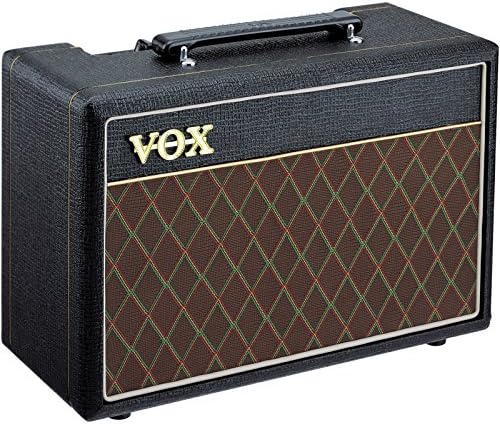
The Pathfinder punches above its weight class in a way that’s hard to explain until you encounter the depth of owner satisfaction it consistently generates. According to MusicRadar’s best practice amps buyer’s guide (2025 edition), the Vox Pathfinder regularly outperforms competing units at equivalent wattage in head-to-head evaluations — a pattern that has held across multiple annual revisions of that guide.
Part of what separates the Pathfinder is its speaker: the 6.5-inch driver is meaningfully larger than the 6-inch cones in the Frontman and Crush 12, and that half-inch difference translates to more low-end response and a less boxy midrange. The Pathfinder also includes tremolo — a built-in effect that creates a rhythmic volume-pulsing, the kind you hear on vintage surf and rockabilly recordings. It’s a purely analog circuit.
The Pathfinder contains no digital processing, no amp modeling, and no preset system — the Sweetwater Sound Vox Pathfinder 10 product page explicitly confirms the analog-only topology. For players who want to learn what an amp circuit actually sounds like rather than what software says it should sound like, that’s a feature, not a limitation.
The overdrive on the Pathfinder is more usable than the Frontman’s — not revelatory, but musical enough to practice with, particularly for classic rock and blues crunch. Sweetwater Sound owner Q&A responses for the Pathfinder 10 cite its ability to hold its own at low-volume rehearsal situations that would expose lesser amps.
Orange
$119.00
In stock on Amazon
Check price on AmazonOrange Crush 12 — The Pedal Platform
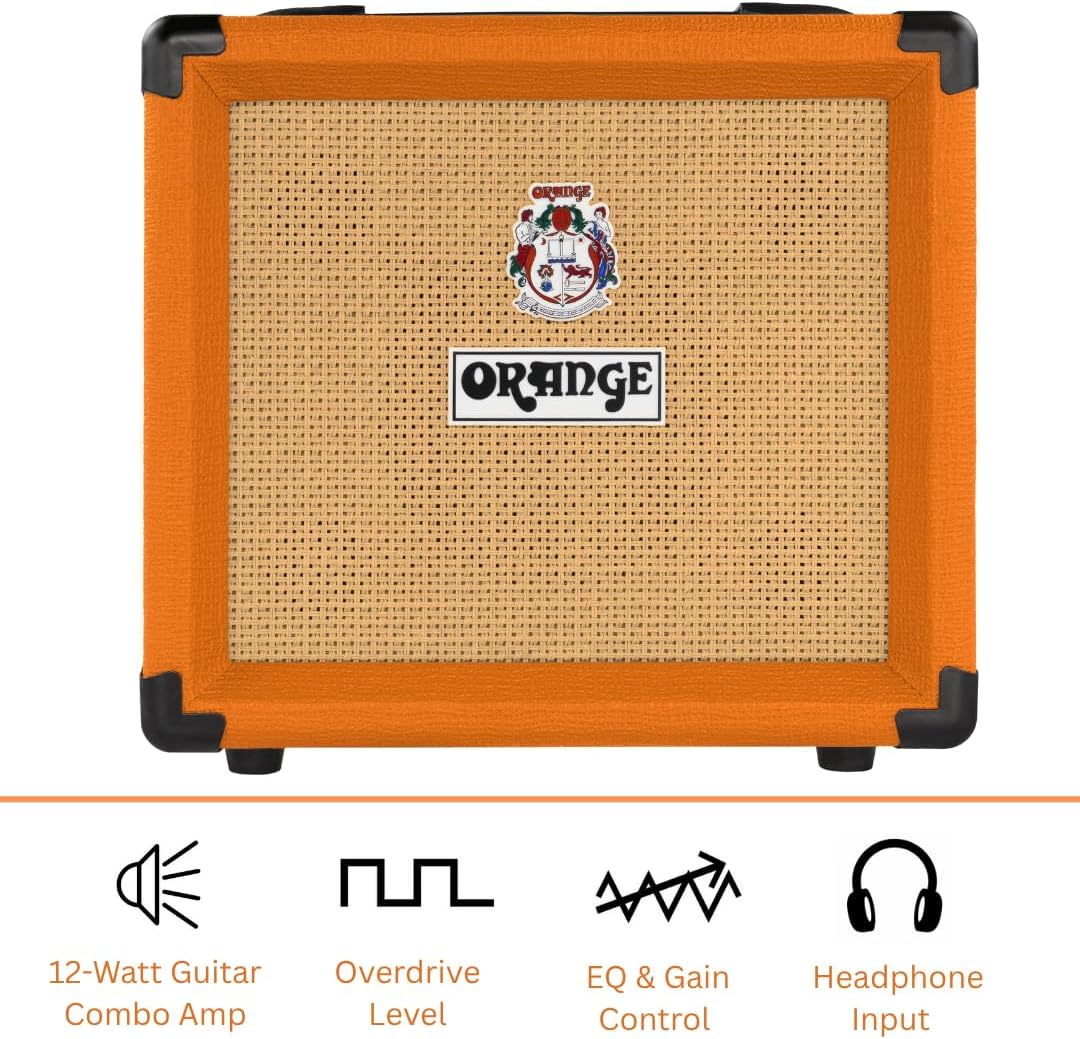
The Orange Crush 12 occupies the sweet spot between the Frontman’s clean clarity and the Pathfinder’s vintage character. Where the Crush 12 particularly distinguishes itself, according to owner reports documented in the Sweetwater Sound Orange Crush 12 product Q&A, is compatibility with active pickups. Active pickups — found on many metal guitars and high-output instruments — use a small onboard battery to boost their signal. They can overwhelm some practice amps and create unwanted noise or clipping at the input stage. Owners of the Crush 12 consistently report it handles active-pickup guitars cleanly, which makes it the strongest choice in this comparison for players already using or planning to use a guitar with active electronics.
The distortion channel on the Crush 12 is described in Guitar World’s budget amp roundup as functional and more present than the Frontman’s drive circuit — not revelatory, but usable without embarrassment. The Orange house sound, which leans toward midrange punch and harmonic density, translates even into their entry-level circuits. For pedal users, the Crush 12’s input stage is reported to respond well to external gain sources, making it the most pedal-forward of the three according to owner feedback aggregated on the Sweetwater Sound Crush 12 product page.
Vox
$129.99
In stock on Amazon
Check price on AmazonVolume Reality Check: How Loud Is 10–12 Watts?
A recurring theme across owner reviews of all three amps is genuine surprise at the volume 10 watts produces. This is worth addressing directly.
Wattage and perceived loudness don’t scale linearly. To double perceived loudness, you need roughly ten times the wattage. A 10-watt amp is not “one-tenth as loud” as a 100-watt amp — it’s closer to half as loud. In a bedroom, that’s still a significant amount of sound. MusicRadar’s best practice amps buyer’s guide notes that owners across the practice-amp category consistently report they rarely push the volume knob past 4 or 5 before it becomes uncomfortable in a home setting.
The practical implication: all three of these amps will be audible through interior walls at moderate settings. They are not “silent practice” tools. If you live in an apartment with thin walls or share space with family members during sleep hours, you’ll want a volume-limiting strategy — either the headphone jack (all three have one) or a dedicated headphone amp. Don’t buy any of these expecting library-level discretion at half-volume.
Pedal Friendliness: Which Amp Plays Best with External Effects?
If you’re building a signal chain — adding pedals for overdrive, reverb, delay, or other effects — amp input response and clean headroom matter. In plain language: some amps play nicely with external pedals, and some color or fight the pedal’s signal.
Based on aggregated owner experience across Sweetwater Sound product Q&A pages for all three amps, here’s the practical ranking for pedal compatibility:
-
Orange Crush 12 — Takes pedals exceptionally well, including high-output drives and active-pickup guitars. The clean channel’s headroom is sufficient to let a pedal do the tonal shaping without the amp fighting back.
-
Vox Pathfinder 10 — Responds well to clean boosts and light overdrive pedals. The analog circuit is predictable and doesn’t introduce artifacts that fight pedal signals. Works particularly well with vintage-voiced overdrives and fuzz boxes.
-
Fender Frontman 10G — Functional with pedals, and in fact, using an external pedal instead of the built-in overdrive is the approach recommended by owners who have spent time with the amp. The clean channel acts as a stable platform. Bypass the built-in drive entirely and the experience improves markedly.
Frequently Asked Questions
Is the built-in distortion on cheap practice amps ever usable, or should I always add a pedal?
Occasionally yes — but at this price tier, rarely without reservation. The Vox Pathfinder’s overdrive is the most musical of the three and is usable for practicing blues and classic rock. The Orange Crush 12’s distortion is functional. The Frontman 10G’s built-in drive is the consistent weak point — owners and reviewers documented in the Sweetwater Sound Frontman 10G Q&A essentially universally recommend bypassing it with an external pedal. A basic overdrive pedal in the $40–$80 range will outperform any built-in drive channel at this amp price point. Budget for it.
How loud is 10 watts — can my family hear it through the walls?
Yes, at moderate settings. Per MusicRadar’s best practice amps buyer’s guide (2025 edition), 10 watts in a bedroom context is genuinely loud. At typical practice volume (roughly 3–4 on the dial), you’ll be heard in adjacent rooms. Use the headphone jack for truly quiet practice.
Which of these amps works best with pedals I might add later?
The Orange Crush 12 is the strongest pedal platform of the three, based on owner-reported compatibility with high-output pickups and external drives as documented in the Sweetwater Sound Crush 12 product Q&A. The Pathfinder and Frontman both work with pedals, but the Crush 12’s input stage is the most accommodating.
Does the Vox Pathfinder 10 have any amp modeling or is it purely analog?
Purely analog. The Pathfinder contains no digital processing, no amp modeling, and no preset system, as confirmed by the Sweetwater Sound Vox Pathfinder 10 product page. For players who want simplicity and a “real” circuit feel, that’s a genuine advantage.
Can I use the Fender Frontman headphone jack for recording directly into a computer?
The headphone jack outputs a signal you can route into a computer interface, but the sound quality for recording purposes is limited. The Sweetwater Sound Fender Frontman 10G product Q&A notes the headphone output is designed for silent practice monitoring rather than studio-quality direct recording. For serious direct recording, a dedicated audio interface paired with impulse response software will produce far better results. The headphone jack works for sketching ideas — don’t expect professional results.
The Decision Rules
Buy the Fender Frontman 10G if: Clean Fender tone is your priority, budget is the tightest constraint (~$60), and you’re willing to add a $40–$60 external overdrive pedal down the road. It’s not a complete solution out of the box for rock players, but as a clean-platform amp it earns its price.
Buy the Vox Pathfinder 10 if: You want the best all-around performer at this wattage without touching a pedal, you play classic rock, blues, or worship music, or you want an amp that can credibly hold its own at a low-volume live rehearsal. The Pathfinder consistently overdelivers relative to its price and is our top recommendation in this comparison.
Buy the Orange Crush 12 if: You play with active pickups (common on metal and high-output guitars), you’re building a pedal-forward rig and want the most accommodating platform, or the Orange house sound — punchy, midrange-forward — matches the music you play. At ~$95, it’s the best value for players who already know pedals are in their future.
All three amps are available through Sweetwater, Guitar Center, and Reverb — compare current pricing before you buy, as street prices on this tier shift frequently.