If you’ve been shopping for your first real acoustic guitar — or a rugged second instrument you won’t be afraid to throw in a car trunk — you’ve probably landed on three names pretty quickly: the Fender CD-60S, the Yamaha FG800J, and the Yamaha FG830. All three sit in the $180–$300 window (as of May 2026), all three feature a solid top (meaning the soundboard is made from a single piece of real wood rather than compressed plywood layers), and all three are regularly praised as overperformers for their price. A solid top resonates more freely than laminate and improves with age, giving you a guitar that actually gets better as you play it. So which one belongs in your hands? This breakdown covers tone character, playability, value math, and the honest tradeoffs that most buying guides skip.
The Contenders at a Glance
Before diving into feel and character, here’s the hardware picture.
| Guitar | Top | Back & Sides | Nut Width | Street Price (May 2026) | Tier |
|---|---|---|---|---|---|
| Fender CD-60S | Solid mahogany | Mahogany (laminate) | 1.69” | ~$199 | Fender — $229.99 |
| Yamaha FG800J | Solid Sitka spruce | Nato/Okoume (laminate) | 1.69” | ~$199–$219 | Fender — $299.99 |
| Yamaha FG830 | Solid Sitka spruce | Rosewood (laminate) | 1.69” | ~$299–$329 | Yamaha — $429.99 |
Note: The FG830 has crept toward $299 at major retailers in 2026, which reshapes the value calculus meaningfully. Factor that into every “is it worth the extra money” question below.
Tone Character: Three Guitars, Three Voices
Fender CD-60S — Mahogany Warmth
The CD-60S is the outlier here in the best possible way. While both Yamahas use Sitka spruce tops, Fender went with a solid mahogany top paired with mahogany back and sides — an all-mahogany construction that produces a fundamentally different sound. Owners and reviewers consistently describe the result as warm, woody, and midrange-forward, with less high-end sparkle than a spruce-top guitar and more of what experienced players call “presence” in the low-mids.
Acoustic Guitar Magazine’s editorial coverage of solid-top entry-level instruments notes that mahogany-topped guitars at this price point have matured considerably in recent years, narrowing the gap between budget and mid-tier acoustics. One practical benefit for beginners: the warmth of mahogany is forgiving. It softens the harshness that can emerge when technique is still rough around the edges — catching strings accidentally or applying uneven pressure produces less of the glassy, unpleasant overtones that a bright spruce top can amplify.
Who this tone serves: Blues players, fingerstylists, and singer-songwriters who want warmth and woody depth rather than sparkle. If you’re playing open-chord folk songs by the fire or working through fingerpicking patterns, the CD-60S’s voice suits the context naturally.
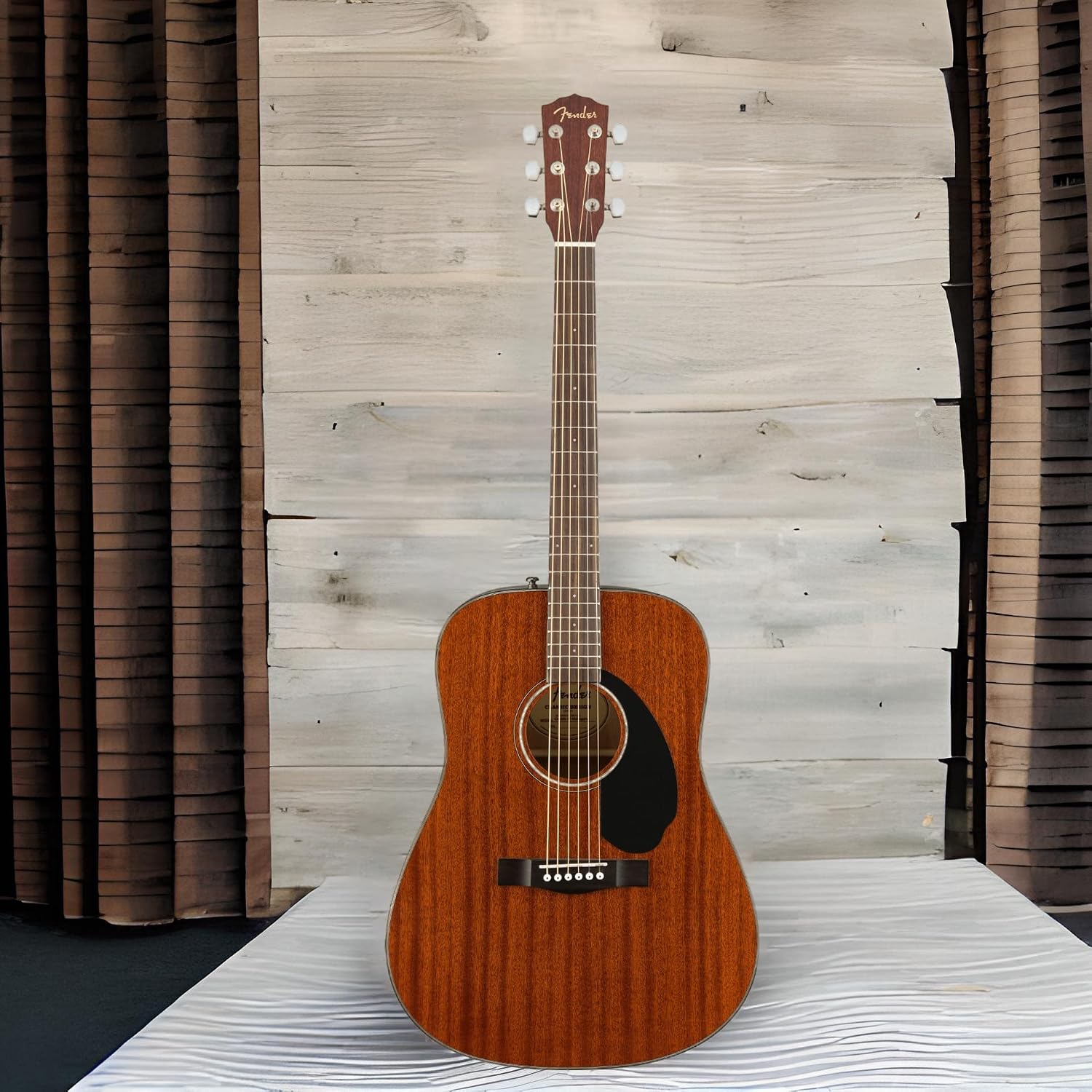
Fender
$229.99
In stock on Amazon
Check price on AmazonYamaha FG800J — Spruce Brightness, Versatile All-Rounder
The FG800J uses a solid Sitka spruce top over nato and okoume back and sides — the classic dreadnought combination that has defined the acoustic guitar sound on country, pop, and folk recordings for generations. Spruce tops are dynamic: they get louder and more harmonically complex as you dig in harder, rewarding aggressive strumming with projection and clarity.
Guitar World’s roundup of best beginner acoustic guitars highlights the FG800J’s note separation as a particular strength — individual notes in a chord ring out with definition rather than blurring together. That’s a quality that matters both for strumming patterns and for basic fingerpicking, where string-to-string clarity makes chord voicings easier to hear and evaluate.
Yamaha’s die-cast chrome tuners earn consistent praise for tuning stability across temperature and humidity changes, which matters for a guitar that travels. The neck profile runs slightly slimmer than the CD-60S, which players with smaller hands often prefer specifically for barre chord work.
Who this tone serves: Players who want the most versatile all-rounder — equally at home strumming pop chords, flatpicking country lines, or working through basic fingerstyle patterns. If you’re not sure what style you’ll settle into, the FG800J’s broad tonal palette is an asset.

Fender
$299.99
In stock on Amazon
Check price on AmazonYamaha FG830 — Rosewood Depth, Experienced-Player Approval
The FG830 shares the FG800J’s solid Sitka spruce top but upgrades the back and sides to rosewood — and that single change meaningfully shifts the sonic character. Rosewood adds depth and resonance in the low-mid frequencies that nato and okoume don’t fully replicate. The result, per MusicRadar’s acoustic guitar buying guide coverage of the FG830, is a sound reviewers describe as “fuller and more open,” particularly noticeable during fingerpicking or when playing in open tunings where individual string resonance is more exposed.
The FG830 also features Yamaha’s scalloped bracing — an internal bracing pattern that allows the spruce top to vibrate more freely than standard ladder or non-scalloped designs. This is a construction detail more commonly found on guitars priced well above $300, and it contributes to the responsiveness that surprises players who approach the FG830 expecting entry-level limitations.
One practical note worth flagging: multiple buyer reports have described the FG830 occasionally shipping without a protective outer carton — just the factory inner box — which raises a legitimate concern about transit damage when ordering online. Confirming packaging with a retailer before purchase is a reasonable precaution.
Who this tone serves: Players who can stretch to $299 and want a guitar that experienced players — including those who own instruments costing many times more — describe as punching far above its price. The FG830 is the strongest choice if you’re treating this as a serious long-term instrument rather than a pure starter.
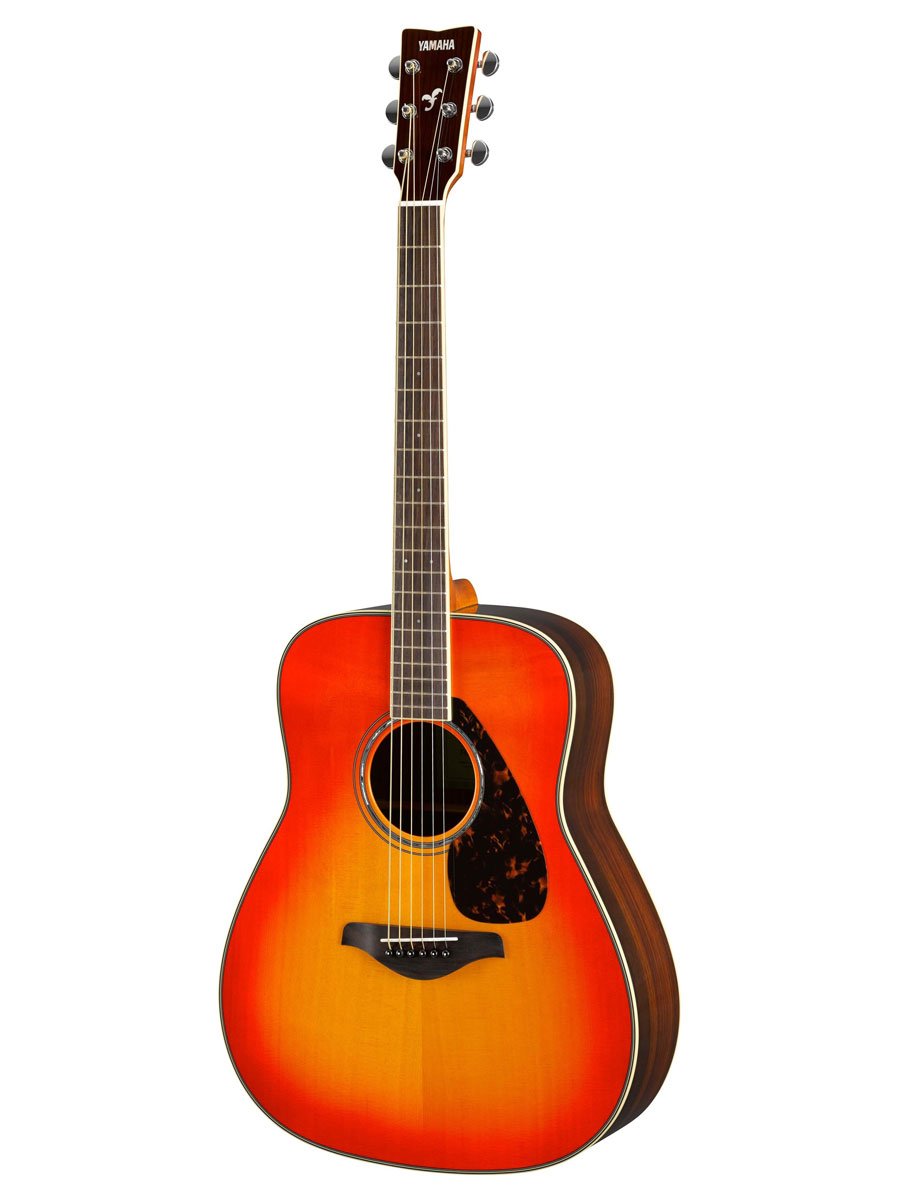
Yamaha
$429.99
In stock on Amazon
Check price on AmazonPlayability, Setup, and Out-of-the-Box Reality
Setup quality — the action height, nut slot depth, and intonation a guitar ships with — is often the difference between a beginner who sticks with playing and one who quits. A poorly set-up guitar fights you: strings sit too high off the fretboard, barre chords become painful, and the guitar never quite plays in tune up the neck.
The Fender CD-60S stands out in this category. Guitar World’s beginner acoustic roundup specifically identifies the CD-60S’s factory setup consistency as a differentiator in this price bracket. Across aggregated buyer reviews, the CD-60S receives unusually consistent praise for arriving playable right out of the box — not “acceptable for the price,” but genuinely playable by the standards of players who own more expensive instruments. One pattern that appears repeatedly: buyers with significant guitar experience describe the factory setup as “near-perfect” and the fit and finish as reliable unit-to-unit. That consistency is rare and valuable at this price.
The FG800J earns quieter but equally substantive praise for tuning stability and comfortable extended playability. Setup quality is generally solid but shows slightly more unit-to-unit variability than the CD-60S, which means the occasional instrument may benefit from a $40–$60 professional setup at a local guitar shop.
The FG830 receives the strongest tone reviews of the three but shows the most setup variability in buyer reports. The shipping-without-outer-carton issue noted above compounds this slightly — an instrument that arrives after rough transit may need setup attention regardless of how it left the factory. Budget for a professional setup if you order online.
The Bundle Question: Does the CD-60S Deal Change the Math?
Yes — and this deserves honest analysis.
The Fender CD-60S bundle configurations (guitar plus hard case plus accessories) have been specifically highlighted by experienced buyers as the best all-in package value at this tier. A comparable standalone hard case retails for $60–$90, which means a bundled CD-60S at ~$229 carries meaningfully more value than the raw guitar price implies.
If you’re comparing a bundled CD-60S at $229 (guitar, hard case, strap, picks) against a standalone FG800J at $219, you are not comparing equivalent value propositions. The case alone nearly closes the dollar gap, and for a player who needs to transport the guitar — lessons, rehearsals, travel — the bundle reshapes the decision significantly.
That said, a bundle is a tiebreaker, not a trump card. If the FG800J’s spruce-top brightness is genuinely what your playing style needs, buying the CD-60S for the case doesn’t serve your tone. Use the bundle math when you’re already leaning toward the CD-60S; don’t let it override a clear tonal preference for spruce.
Can an Experienced Player Be Genuinely Happy with a Sub-$300 Acoustic?
This question comes up often, and it’s worth addressing directly rather than hedging.
The FG830 has accumulated an unusual category of review: experienced players — people who own acoustics priced at $1,500 and above — who bought it as a travel or beater guitar and ended up describing it in terms that go well beyond polite surprise. MusicRadar’s acoustic guitar roundup analysis attributes much of this to Yamaha’s scalloped bracing, which produces a top responsiveness rarely found at this price point. These are not beginners easily impressed by their first decent guitar; these are calibrated ears reporting genuine tonal satisfaction.
The CD-60S draws similar testimony at a slightly less emphatic register. Acoustic Guitar Magazine’s editorial coverage of the solid-top entry-level segment notes that the all-mahogany format has matured enough in quality and consistency that the gap between this tier and mid-priced acoustics is narrower than it was a decade ago.
The honest answer: yes, any of these three guitars can genuinely satisfy an experienced player for the right use case — not as a compromise, but as an actual instrument.
Frequently Asked Questions
Is the CD-60S actually better than the FG800J, or does the bundle make it look that way? Both are genuinely good guitars. The CD-60S edges the FG800J on factory setup consistency — it arrives more reliably playable. The bundle adds real value. But if spruce-top articulation fits your style better, the FG800J is the right call regardless of what comes in the box.
What does all-mahogany construction mean for tone? Mahogany produces warmth, midrange fullness, and slightly reduced high-end brightness compared to spruce. It tends to flatter fingerpicking and blues; spruce rewards strumming and flatpicking. Neither is superior — they suit different styles.
Is the FG830 worth the extra money over the FG800J? At $80–$100 more (May 2026 pricing), it’s a real question. The rosewood back and sides add depth that experienced players notice, especially fingerpicking. If your budget is firm at $200–$220, the FG800J is not a compromise. If you can stretch, the FG830’s tone ceiling is meaningfully higher.
Do any of these guitars need a professional setup? The CD-60S is the most consistent out-of-the-box performer. The FG800J and FG830 show more unit-to-unit variability. A professional setup typically costs $40–$60 and transforms any guitar in this range — budget for it if you can, especially with the FG830.
Which is best for fingerpicking vs. strumming? For fingerpicking: the CD-60S’s mahogany warmth or the FG830’s rosewood depth both serve well. For strumming: the FG800J or FG830’s spruce top provides brightness and projection that rewards aggressive playing. The FG800J is arguably the most versatile all-rounder.
The Decision Framework
- Buy the Fender CD-60S if you want the warmest tone, the most reliable factory setup, and the best all-in bundle value — particularly if you need a case and want a guitar that plays well on day one without extra work.
Fender
$229.99
In stock on Amazon
Check price on Amazon- Buy the Yamaha FG800J if spruce-top brightness fits your playing style and you want a versatile all-rounder at the lowest price point without stretching to the FG830’s premium.
Fender
$299.99
In stock on Amazon
Check price on Amazon- Buy the Yamaha FG830 if you can stretch to $299 and want the guitar that experienced players consistently describe as punching far above its price — especially for fingerstyle or if this is your serious long-term instrument rather than a pure starter.
Yamaha
$429.99
In stock on Amazon
Check price on AmazonAll three are legitimate choices. The question is which tradeoffs match your playing style, your genre, and your budget — and you now have the full picture to decide.