If you’re just starting to shop for your first electric guitar — or coming back to the instrument after a long break — the options at the entry-level price point ($150–$250) have genuinely never been better. An electric guitar is simply a solid or semi-hollow body of wood fitted with magnetic pickups (small coils of wire that turn string vibration into an electrical signal) and sent through an amplifier. That’s the whole system. The three guitars in this comparison — the Squier Debut Telecaster, the Epiphone SG Special, and the Ibanez GRX70QA — each approach that system from a different angle: different body shapes, different pickup layouts, different sonic personalities. By the time you reach the end of this article, you’ll have a clear “if this is you, buy that one” framework. No guessing, no vague generalizations.
If you already know what a humbucker is and you’ve spent the past two weeks watching YouTube demos trying to decide between these exact three guitars, we’ll get to the granular stuff fast. The published reviewer record on all three instruments is unusually rich — and some of it is surprising.
What You’re Actually Choosing Between
Let’s establish the structural differences before we get into tone and feel, because body shape and pickup configuration — the arrangement of pickups on the guitar body — genuinely determine which music you can credibly play.
Specs at a glance:
| Guitar | Body Shape | Pickup Config | Scale Length | Approx. Street Price |
|---|---|---|---|---|
| Squier Debut Telecaster | Single-cutaway slab | SS (two single-coils) | 25.5” | ~$149–$179 |
| Epiphone SG Special | Double-cutaway horns | HH (two humbuckers) | 24.75” | ~$179–$199 |
| Ibanez GRX70QA | Double-cutaway | HSH (humbucker-single-humbucker) | 25.5” | ~$199–$229 |
Scale length — the distance between the nut at the top of the neck and the saddle at the bridge — affects string tension and the reach between frets. The Squier and Ibanez share a 25.5-inch scale, which feels slightly tauter and brighter. The Epiphone runs 24.75 inches — fractionally shorter, fractionally looser — the same measurement Gibson has used on Les Pauls and SGs for decades.
The Three Guitars, Head to Head
Squier Debut Telecaster: Simplicity Done Right
Fender
$149.99
In stock on Amazon
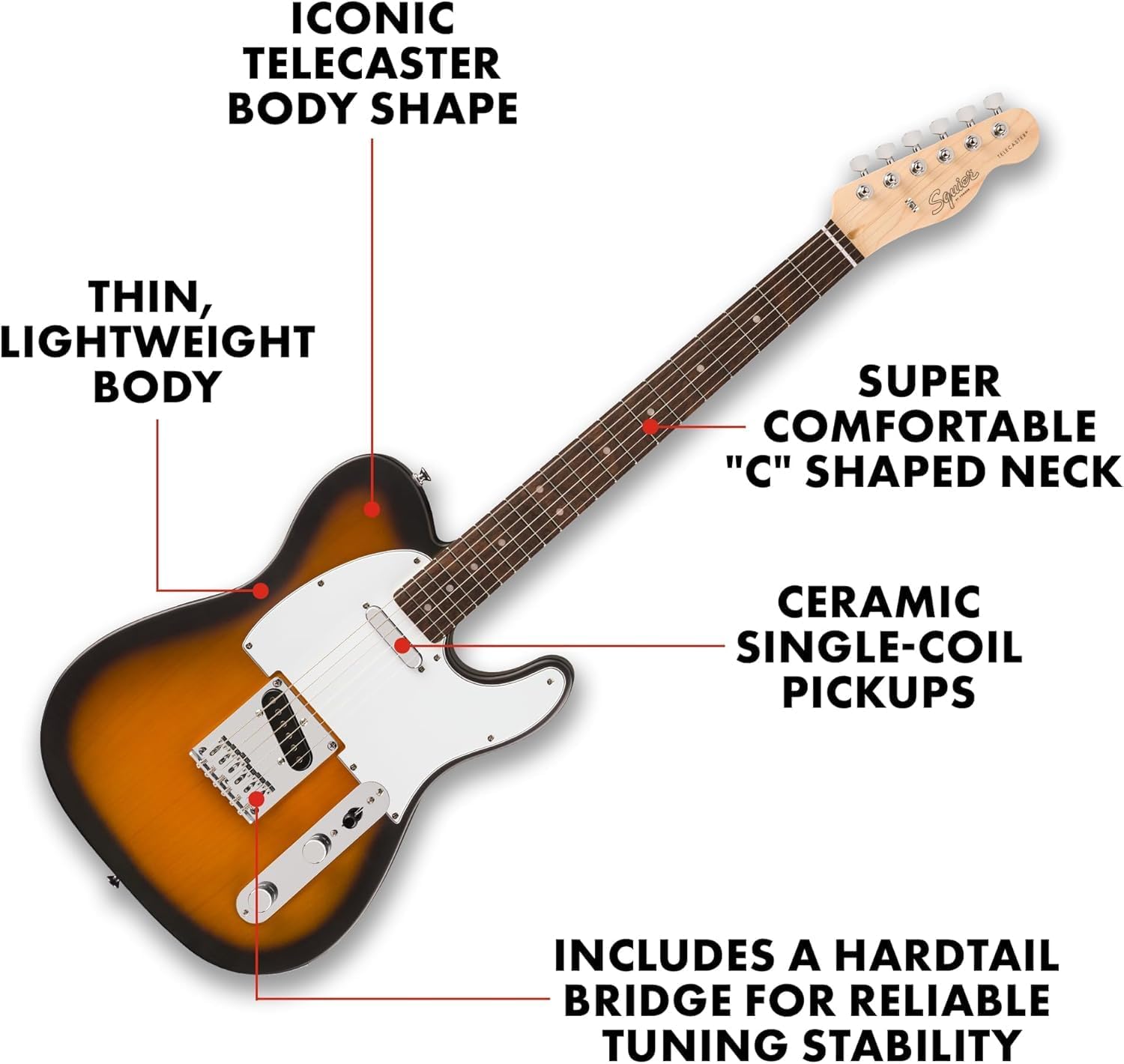
Check price on AmazonThe Telecaster — almost universally called a “Tele” — is one of the oldest electric guitar designs still in continuous production. Fender’s budget-brand Squier has made affordable versions for years. The Debut series is their newest and most accessible entry point, engineered with first-time buyers specifically in mind.
MusicRadar’s coverage of the Debut Series notes that Fender’s intent with the line was explicitly to compete on playability rather than price alone. That editorial judgment is borne out in the owner review record: players with enough experience to recognize a properly set-up guitar consistently describe the out-of-box setup — fret heights, string action, and intonation — in unexpectedly positive terms for this price range. A guitar that plays uncomfortably is a guitar that ends up in the closet, which is why factory setup quality matters as much as it does for a beginner instrument.
The two single-coil pickups produce what Guitar World’s best beginner electric guitar roundup characterizes as the classic Telecaster voice: articulate, bright, and precise, with the twangy snap that has defined country, indie rock, and clean-channel classic rock for more than 70 years. It’s a specific voice, but it’s an enduringly useful one.
The honest caveat: A recurring complaint across owner reviews is that the finish colors look significantly more vivid in product photography than in person. Butterscotch and vintage white models in particular tend to arrive looking more muted — sometimes with slight greenish or brownish casts — under real-world lighting. This is cosmetic, not functional, but worth knowing before you open the box if you ordered online based on a product photo.
Buy this if: You want to learn on a guitar that sounds like the guitar on your favorite country, indie, or classic rock records. If clean, unprocessed tone matters to you and you want something that can hold its own next to a much more expensive Fender, the Debut Tele earns that comparison honestly.
Fender
$149.99
In stock on Amazon
Check price on AmazonEpiphone SG Special: When Veteran Players Are the Ones Impressed
Fender
$149.99
In stock on Amazon
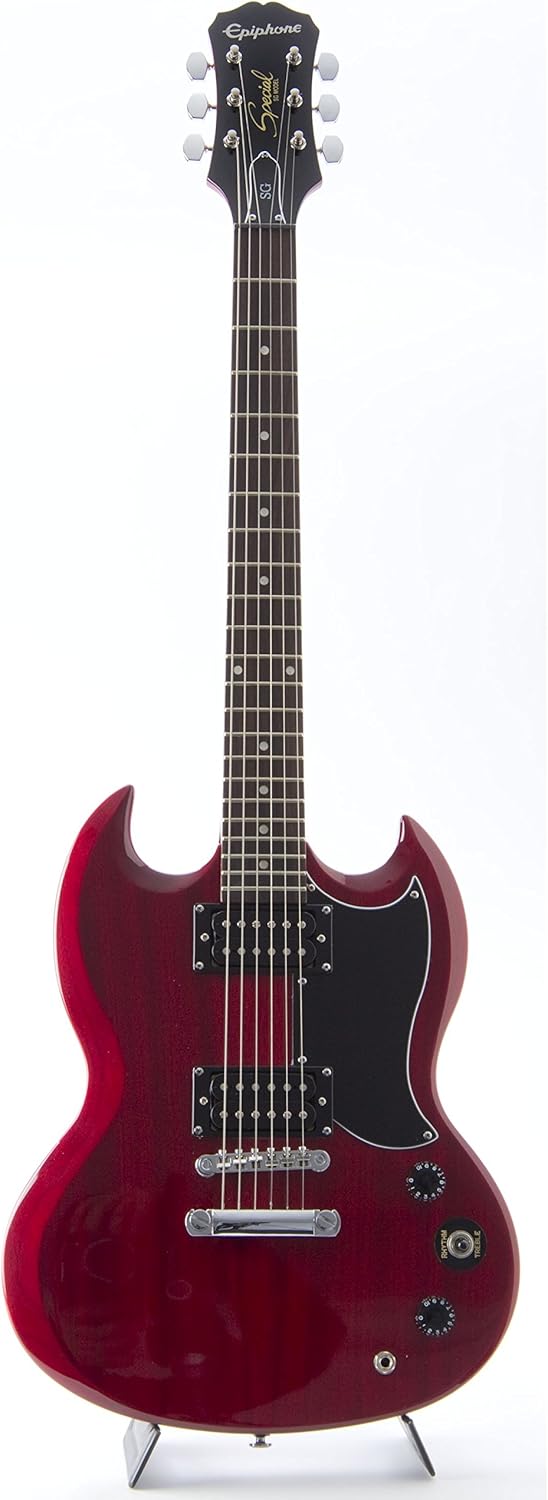
Check price on AmazonThe SG — the name stands for “Solid Guitar” — is Gibson’s other iconic shape: the twin-horned double-cutaway body with devil-horn curves that has been attached to everyone from Angus Young to Tony Iommi to Jack White. Epiphone is Gibson’s own budget line, and the SG Special is the floor-level entry into that lineage.
What makes the owner-review record on the SG Special genuinely striking is who’s writing those reviews. Premier Guitar’s budget guitar roundup coverage and aggregated owner commentary consistently surface players with 20 to 30 years of experience and extensive collections — people who own vintage instruments and boutique gear — expressing genuine surprise at the build quality. Fret ends, which are the metal tips where fret wire meets the edge of the neck and are notoriously sharp and unfinished on cheap guitars, receive notably positive treatment in experienced-player reviews. The common verdict from those reviewers is that the SG Special delivers more than enough quality for beginners — delivered by people who know exactly what the alternative looks like.
The HH pickup configuration — two humbuckers, which are hum-canceling pickups that produce a thicker, warmer, less noise-prone signal than single-coils — means the SG Special leans hard toward rock and metal tones. This is not a versatile guitar in the traditional sense; it is a focused guitar. It does thick, warm, and heavy very well. It does bright and glassy less convincingly.
The 24.75-inch scale length also makes chord fingering slightly more comfortable for players with smaller hands or shorter fingers — a practical consideration that gets overlooked in most spec comparisons.
Guitar World’s beginner electric guitar roundup consistently positions the SG Special as the strongest value pick for players whose amplifier will spend most of its life above noon on the gain knob.
Buy this if: Your musical touchstones are rock and metal — AC/DC, Black Sabbath, Guns N’ Roses, or modern hard rock. If you want to play power chords and palm-muted riffs and you are not particularly interested in clean, twangy tones, the SG Special’s HH layout gives you more useful tonal territory for that genre than either of the other two guitars at this price.
Fender
$149.99
In stock on Amazon
Check price on AmazonIbanez GRX70QA: The Sleeper Pick for Players Who’ve Been Around
Epiphone
$199.00
In stock on Amazon
Check price on AmazonHere is where this comparison gets interesting. The Ibanez GRX70QA — the “QA” designation refers to the quilted art finish, a translucent color laid over a patterned top that makes the guitar look significantly more expensive than it is — pulls a demographically unusual reviewer profile. Sweetwater’s owner Q&A section for the GRX70QA is particularly rich with a specific pattern: players returning to the instrument after five, ten, or fifteen years away who grabbed one out of curiosity and found themselves genuinely impressed by the feel and tonal range. Collectors who own Martins, Gibsons, and Gretschs appear in that owner commentary describing the GRX70QA as playing on par with their more expensive electrics.
The reason experienced players gravitate toward it is almost always the same: the HSH pickup configuration. HSH means humbucker in the bridge position, single-coil in the middle, humbucker in the neck. A five-way selector switch lets you blend these pickups in different combinations. In practical terms, the bridge humbucker delivers thick, aggressive tones for rock and metal; the middle single-coil produces a brighter, glassier sound useful for clean playing; the neck humbucker provides warm, round tones suited to leads and jazz-adjacent work. It is a more flexible pickup palette than either the Tele’s SS layout or the SG’s HH layout, which is why players with genre variety in their playing find it more useful.
MusicRadar’s coverage of the broader Ibanez GRX series notes that the line has historically over-delivered on hardware quality relative to price, a pattern the GRX70QA continues. The quilted finish also photographs and presents well in person — it looks genuinely premium at a price that doesn’t suggest it, which doesn’t affect tone but does affect how willing you are to pick the guitar up every day.
The tradeoff: HSH versatility means the GRX70QA is not the best at any single thing — it is the best at covering multiple things. If your genre is specific and settled, the Tele or the SG will serve that one zone more authentically. If you play across styles or genuinely don’t know yet where your playing will go, the GRX70QA is the safer all-around investment.
Buy this if: You want tonal range, you have some guitar experience you’re rebuilding or expanding, and you want something that won’t immediately feel limiting as your technique and genre curiosity develop. The HSH layout is the feature that separates this guitar from similarly priced competitors and the reason players with expensive gear in their closet still describe it the way they do.
Epiphone
$199.00
In stock on Amazon
Check price on AmazonFrequently Asked Questions
Does the Squier Debut Telecaster actually come set up and playable out of the box?
Across aggregated owner reviews, the answer trends positive in a way that is unusual for this price range. Players experienced enough to recognize a proper setup describe fret heights and action as genuinely playable without needing a tech visit. That said, any guitar shipped through a retailer can shift in transit due to humidity and temperature changes, so checking intonation — whether the guitar plays in tune at the 12th fret as well as open — on arrival is always worth doing. The consensus is that the Debut Tele arrives there more reliably than most guitars at this price.
How does the Epiphone SG Special compare to a Squier Stratocaster for a beginner?
They serve different sonic identities. A Stratocaster runs three single-coil pickups and produces bright, glassy, articulate tones associated with blues, funk, surf, and clean-channel rock. The SG Special’s two humbuckers produce a thicker, warmer sound with more natural drive. Neither is objectively better — the question is what music you want to play. If your references are Jimi Hendrix and John Mayer, the Stratocaster wins. If your references are AC/DC and Black Sabbath, the SG Special is the more honest instrument for that purpose.
What does HSH pickup configuration mean and why does it matter on the Ibanez GRX70QA?
HSH stands for Humbucker-Single coil-Humbucker, describing the three pickup positions from bridge to neck. A five-way selector switch lets you access these pickups in different combinations. Bridge humbucker: thick and aggressive, good for rock and metal. Middle single-coil: bright and glassy, good for clean playing. Neck humbucker: warm and round, good for leads and softer styles. That range is the reason players with experience — and therefore a developed ear for what tonal variety can do for them — consistently find the GRX70QA more useful than simpler pickup layouts at the same price.
Are the finish colors on the Squier Debut Series accurate to product photography?
Consistently, no. This is the single most common complaint in Debut Series owner reviews. Colors that appear vivid, saturated, and rich in product photos arrive looking noticeably more muted under regular light. Butterscotch yellows can lean greenish. Reds can appear more brown. This is a cosmetic issue, not a functional one — the guitar plays the same regardless. But if the color is a significant factor in why you’re choosing a specific model, try to view in-store stock in person before purchasing online.
Which of these three guitars holds its tuning most reliably?
Owner reports give the Epiphone SG Special slightly more mixed tuning-stability reviews — the stock tuners are functional but some owners report retuning more frequently during extended playing sessions. The Squier Debut Telecaster and Ibanez GRX70QA receive more consistently positive tuning reports. All three benefit from proper nut lubrication and correct string winding technique at installation, which matters more than hardware differences at this price tier.
The Decision Rule
One clear framework: play in a specific genre — buy the guitar built for that genre’s sound. Telecaster for country, indie, and clean-channel rock. SG Special for hard rock and metal. Play across genres, or don’t know yet — the GRX70QA’s HSH configuration gives you the most room to discover where you land without immediately outgrowing the instrument’s tonal range.
All three of these guitars are genuinely good in ways that weren’t true of budget instruments even five years ago. Guitar World’s beginner roundup coverage and Premier Guitar’s budget guitar commentary both reflect an industry-wide acknowledgment that the entry-level floor has risen. The question is simply which floor is under the music you want to make.