If you’ve just picked up your first electric guitar — maybe a Squier Affinity, an Ibanez GRX70QA, or a beginner acoustic-electric — and you’re plugging into a small practice amp, you’ve probably had the same thought every new player has: this doesn’t sound like the records I love. That gap is real, but it’s smaller than you think, and the fix is cheaper than you’d expect. A multi-effects unit — a single floor pedal that simulates dozens of individual effects (distortion, reverb, chorus, wah, delay, and more) plus different amp tones, all in one box — can dramatically change what your rig sounds like without changing the guitar itself. This article breaks down three of the most talked-about budget options right now — the Zoom G1X FOUR, the Boss GT-1, and the FLAMMA FX100 — and tells you exactly which one fits your situation, your amp setup, and your level of patience for menus.
All three units sit below $150 at street price as of mid-2026. None of them are toys. Guitar World and MusicRadar both publish annual multi-effects buying guides that include units in this price tier alongside far more expensive options — and a consistent theme across those guides is that players pairing budget processors with entry-level guitars like the Squier Debut, the Jasmine S35, or the Ibanez GRX consistently report that the combination sounds far more expensive than the sum of its parts. That’s worth taking seriously.
The Core Tradeoff You’re Actually Making
Before comparing units, it’s worth naming the fundamental decision you make when you put a multi-effects processor into your signal chain — the path your sound travels from guitar to amp or speakers.
You’re trading simplicity for range. A single distortion pedal — something like the Boss DS-1, which does one thing — is plug-and-play. A multi-effects unit gives you 50, 80, or 200 different sounds, but it asks something of you in return: time spent learning its architecture.
That tradeoff looks different depending on your goals:
- Just want to sound better tonight? You need presets that are usable out of the box and an interface that doesn’t punish you for skipping the manual.
- Building a signal chain for recording or live performance? You care about routing flexibility — specifically whether the unit can run in front of your amp (standard mode) or through the amp’s effects loop, a secondary input that bypasses the amp’s preamp stage so effects don’t color the core amp tone.
- Running without a traditional amp? You need solid headphone output and direct recording capability — plugging straight into a computer or audio interface without extra gear.
Each of the three units below handles these scenarios differently. That’s the real comparison.
Three Units, Three Use Cases
Zoom G1X FOUR: The One That Goes Anywhere
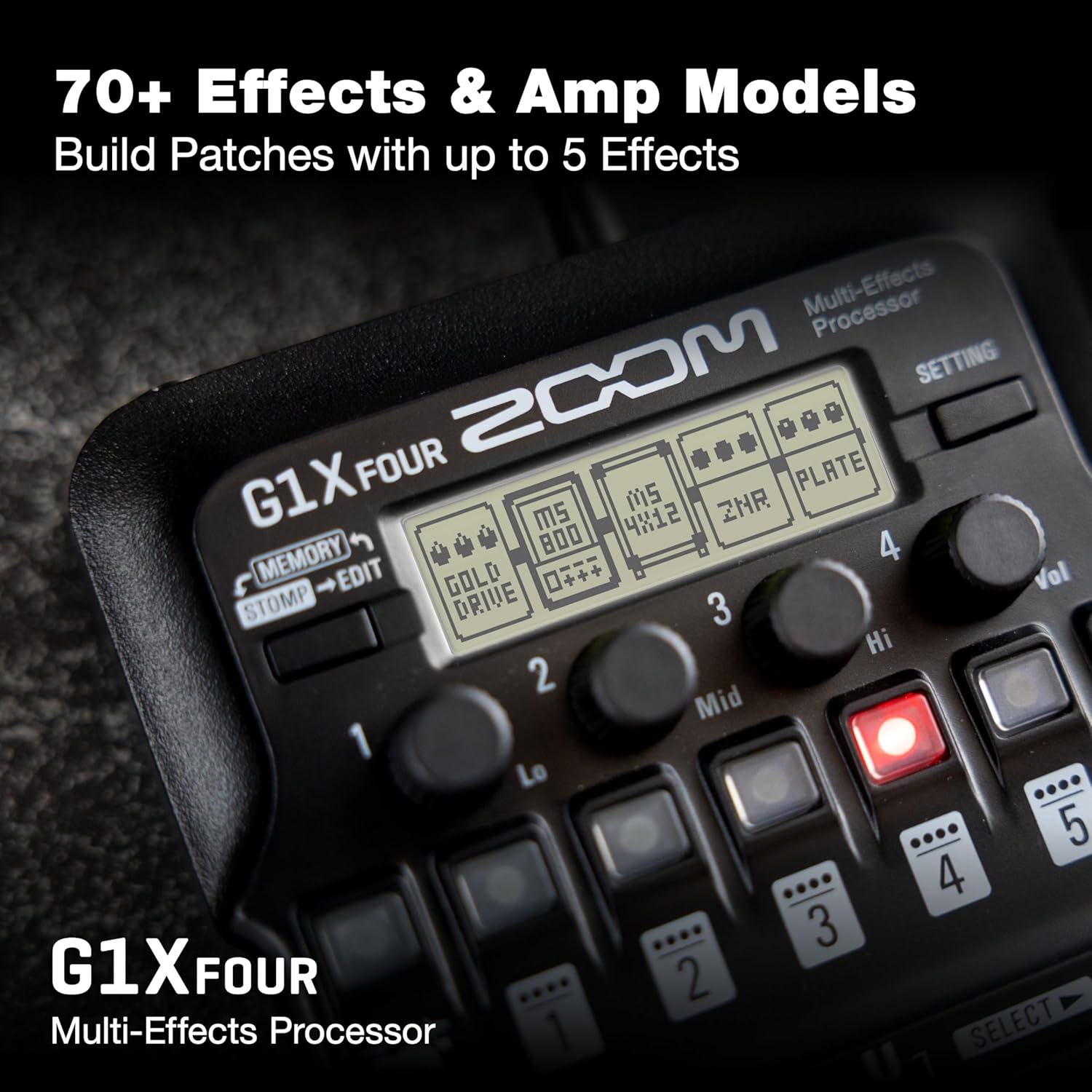
The Zoom G1X FOUR is the unit reviewers keep returning to when they want to emphasize value-per-dollar. It ships with over 70 built-in effects, five simultaneous effect slots — meaning you can stack reverb, delay, compression, overdrive, and an amp simulation all at once — and a built-in expression pedal, a rocker you control with your foot to sweep parameters like wah-wah effect or volume in real time.
One detail that Guitar World’s multi-effects buying guide specifically highlights is the USB power bank compatibility. The G1X FOUR runs on four AA batteries or via USB power from any standard USB-A power bank — the same portable battery pack you’d use to charge your phone. Practicing unplugged in a park, on a tour bus, or in a hotel room without hunting for an outlet is a real use case this unit handles without compromise, and it’s a feature that stands alone at this price tier. MusicRadar’s multi-effects roundup coverage similarly flags this power flexibility as a meaningful differentiator for players without a fixed practice space.
One caution worth naming directly: players new to multi-effects units frequently describe a first-week learning curve navigating between patches — saved sound settings — and individual effect parameters. The navigation isn’t immediately obvious. Budget 60–90 minutes of focused setup time, ideally alongside Zoom’s own video tutorial materials, before judging the interface. Players who clear that initial hurdle consistently describe the unit as indispensable afterward.
The built-in expression pedal handles wah duty capably for most practice and recording contexts. Players with extensive experience on a dedicated standalone wah will notice differences in feel and sweep response — a distinction addressed in the FAQ section below.
Best fit: Beginners who want portability, players without a permanent practice space, and anyone who wants battery-free USB power flexibility.
FLAMMA
$109.99
In stock on Amazon
Check price on AmazonBoss GT-1: The One That Replaces a Pedalboard
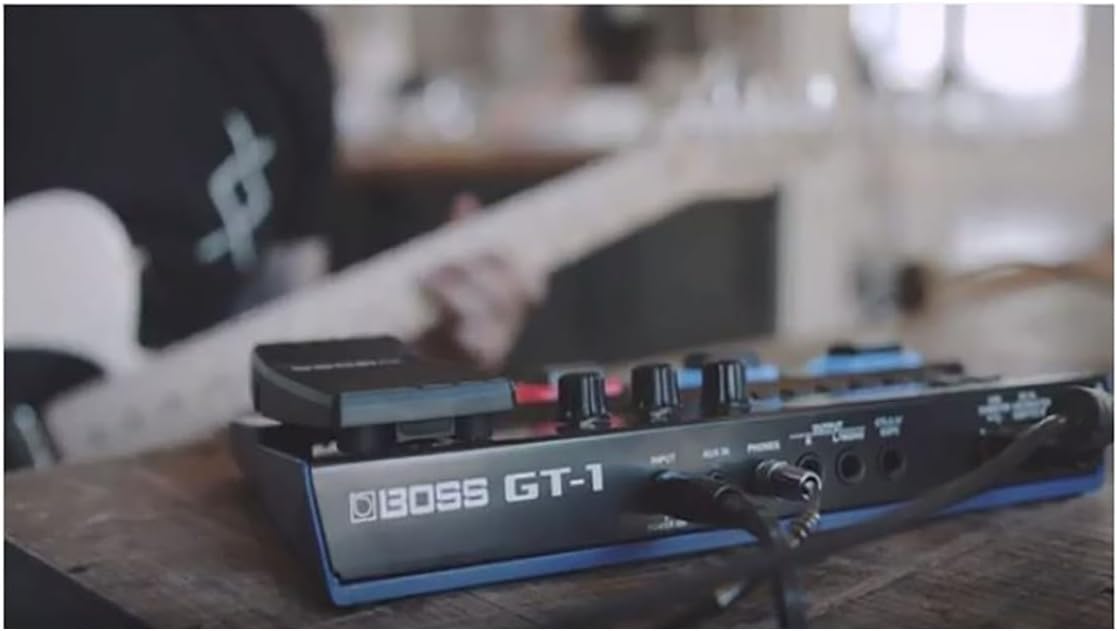
The Boss GT-1 is older in the product lineup but remains what Premier Guitar’s floor processor coverage describes as a unit serious players can build a complete rig around. It contains over 100 effect types and supports two distinct routing modes that more experienced players will recognize as genuinely useful architecture.
In preamp mode, the GT-1 runs straight into the front of your amp, using its own amp simulations alongside the amp’s natural character. In effects-loop mode, you bypass the amp’s preamp entirely and run the GT-1’s amp models as your core tone source, with the amp acting purely as a powered speaker cabinet. That second option is what allows the GT-1 to replace — not just supplement — individual stompboxes like the Boss DS-1 distortion or BD-2 Blues Driver. The amp modeling handles the tonal work those pedals would otherwise do.
Sweetwater’s product page for the Boss GT-1 confirms its USB audio recording path, meaning you can plug directly into a computer and record into a DAW like GarageBand, Audacity, or Reaper without a separate audio interface. That dual function — effects processor and basic recording interface — is one of the strongest value arguments for the unit.
The tradeoff is first-setup complexity. The Boss GT-1 reveals its capabilities over weeks of use rather than rewarding impatient first sessions. Players willing to invest that time consistently find it a unit they don’t outgrow.
No expression pedal is included in the base unit — a notable difference from the G1X FOUR. An external expression pedal can be connected via the GT-1’s dedicated input jack, but that is an additional purchase if wah or volume-sweep functionality matters to you.
Best fit: Players consolidating individual pedals into one unit, semi-pro performers building a compact live rig, and anyone comfortable investing a week of learning time upfront.
Jasmine
$119.00
In stock on Amazon
Check price on AmazonFLAMMA FX100: The Sleeper Challenger
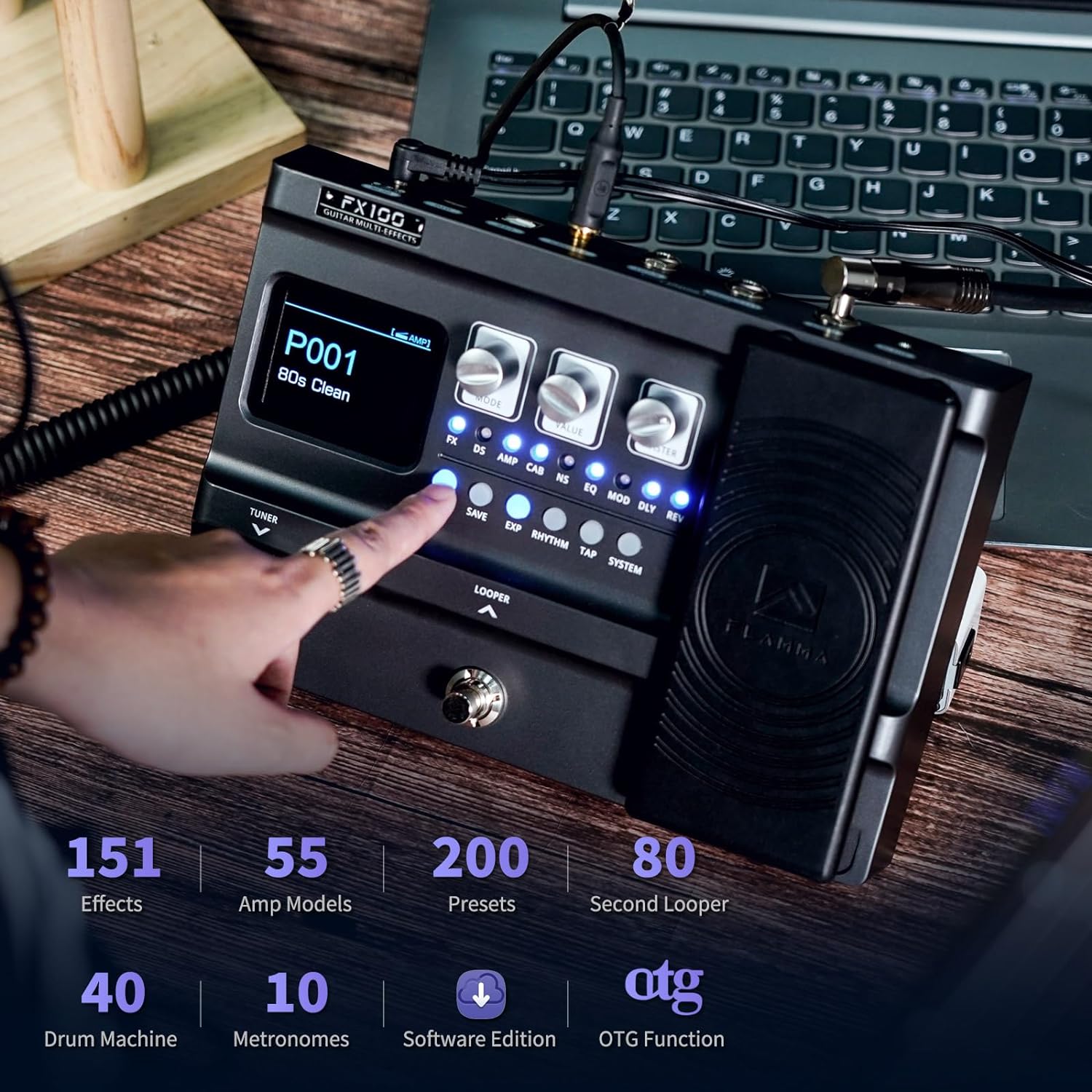
The FLAMMA FX100 is the least widely distributed of the three in North American retail channels, but it has generated serious attention among players running direct comparisons in the sub-$150 category. The feature that distinguishes it most clearly is a 9-block independently switchable effects chain. Most budget multi-effects units let you stack effects; the FX100 lets you toggle each of those nine blocks on and off individually with dedicated switches — no scrolling through menus mid-performance. For a player building a live setup, that interaction model is closer to how a real pedalboard works than anything else at this price.
MusicRadar’s multi-effects roundup coverage has increasingly flagged processors in this category as credible alternatives to established brands, particularly in amp simulation quality. The caveat is ecosystem support: owner reports on the FX100 are generally positive, but the sample size is smaller than Boss or Zoom, and the warranty and support infrastructure is less established in the U.S. market. That’s a real consideration if you prefer having a domestic support channel.
Like the GT-1, the FX100 does not include a built-in expression pedal, but it does support USB audio output for direct computer recording.
Best fit: Players who prioritize amp modeling realism and live-performance switching flexibility, and who are comfortable navigating a smaller support ecosystem.
BOSS
$189.98
In stock on Amazon
Check price on AmazonSide-by-Side Specifications
| Feature | Zoom G1X FOUR | Boss GT-1 | FLAMMA FX100 |
|---|---|---|---|
| Effects Slots | 5 simultaneous | Up to 8 (chain) | 9 independent |
| Expression Pedal | Built-in | Not included (add-on jack) | Not included |
| Power Options | Batteries / USB power bank | AC adapter | AC adapter |
| USB Audio Recording | Yes | Yes | Yes |
| Street Price (mid-2026) | ~$100 | ~$150 | ~$120 |
Specifications per manufacturer documentation and Sweetwater product listings as of mid-2026.
Frequently Asked Questions
Can I use the Zoom G1X FOUR with just a phone charger or power bank instead of a wall adapter? Yes — this is one of the G1X FOUR’s most practically useful features. It runs on four AA batteries or via USB power from any standard USB-A power bank. You don’t need a wall outlet or a dedicated power supply, which is a meaningful advantage for anyone practicing away from a fixed setup. Guitar World’s multi-effects buying guide specifically flags this as a key differentiator in the sub-$150 category.
Will any of these multi-effects units work as a direct recording interface without a separate audio interface? All three support USB audio output, meaning you can plug them into your computer and record directly into a DAW — software like GarageBand, Audacity, or Reaper — without purchasing a separate audio interface. Sweetwater’s product documentation for the GT-1 specifically confirms its USB audio recording path. This is one of the strongest value arguments for any of these units: you get effects and a basic recording path in a single purchase.
Does the Boss GT-1 replace individual pedals like the DS-1 or BD-2, or is it better used alongside them? It’s designed to replace them, not supplement them — particularly when run in effects-loop mode, where the GT-1’s amp modeling does the tonal work those individual pedals would otherwise handle. Premier Guitar’s coverage of floor processors positions the GT-1’s routing flexibility as the feature that makes it genuinely substitute a conventional pedalboard rather than simply extend one. Running individual pedals into the GT-1 is technically possible but adds complexity without obvious benefit at this price tier.
Which of these is easiest for a complete beginner to get a good sound from on day one without reading the manual? The Zoom G1X FOUR has the clearest edge here based on how its preset library is structured and how Guitar World’s buying guide characterizes it for first-time multi-effects users. Its presets are usable out of the box, and the parameter navigation — while not perfect — is more forgiving than the GT-1’s on initial contact. That said, budget time for tutorial sessions regardless of which unit you choose; all three reward a small upfront investment in orientation.
Do these units work with acoustic-electric guitars or only electrics? All three work with any guitar that has a pickup output, including acoustic-electrics. The Zoom G1X FOUR includes dedicated acoustic modeling patches per Zoom’s published feature list. The more important variable is whether you’re running into an acoustic amp — designed to stay transparent and clean — versus a standard electric guitar amp that colors the tone. For acoustic-electrics going direct to a PA system or recording interface, all three are viable; simply bypass the amp simulation blocks and use only effects like reverb and compression.
Is the expression pedal on the Zoom G1X FOUR good enough to replace a dedicated wah like the Cry Baby? For beginners and intermediate players, yes — it handles the core wah function and is genuinely useful in practice and recording contexts. Players who have logged significant time on a dedicated Cry Baby or similar pedal will likely notice differences in feel, sweep arc, and the physical toe-down engagement click that many standalone wahs use. The G1X FOUR’s expression pedal is always physically engaged; wah is activated by assigning it to that pedal in the patch settings. It functions as a real wah, just with a different physical experience than a purpose-built unit.
The Decision Rule
Here’s how to cut through the comparison:
-
If you want portability, USB power bank compatibility, and the most forgiving first-day experience: the Zoom G1X FOUR is the clear call. The built-in expression pedal means nothing else is required out of the box, and freedom from wall-outlet dependency genuinely changes where and how you practice.
-
If you’re consolidating a pedalboard, performing semi-regularly, or want a unit with serious long-term ceiling: the Boss GT-1 is worth the extra setup time. Its routing flexibility is genuine, its amp modeling has held up across multiple years of use without feeling dated, and Sweetwater’s product coverage consistently positions it as the unit players don’t outgrow. The confirmed USB recording path adds further value.
-
If amp modeling realism and per-block live switching are your priorities and you’re comfortable with a less established support network: the FLAMMA FX100 is the sleeper worth investigating, especially if you’re running direct to a PA or recording interface and want individual block control without menu-diving.
All three will make a Squier, a GRX, or a Jasmine sound better than you probably expect. The guitar isn’t the ceiling here. The signal chain is — and any of these units raise it meaningfully.