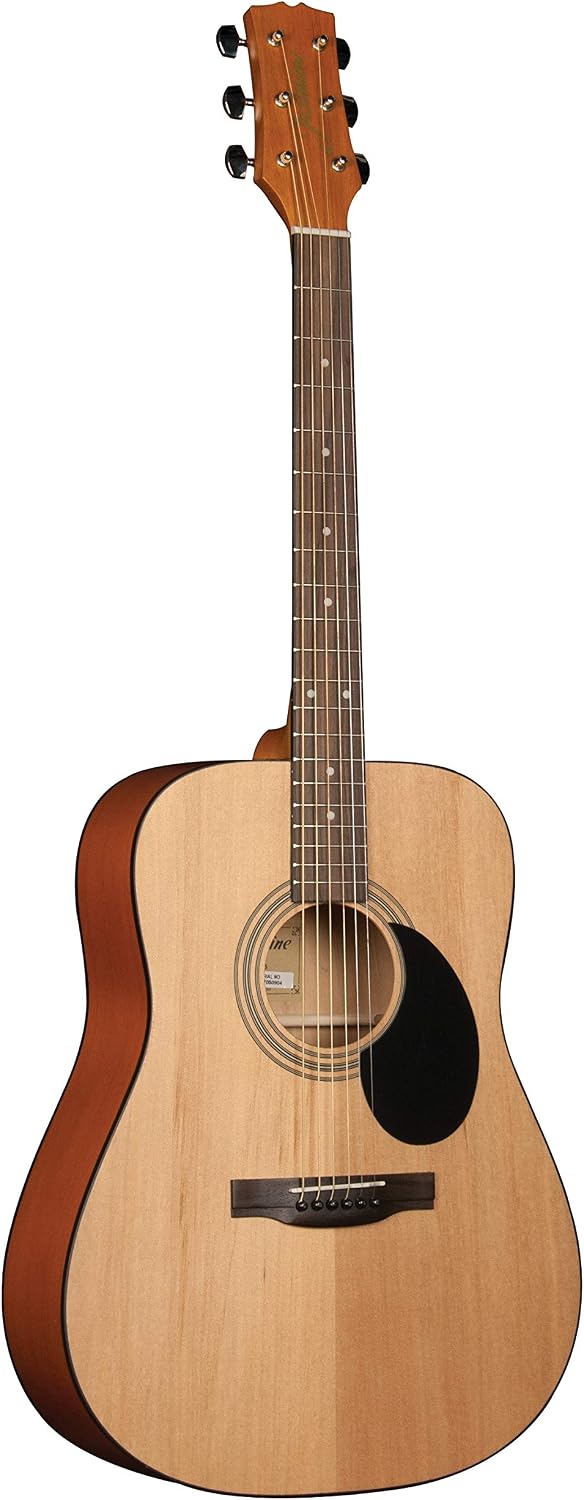
You just bought a guitar. Maybe it’s a Jasmine S35 acoustic — a trim little dreadnought that costs less than a tank of gas for a truck. Maybe it’s a Donner electric or a Squier Affinity Strat. You unbox it, tune it up, and… something feels off. The strings feel like they’re a mile above the fretboard. A few notes buzz. Your fingers hurt more than they seem like they should. You start to wonder if you bought the wrong guitar, or worse, if you’re just not cut out for this.
Here’s what’s actually going on: almost every guitar sold under $300 — and plenty of guitars well above that price — ships from the factory or warehouse without being optimized for your hands, your room’s humidity, or the realities of weeks spent in a shipping container. A guitar setup (a professional adjustment of the instrument’s physical components to make it easier and more pleasant to play) is not a luxury add-on. For most beginners, it’s the single highest-return investment you can make in your playing experience. This guide will explain exactly what a setup is, what it costs, how to spot when you need one, and when to call in a pro versus when you can handle something yourself.
What a Guitar Setup Actually Is (and What Gets Adjusted)
A setup is a collection of small mechanical adjustments that work together to make a guitar feel and sound its best. Think of it like getting a new bicycle tuned before a long ride — the bike works out of the box, but a few tweaks make it dramatically more efficient and comfortable.
The main things a technician addresses during a standard setup:
Action — “Action” is the distance between the strings and the fretboard. High action means your fingers have to press harder and further to make a note ring cleanly. Low action can cause fret buzz, which is that sitar-like rattling sound when a string vibrates against a fret it shouldn’t be touching. Most budget guitars ship with action on the high side because it’s safer for shipping and avoids warranty buzz complaints — but it makes the instrument genuinely harder to play.
Truss rod adjustment — Inside the neck of almost every modern guitar is a metal rod (the truss rod) that counteracts the tension of the strings and keeps the neck from bowing. A little curve (called relief) is usually intentional, but too much or too little causes playability problems. Sweetwater’s overview of guitar setup explains that incorrect neck relief is one of the two most common sources of buzzing and high action on new instruments.
Nut slots — The nut is the small slotted piece at the top of the neck, right where the headstock begins. If the slots are cut too high, the guitar will feel stiff and sharp-sounding in the first few frets. If they’re too low, open strings buzz. Budget guitars frequently have nut slots left high from the factory.
Saddle height — On acoustic guitars especially, the saddle (the white or bone-colored piece that the strings rest on in the bridge) controls overall action and has a huge effect on tone and intonation. Acoustic Guitar Magazine’s setup guide specifically calls out saddle height as the most impactful single adjustment on an acoustic instrument.
Intonation — This is tuning accuracy up and down the neck. A guitar can be perfectly in tune on open strings and still sound noticeably off when you play a chord up the neck. Intonation is set by adjusting the string length at the bridge. On most electric guitars this is straightforward. On acoustic guitars it’s less adjustable, which is why getting the nut and saddle right matters even more.
String change — Many budget guitars ship with low-quality factory strings that have been on the instrument for months. A setup almost always includes a fresh set.
The Real Cost of Skipping a Setup (and the Real Price of Getting One)
Here’s the pattern that shows up repeatedly across buyer reviews at MusicRadar and Guitar World: the same guitar earns both one-star and five-star reviews. The negative reviews describe an unplayable instrument with buzzing strings and painful action. The positive reviews describe a guitar that punches above its price. The difference is almost never the guitar itself — it’s whether the buyer knew a setup was needed.
A Jasmine S35 reviewer, widely quoted in beginner forum discussions, puts it plainly: negative reviews come from players who don’t know about setup, and the truss rod and saddle height are the typical culprits. A Donner electric buyer who initially rated their instrument poorly updated to highly satisfied after the company explained that shipping conditions routinely knock adjustments out of spec. The Fender CD-60SCE gets a version of the same story: owners who made “a couple of tweaks” describe going from disappointed to genuinely delighted.
The takeaway is not that these are bad guitars. It’s that a guitar is a precision instrument that responds to its environment, and no factory can guarantee it arrives in perfect adjustment after weeks in transit across varying temperatures and humidity levels.
By the Numbers: What a Setup Costs in 2026
| Service level | Typical price range | What’s included |
|---|---|---|
| Basic electric setup | $50–$80 | Truss rod, action, intonation, string change |
| Basic acoustic setup | $60–$90 | Truss rod, nut/saddle, intonation check, string change |
| Full setup with nut replacement | $90–$150 | All of above plus new nut cut and fitted |
| Fret level & crown (if needed) | $150–$250 | Fret work plus full setup |
Prices reflect typical U.S. music store rates as of mid-2026. Independent luthiers may run slightly higher or lower; Guitar Center and Sweetwater-affiliated stores tend to land in the middle of these ranges. Call ahead — many stores offer setup specials for new instrument purchases.
On a $200 guitar, a $60–$75 setup is a 30–37% price increase. That sounds steep until you frame it correctly: you’re not paying to fix a defective guitar, you’re paying to unlock the instrument you already bought. The guitar that felt unplayable at $200 can genuinely compete with instruments at $350–$400 after a proper setup. That’s the real value exchange.
What Beginners Can DIY (and What They Shouldn’t Touch Yet)
This is where the conversation gets practical. Some setup tasks are genuinely approachable for a careful beginner. Others carry real risk of damage.
Reasonable for beginners to attempt:
- Changing strings — A fundamental skill. Fresh strings alone can transform a buzzy, dull-sounding guitar. Guitar World’s setup guide walks through the process step by step and is worth bookmarking.
- Checking and adjusting bridge saddle height on electrics — On most electric guitars (Strats, Teles, Les Paul-style instruments), individual saddle height is adjusted with a small hex key (Allen wrench). It’s fiddly but low-risk. Go slow, measure before and after, and change only one saddle at a time.
- Checking neck relief visually — Hold the guitar with one hand fretting the low E string at the first fret and the other hand fretting it at the body join (around the 14th or 15th fret). Look at the gap between the string and the frets in the middle of the neck. A small gap (roughly the thickness of a business card at the 7th or 8th fret) is normal. A big gap or no gap at all means the neck needs attention.
Leave these to a professional, at least at first:
- Truss rod adjustment — The truss rod is strong, but overtightening it can crack a neck. Quarter-turn increments, 24-hour wait periods, and knowing what you’re looking for are all part of doing this safely. Sweetwater’s setup documentation is emphatic: beginners should understand what the truss rod does, but adjusting it is a job for someone with tactile experience, not just a YouTube video.
- Nut slot filing — Filing a nut slot deeper is a one-way trip. There’s no un-filing. A professional removes a tiny amount of material at a time and checks constantly. Getting this wrong means buying a new nut.
- Fret work — Leveling and crowning frets requires specialized tools and the ability to read a fret rocker accurately. This is firmly in luthier territory.
One genuinely encouraging data point: a reviewer of the Donner 30-inch kids’ guitar — an instrument that’s essentially at the toy-adjacent end of the market — successfully adjusted intonation and individual string action and documented the improvement. Setup knowledge scales to any budget. The principles are the same whether you’re working on a $75 three-quarter-size acoustic or a $3,000 PRS.
How to Find a Good Setup Tech (and What to Ask)
Ask at your local music store first. Even big-box guitar retailers typically have a repair tech on staff or a referral relationship with one. When you call, ask:
- “Do you do setups on student guitars?” — You want someone who won’t talk you into a $250 fret level on a $180 instrument.
- “What does a basic setup include and how much?” — A real answer tells you they’re organized and transparent.
- “How long does a turnaround take?” — Anywhere from same-day to a week is normal depending on how busy they are.
Bring your guitar in person if possible. A good tech will look it over before quoting, especially if fret wear or a warped neck might change the scope of work.
Frequently Asked Questions
Does a new guitar always need a professional setup or can I play it straight out of the box? Some guitars — the Ibanez GIO series comes up frequently in owner reviews for arriving closer to playable than most budget instruments — ship in genuinely good adjustment. But “playable” and “playing at its best” are different things. If you’re buying a guitar under $300, budget for a setup and be pleasantly surprised if you don’t need a full one.
How much does a guitar setup cost at a music store? Most basic setups run $50–$90 in 2026 for electric or acoustic. If the nut needs replacing or there’s fret work involved, costs can reach $150 or more. Always ask for a quote before work begins.
What is a truss rod and should a beginner touch it? The truss rod is a steel rod inside the neck that controls its curvature under string tension. It’s an essential adjustment point — but also one where a wrong move can cause expensive damage. Read about it, understand what it does, and then let a professional make the first adjustment on your instrument while you watch. Many techs are happy to explain what they’re doing.
Why does my new guitar sound buzzy on certain frets? Fret buzz usually means either the action is too low (strings too close to the frets), the neck has too little relief (it’s too straight or back-bowed), or there’s an individual high or low fret. All three are setup issues. A tech can diagnose which one within a few minutes of looking at the instrument.
How do I know if my guitar’s action is too high? The clearest sign: playing an F chord (or any barre chord) on an acoustic feels like a feat of strength rather than a musical gesture. Also, if your guitar sounds slightly sharp (out of tune sharp) when you fret notes compared to open strings, high action is often the cause — the extra string tension created by pressing down further pulls the pitch up. Acoustic Guitar Magazine’s setup guide describes this intonation-action relationship in useful detail.
Will setting up a cheap guitar actually make it play better, or is it still going to feel cheap? Honestly? Yes — a setup makes a real, noticeable difference on budget guitars. What it can’t fix is wood quality, resonance, or hardware durability. But if the main thing standing between you and enjoyment is string height and neck relief, those are fixable for $60–$75. The guitar will still be an entry-level instrument, but it will be an entry-level instrument that you can actually play — and that’s worth everything when you’re starting out.
Buy this if you’re on the fence: If you’ve already purchased a sub-$300 guitar and you’re frustrated with it, get a setup before drawing any conclusions about whether you like playing guitar. A single $60–$75 appointment at a local music store has converted more “maybe this isn’t for me” moments into long-term players than any amount of practice tips or YouTube tutorials. The guitar you have might already be the right guitar — it just needs to be adjusted to prove it.